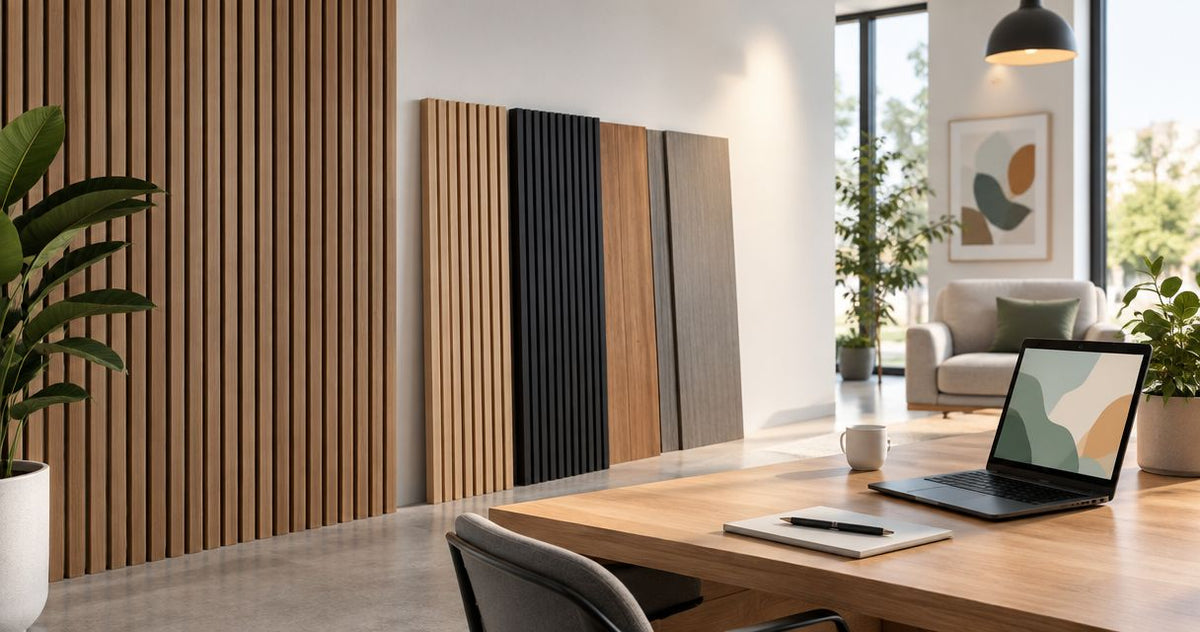
Panelling Direct is a relevant starting point when you want wall panelling. A supplier shortlist alone is not enough when your project needs acoustic backing, a particular veneer finish or a different panel layout. The best Panelling Direct alternative in 2026 is Akustiq UK if you need real-wood-veneer acoustic slat panels; painted MDF panelling is the better route if you want a traditional, paintable wall design.
- For panelling direct alternatives, choose Akustiq UK acoustic wood panels when you want real wood veneer and felt backing.
- Choose hexagon acoustic panels for a geometric feature rather than continuous vertical slats.
- Choose painted MDF panelling for a traditional painted finish, not as a substitute for acoustic treatment.
- Compare panel construction, installation requirements and room suitability before comparing appearances.
Why this matters
A living room that sounds harsh needs a different specification from a bedroom that simply needs a new headboard wall. Both projects involve panelling, but the same material does not automatically solve both problems.
For your 2026 shortlist, separate three decisions: the appearance you want, the sound problem you need to address and the conditions the wall will face. That stops you choosing a decorative finish and expecting it to perform as acoustic treatment or exterior cladding.
Acoustic absorption and soundproofing are different jobs. Absorptive surfaces help control reflections within a room; sound isolation concerns noise passing through the building structure. A felt-backed feature wall is not a substitute for a designed separating wall.
Panelling Direct alternatives at a glance
The alternatives below include a named supplier and different panel types. They are not interchangeable: use the table to decide which route belongs on your shortlist, then compare individual products within that route.
| Supplier or panel route | Best for | Standout feature | How to compare with Panelling Direct |
|---|---|---|---|
| Panelling Direct | Benchmarking the panel you already have in mind | Your selected panel's construction and finish | Keep the exact product specification as your baseline |
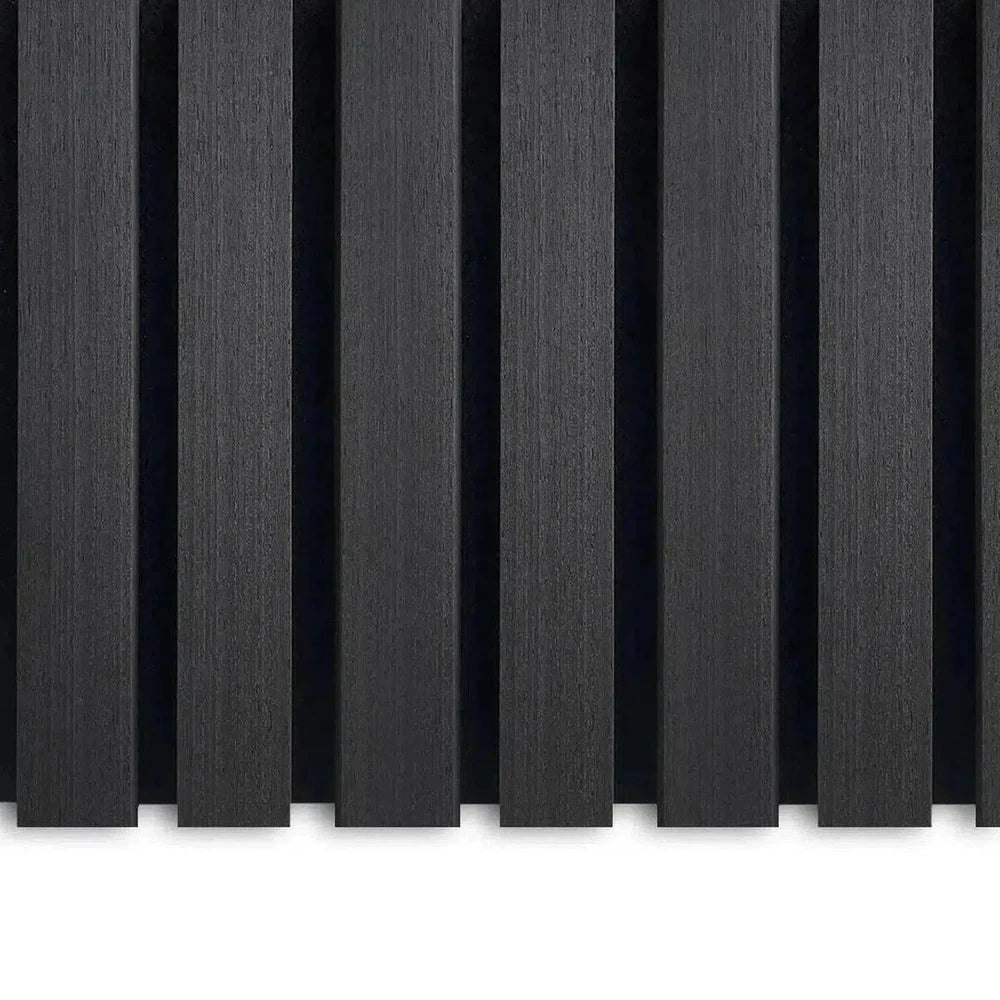
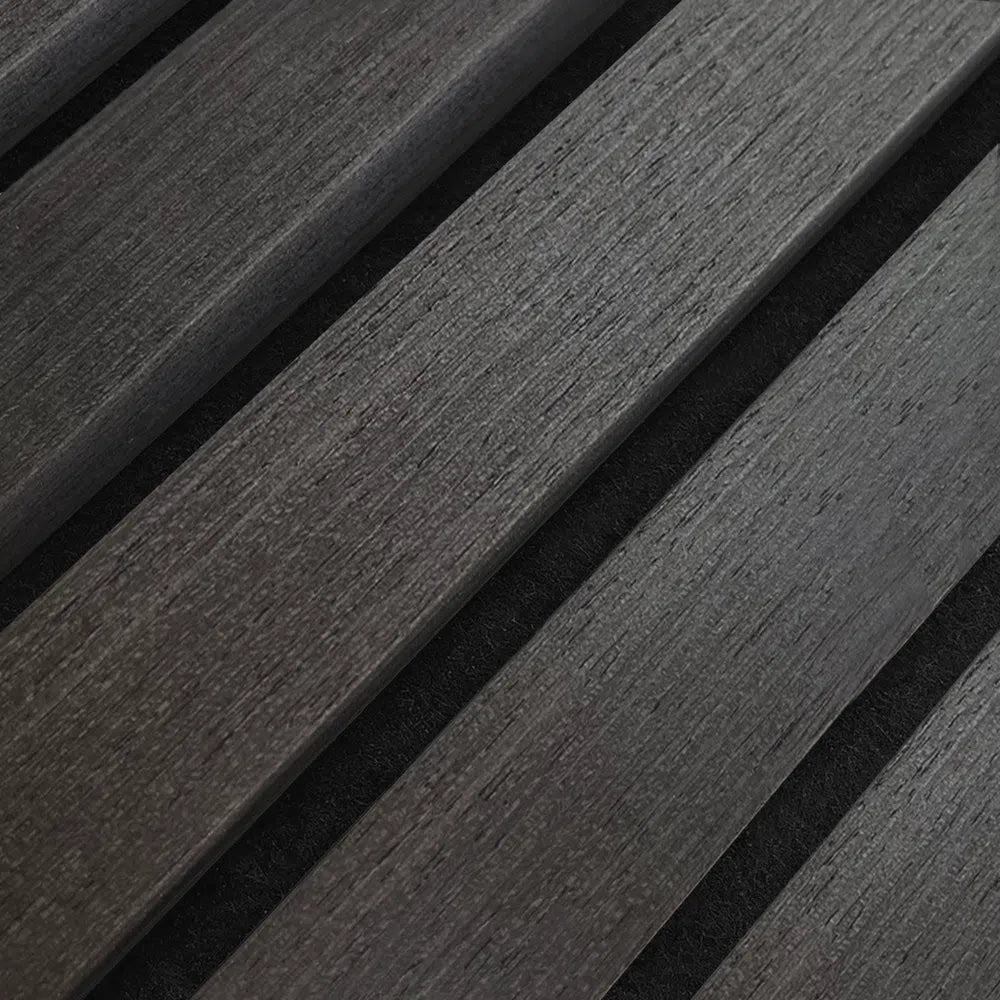
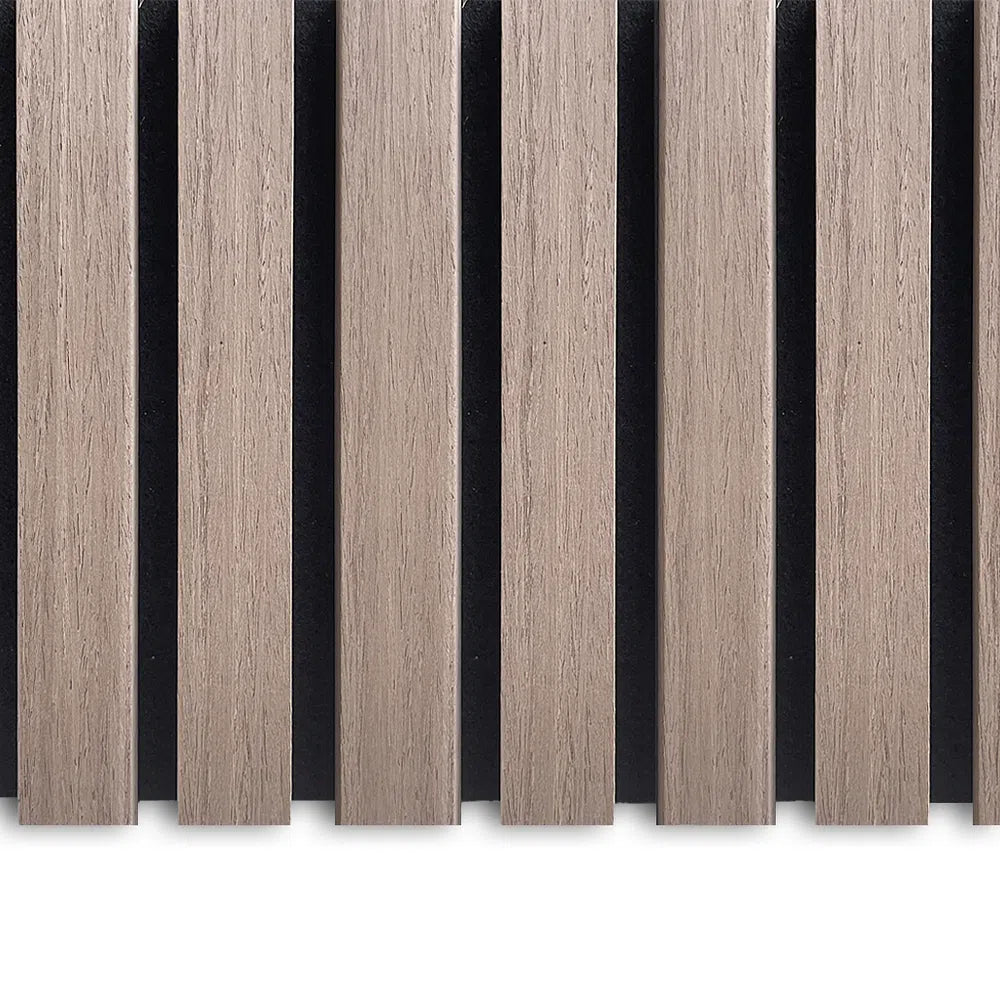
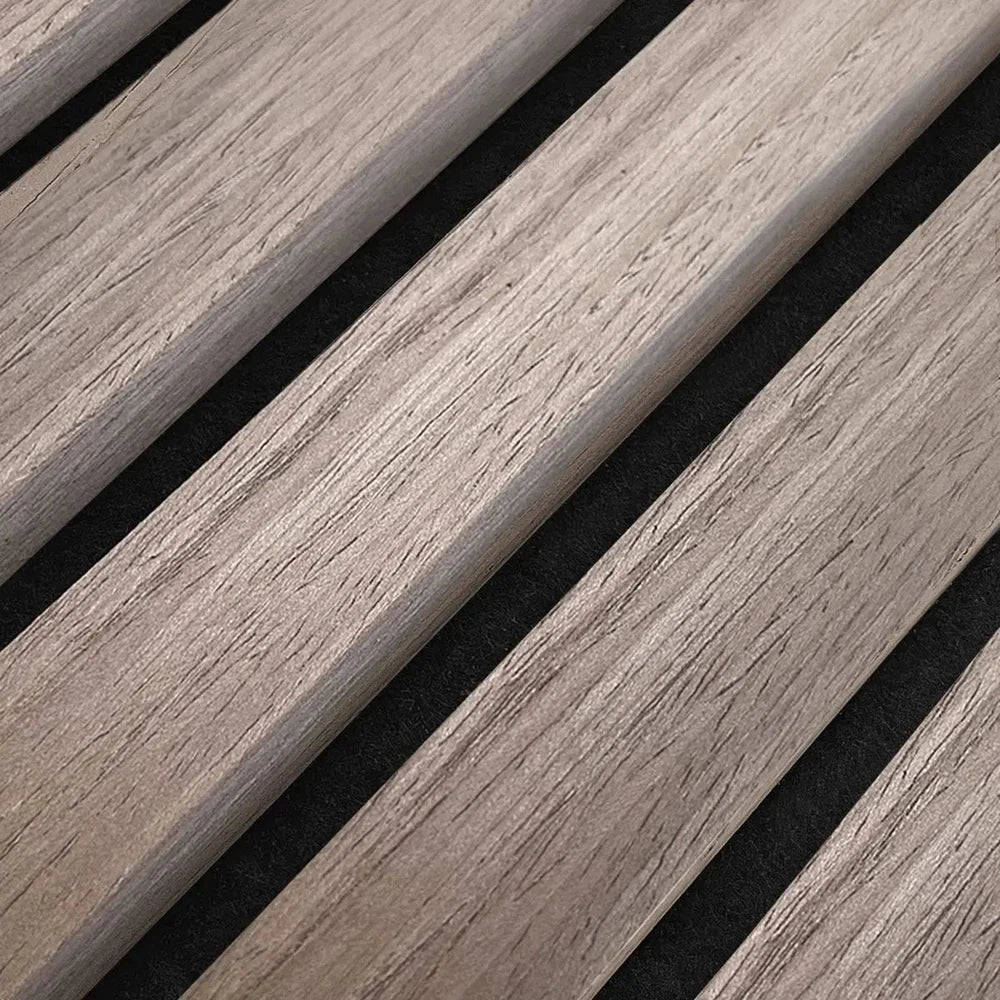
| Akustiq UK acoustic slat panels | A wood-finished wall with acoustic felt backing | Three-sided real wood veneer on flagship indoor panels | Compare veneer coverage, backing and panel dimensions |
| Hexagon Acoustic Panel Walnut | A geometric acoustic feature wall | Hexagon format rather than continuous slats | Compare the proposed layout and acoustic construction |
| Painted MDF panelling | Traditional painted wall designs | A surface you can finish in your chosen paint colour | Compare the finished design, preparation and joinery work |
| Upholstered acoustic panels | A fabric-faced acoustic treatment | An absorptive panel behind a fabric finish | Compare tested performance and mounting requirements |
Do not rank these routes by photographs alone. A finished installation hides the backing, edge detail, fixing method and wall preparation that determine whether the panel suits your project.
1. Akustiq UK: best for wood-veneer acoustic slat walls
Best for: Homeowners and businesses wanting a wooden slat feature wall with acoustic felt backing.
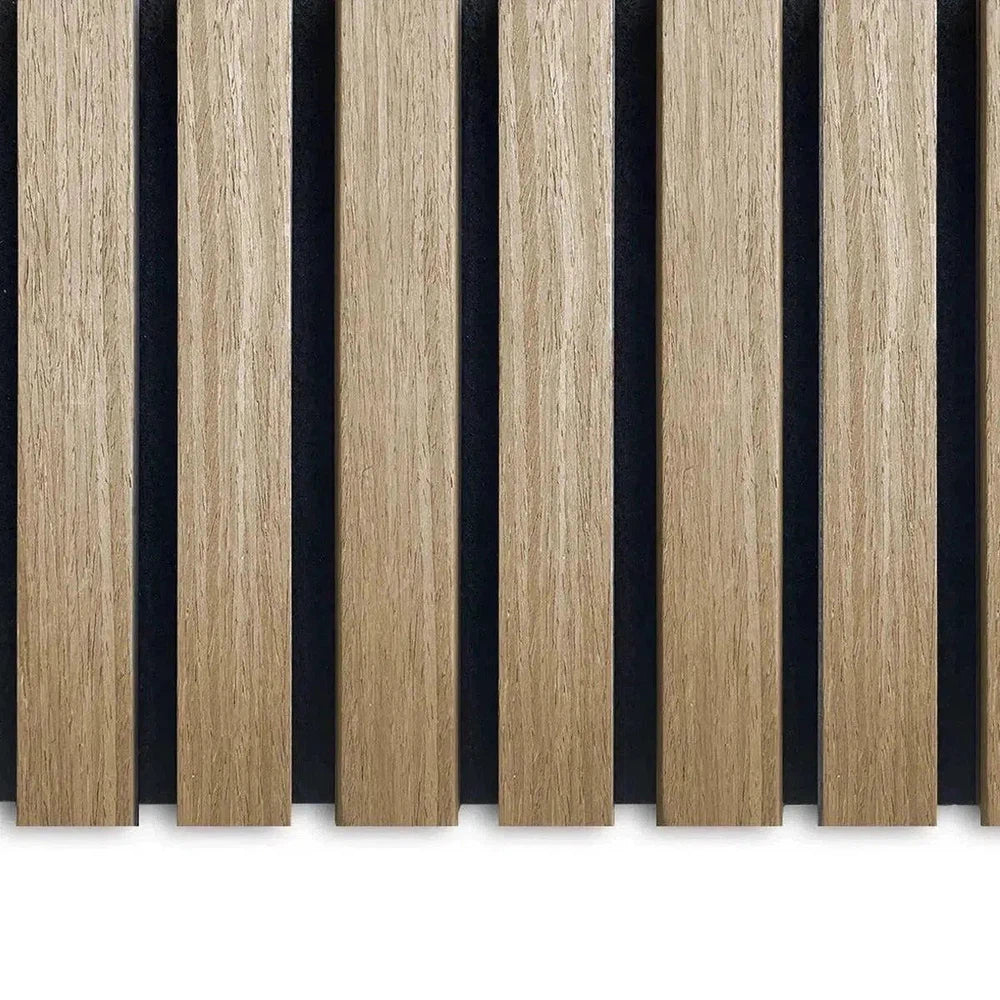
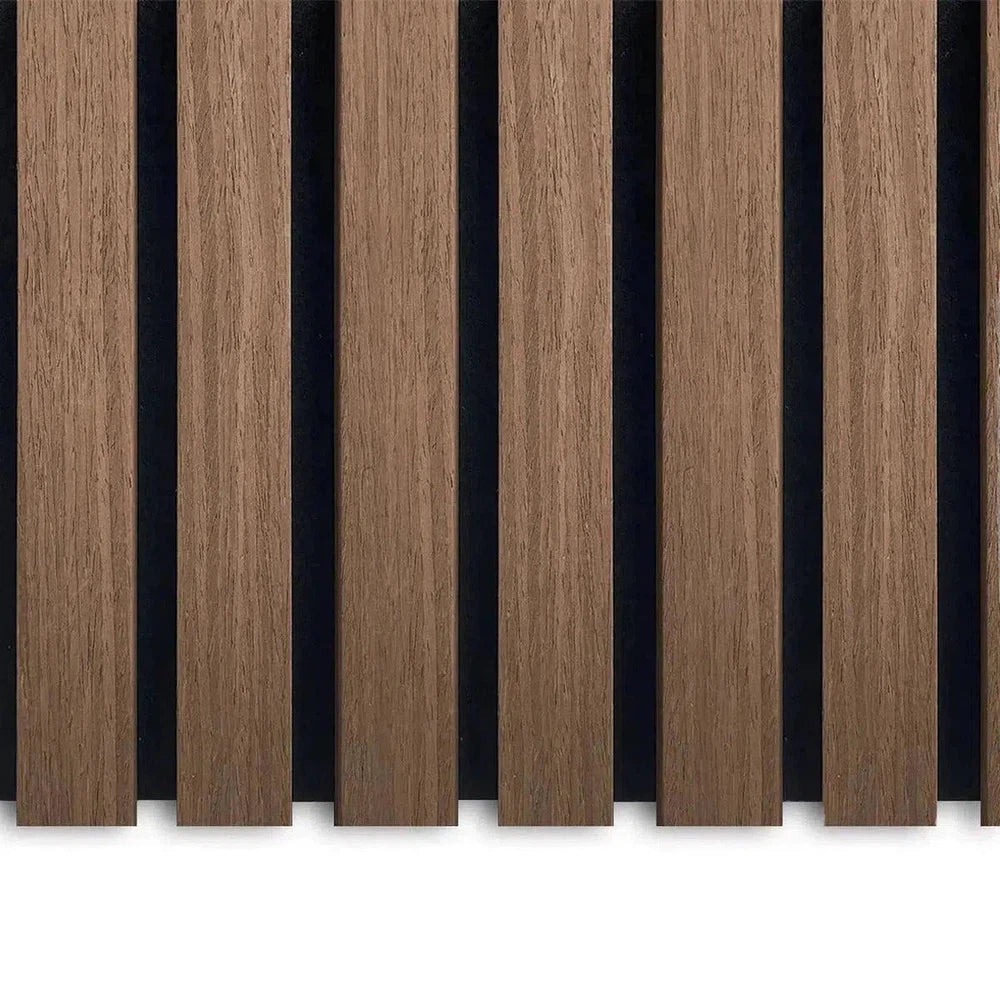
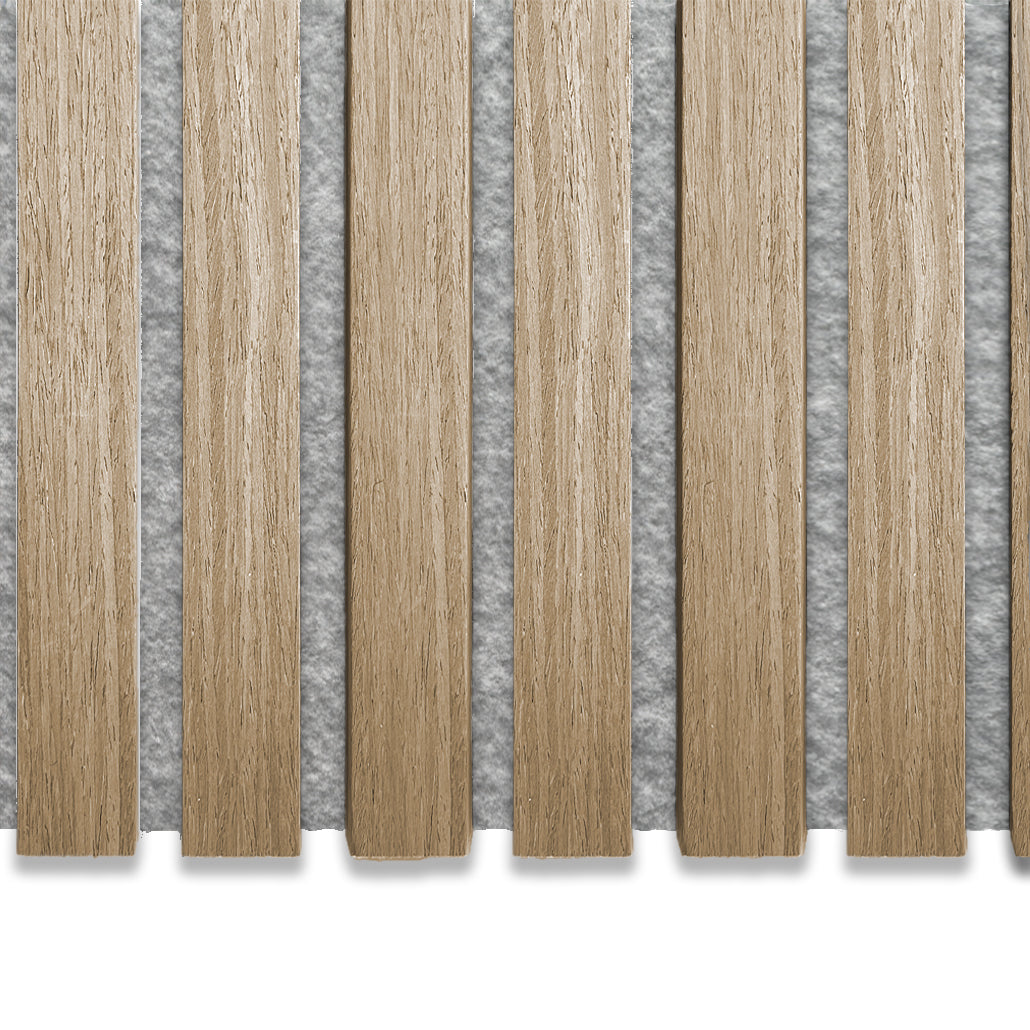
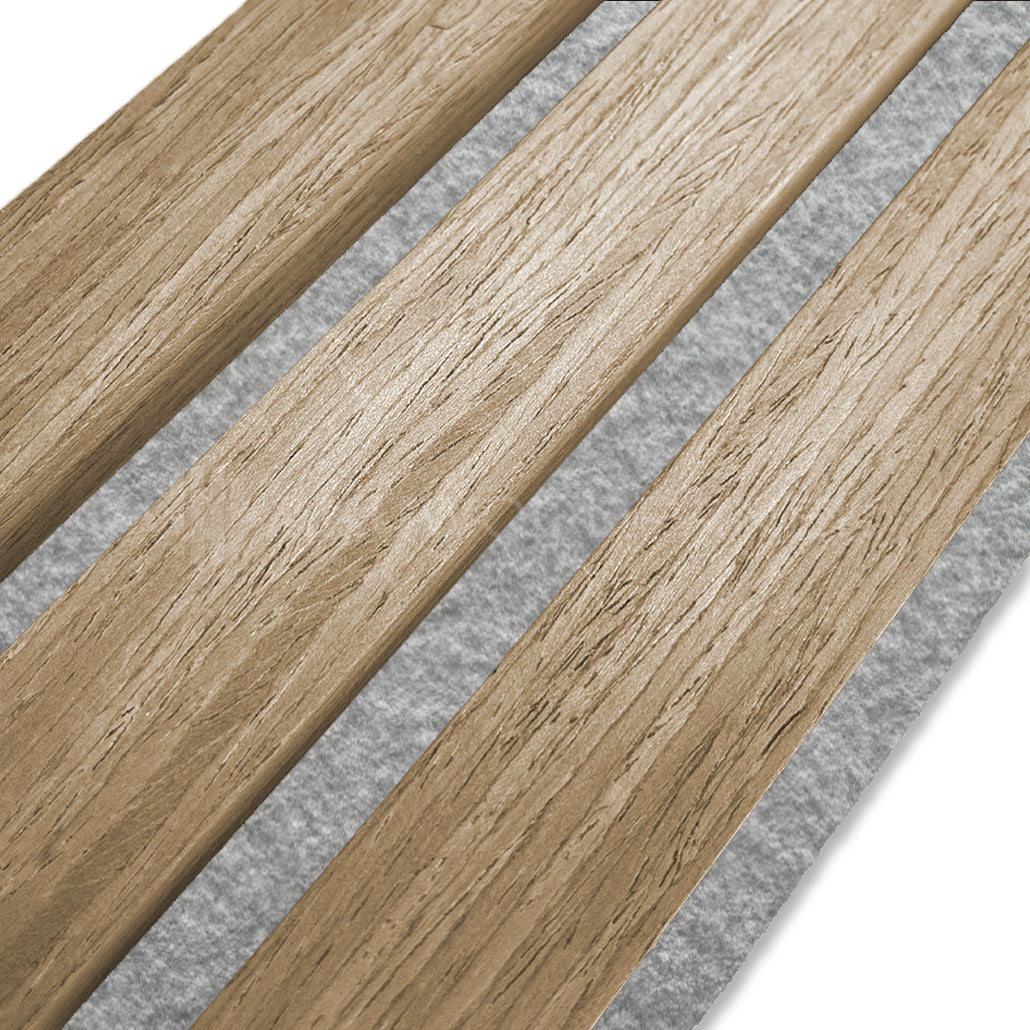
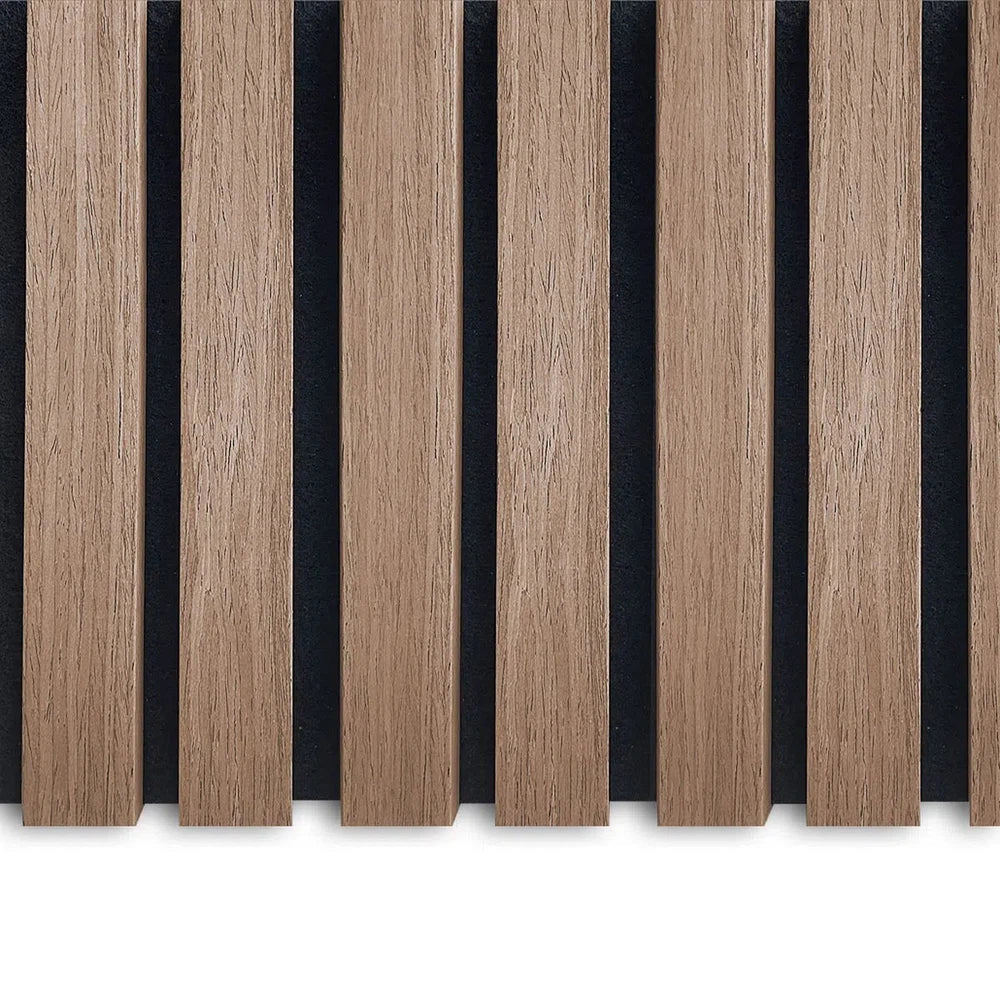
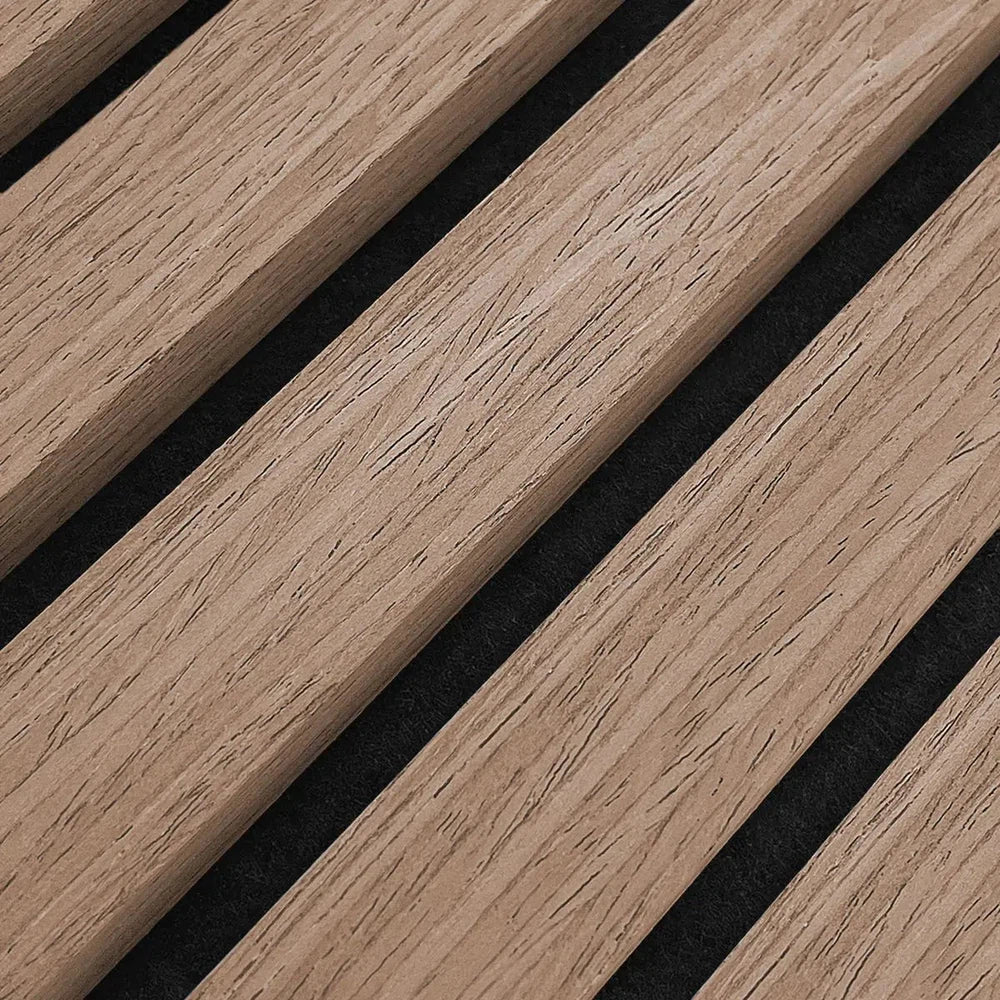
The flagship indoor panels combine a three-sided real wood veneer finish with acoustic felt backing. The range includes 240 cm and 300 cm formats, giving you different starting points for planning a floor-to-ceiling installation.
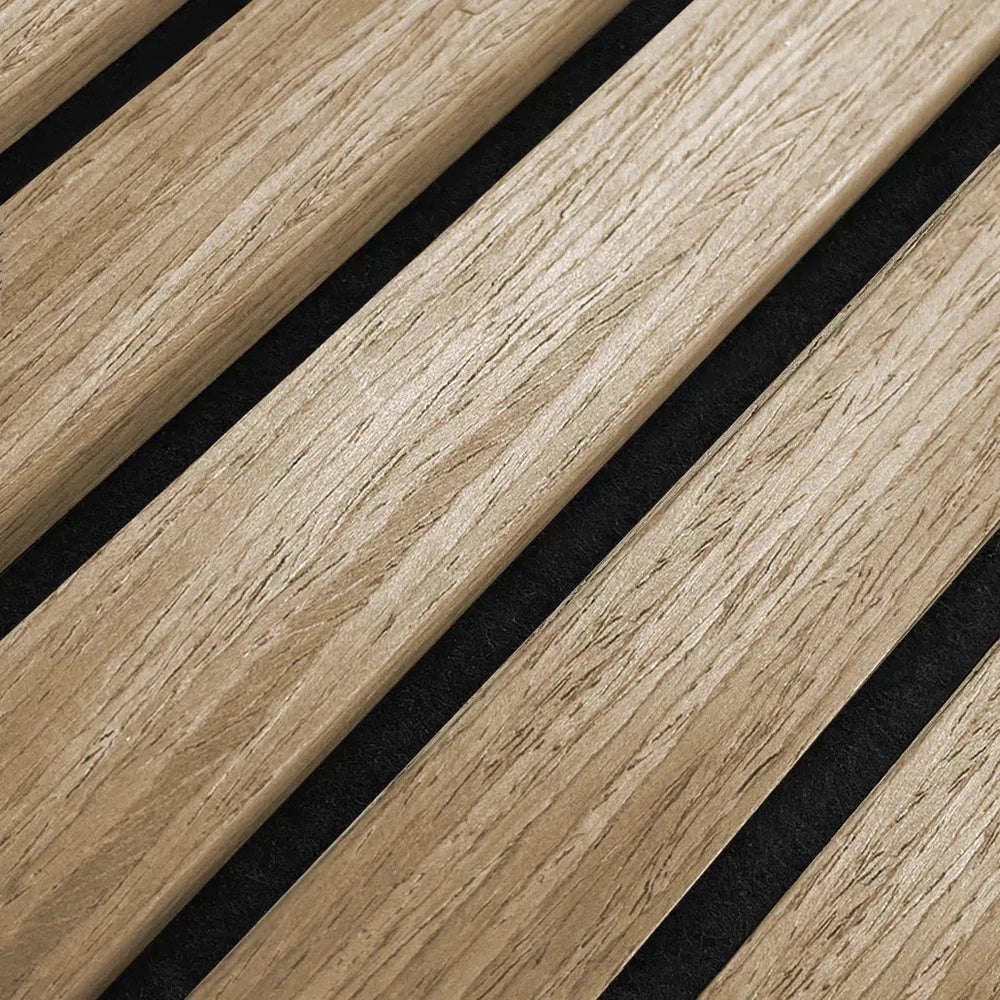
The Wooden Wall Panel Rustic Oak Premium 3 Sided Wood Veneer is a relevant option when veneer coverage is part of your brief. Check the selected panel's dimensions and fitting instructions before deciding how the wall will be finished.
Where Akustiq UK shines
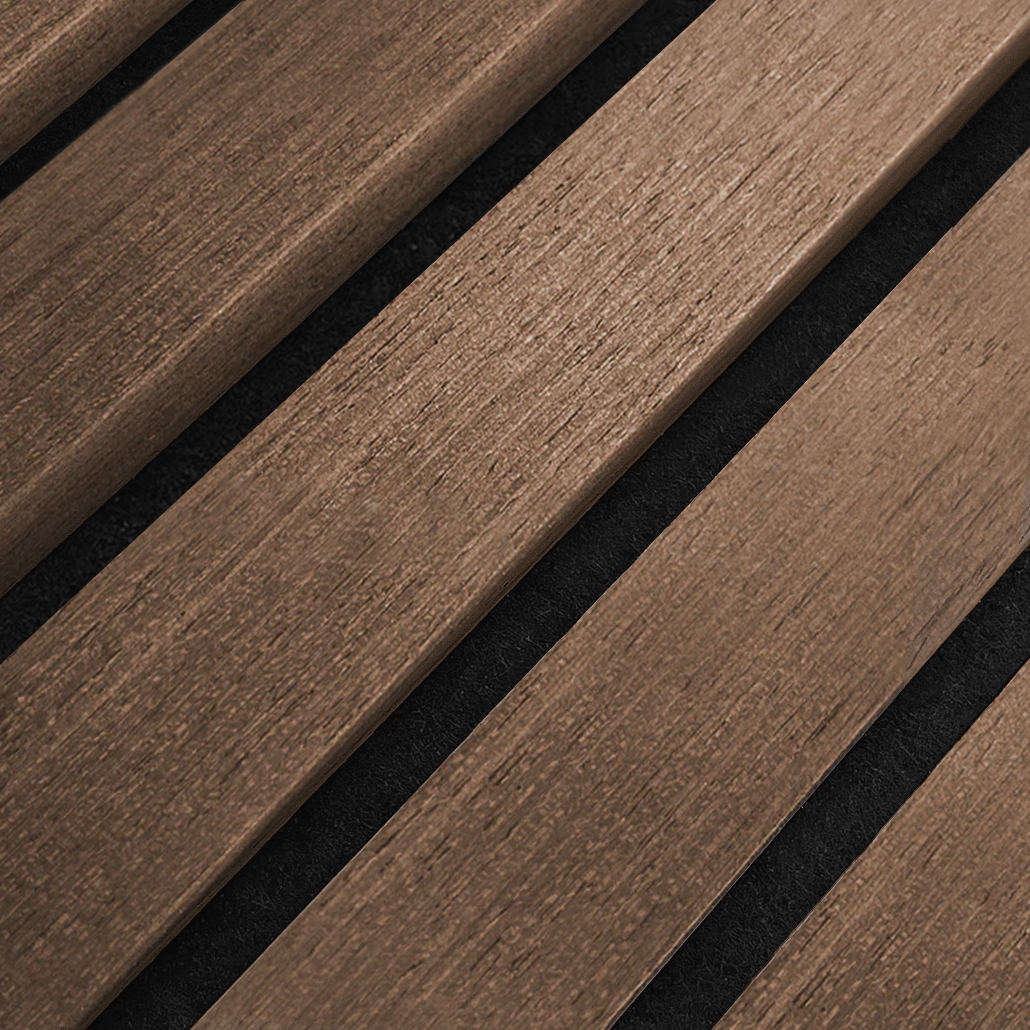
- Specified veneer coverage: The flagship construction uses real wood veneer on three sides, not just a wood-effect description.
- Acoustic backing: Felt backing makes the indoor slat range relevant to projects addressing room reflections.
- Height choices: The 240 cm and 300 cm formats let you compare layouts against your measured wall.
- Different project routes: The business also offers hexagon panels, decorative panels and a separate exterior cladding range.
Where Akustiq UK falls short
- Not a soundproofing system: Do not choose decorative acoustic slats as the sole answer to noise from a neighbouring property.
- A specific visual style: Repeated slats are not the right substitute for traditional painted moulding or a fabric-faced wall.
- Fixed formats need planning: Wall height, sockets and exposed edges still determine your cuts and finishing details.
- Indoor and outdoor products are separate: Do not treat an indoor veneer panel as exterior cladding.
What to compare before choosing
For a 2026 renovation, start with the wall height rather than the finish name. The 300 cm format is 60 cm longer than the 240 cm format, but that difference does not tell you which panel fits your wall: measure the actual installation area first.
Ask the same construction questions of the Panelling Direct panel on your shortlist. Compare veneer coverage, backing, dimensions and the intended mounting arrangement; do not assume that visually similar slats share those details.
For a living room or office, establish whether your priority is appearance, reduced reflections or both. If the project has a defined acoustic target, obtain performance evidence for the proposed installation rather than treating felt backing as a complete specification.
Verdict: Buy for a wood-veneer acoustic slat wall once the selected panel and installation match your room.
2. Hexagon acoustic panels: best for geometric layouts
Best for: A living room, bedroom or office feature where you want a geometric composition rather than a continuous slatted wall.
Hexagon acoustic panels change the layout more than the buying problem. You still need to check construction, fixing requirements and acoustic evidence, but you can plan a defined arrangement around a desk, headboard or seating area.
A walnut hexagon panel belongs on your shortlist when the shape is central to the design. Do not choose it merely because a smaller arrangement seems simpler: the outline, spacing and exposed perimeter all need planning.
Where hexagon acoustic panels shine
- The geometric format gives you a different visual rhythm from vertical slats.
- You can design a distinct feature area instead of treating the whole wall as one continuous surface.
- The format suits a brief where panel shape matters as much as wood finish.
Where hexagon acoustic panels fall short
- A decorative arrangement does not establish how much acoustic treatment the room needs.
- More exposed perimeter makes edge appearance an important part of the design.
- A pattern around furniture needs careful setting out so the finished composition looks intentional.
Hexagons versus continuous slats
| Decision | Hexagon acoustic panels | Continuous acoustic slats |
|---|---|---|
| Layout | Geometric composition | Repeated linear pattern |
| Design priority | Shape and arrangement | Direction and continuity |
| Planning focus | Outline, spacing and perimeter | Panel joins, cuts and exposed edges |
| Acoustic decision | Assess construction and treated area | Assess construction and treated area |
This is a format comparison, not a performance ranking. The shape alone does not establish which installation will control reflections better.
Verdict: Buy when a geometric feature is the goal; skip if you want an uninterrupted slatted wall.
3. Painted MDF panelling: best for traditional painted walls
Best for: Hallways, bedrooms and living rooms where the brief is a painted panelled design rather than visible wood grain.
Painted MDF panelling is a different solution, not an acoustic-slat equivalent. It gives you a route to framed or moulded wall designs that you finish in your chosen colour.
Choose this route when the paint finish and proportions are the main decisions. If echo is also a problem, plan acoustic treatment separately rather than assigning that job to the painted panelling.
Where painted MDF panelling shines
- It suits a design brief centred on painted surfaces.
- You can coordinate the finished colour with skirting, doors and surrounding walls.
- Framed layouts give you a clear alternative to repeated wood slats.
Where painted MDF panelling falls short
- Cutting, joint preparation, priming and painting become part of the project.
- Standard MDF is not a default choice for persistently damp conditions.
- A hard painted surface is not a substitute for a purpose-designed absorptive panel.
For a 2026 bedroom refresh, draw the panel divisions around the bed and bedside furniture before cutting. For a hallway, check how the design meets door frames and skirting; those junctions matter more than a supplier name.
Verdict: Buy for a traditional painted design; skip as your main echo-control measure.
4. Upholstered acoustic panels: best for a fabric-faced finish
Best for: Offices, listening spaces and rooms where you want acoustic treatment without a timber-slat appearance.
Upholstered acoustic panels place a fabric finish over an absorptive construction. Specify an acoustic product, not simply a padded decorative board: the internal material and mounting arrangement determine the treatment's performance.
Where upholstered acoustic panels shine
- Fabric gives you an alternative to exposed wood grain.
- Purpose-designed products can support a performance-led acoustic specification.
- You can plan individual treatment areas around the room's use.
Where upholstered acoustic panels fall short
- Fabric care and cleaning requirements need checking for the room.
- A padded appearance does not prove acoustic performance.
- Mounting depth and edge details affect how the finished panels sit on the wall.
Ask for relevant absorption evidence and fitting instructions. For a commercial room, also check the fire documentation required by the project specification.
Verdict: Buy when fabric-faced acoustic treatment fits the brief; hold until the construction and documentation are confirmed.
Why people switch from Panelling Direct
A useful reason to switch is a mismatch between the selected panel and your project, not a different logo. Apply these decision checks to your 2026 shortlist.
You need acoustic treatment, not just a new surface
If conversations or television sound are difficult to follow in a reflective living room, compare products designed for absorption. Keep the installation arrangement and treated area in the discussion; a wood finish alone tells you nothing about those decisions.
You want a different finish or layout
Three-sided veneer, a painted framed design, a hexagon arrangement and a fabric face produce different walls. Switch routes when the original panel cannot deliver the design you actually want, rather than trying to adapt the room around the wrong format.
Your project is outdoors
An exterior wall needs an exterior specification. Weather exposure, wall construction, openings and finishing details belong in that decision; indoor acoustic felt backing is not an exterior selection criterion.
The wall geometry changes the installation
Ceiling height, corners, sockets and door openings can make the initial panel format inconvenient. Compare a complete layout before committing, including cuts and visible edges.
None of these reasons depends on an allegation about Panelling Direct's service or products. They are practical tests of whether the particular panel you selected is still the right one.
Check the wall before changing suppliers
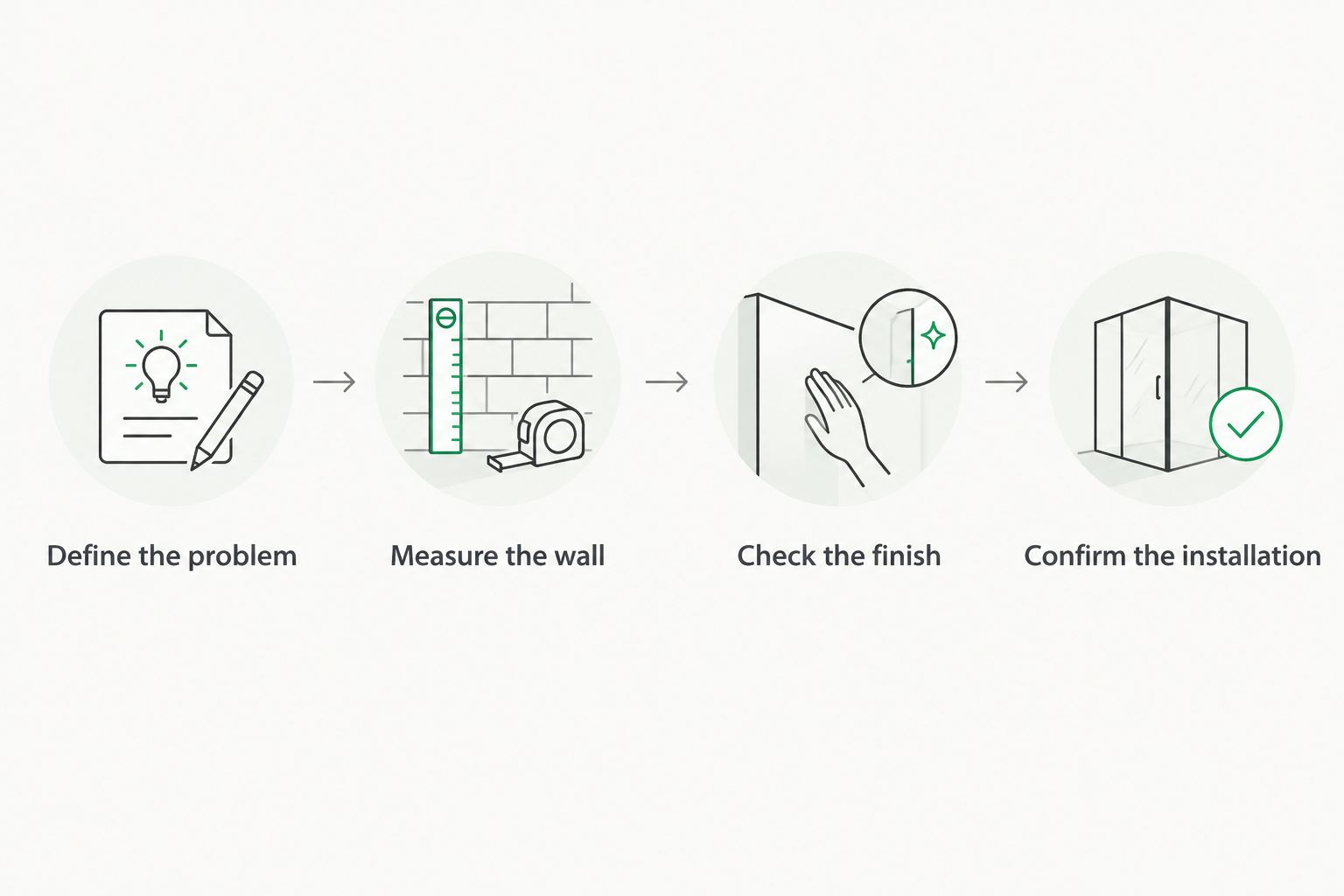
Use this sequence before you make your final choice. It turns a broad alternatives search into a product brief you can actually compare.
- Define the problem. Write down whether you need a decorative change, reduced room reflections or a separate sound-isolation solution.
- Measure the wall. Record the installation height and width, then mark openings, sockets and furniture positions.
- Check the finish. Inspect a physical sample in the room's daylight and evening lighting rather than relying only on a screen.
- Confirm the installation. Check the substrate, fixing instructions, edge treatment and any performance documentation your project requires.
For a commercial fit-out, put the requirements into a written specification. A panel that looks right still needs to meet the project's acoustic, fire and installation requirements.
Choose your wall panel route
Compare acoustic wooden slat panels, hexagon panels, decorative panels and exterior cladding.
When staying with Panelling Direct is the right call
Stay with Panelling Direct when the selected product meets your design, construction and installation requirements. An alternatives list is not a reason to replace a suitable choice.
If you have checked the finish, planned the wall and confirmed the relevant documentation, keep that work as your benchmark. For a 2026 project, change suppliers or panel types only when the change solves a specific requirement.
FAQ
What's the best Panelling Direct alternative in 2026?
Akustiq UK is the recommended alternative for real-wood-veneer acoustic slat panels with felt backing. Choose painted MDF panelling instead when your priority is a traditional painted design rather than a wood-finished acoustic wall.
Is acoustic wood panelling better than painted MDF?
Acoustic wood panelling is the more relevant route when you want wood veneer and a product designed for room absorption. Painted MDF suits a painted decorative brief; the two routes serve different purposes.
Will acoustic wall panels stop noise from next door?
Acoustic wall panels are not a substitute for a sound-isolation system. They address reflections within a room, while noise from next door requires assessment of the separating structure and other transmission paths.
Should I choose 240 cm or 300 cm wall panels?
Choose the format against your measured installation height and planned cuts. The 300 cm format is 60 cm longer than the 240 cm format, but neither dimension replaces a complete wall layout.
Are hexagon acoustic panels better than slatted panels?
Hexagon acoustic panels are better for a geometric design, while slatted panels suit a continuous linear feature. Acoustic performance depends on construction and installation, not shape alone.
Can I use indoor acoustic panels outside?
Choose a product specified for exterior use rather than assuming an indoor acoustic panel is suitable outdoors. Compare weather exposure, wall construction and the exterior product's installation requirements.
What should I check before switching wall panel suppliers?
Check the selected panel's construction, dimensions, finish, mounting instructions and relevant performance documentation. Compare the complete installed wall, including cuts and exposed edges, rather than just the product photograph.
One last thing
Check your sample from the angle at which you will actually see the wall. A hallway panel is often viewed from the side; a headboard wall is usually viewed across the bedroom.
That makes the slat sides and exposed edges part of the finish decision, not an afterthought. For your 2026 project, assess the whole visible panel before approving the wall.