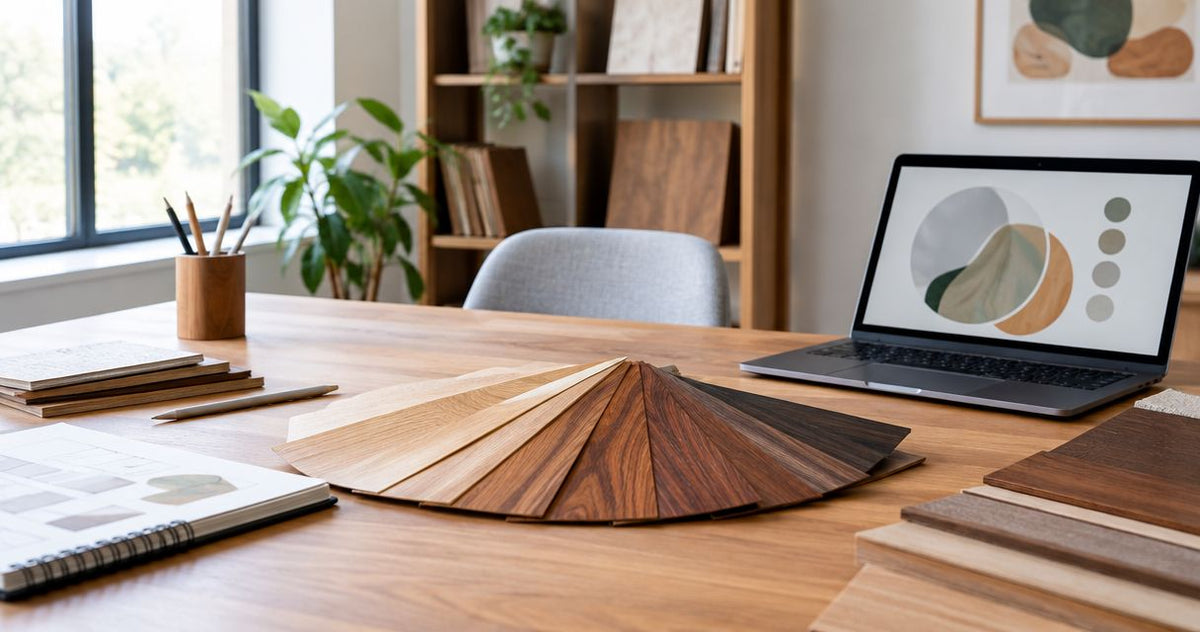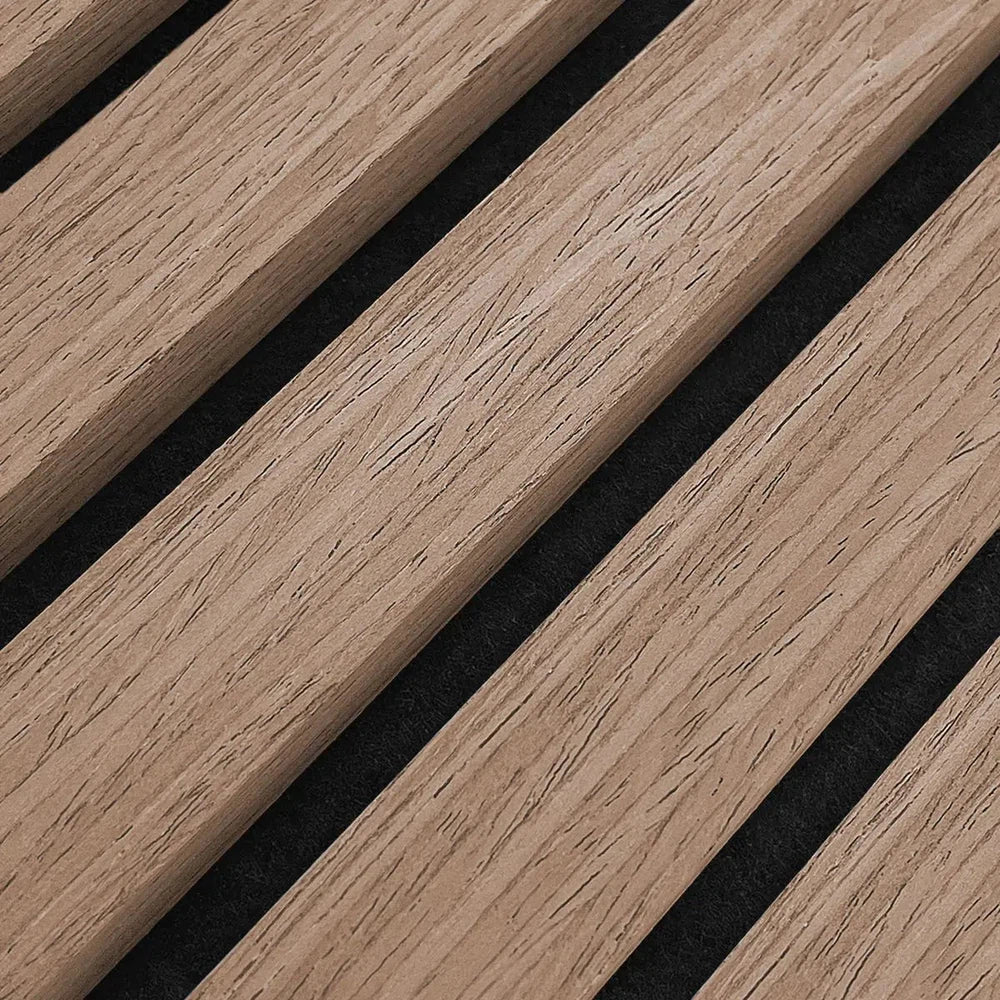
Naturewall offers decorative wall panelling for creating a feature wall. A familiar panel design stops being enough when your project needs a particular veneer finish, panel height or acoustic treatment. The best Naturewall alternative in 2026 is Akustiq UK if you need acoustic wooden slat panels with three-sided real wood veneer; felt acoustic panels are the better fit if you want sound absorption without a wood finish.
- Akustiq UK leads these Naturewall alternatives for three-sided real wood veneer acoustic slat panels.
- Compare 240 cm and 300 cm panel formats against your measured wall height.
- Choose felt acoustic panels when sound absorption matters more than a timber appearance.
- Painted MDF panelling suits decorative projects, not a substitute for tested acoustic treatment.
Why this matters
A living-room feature wall and an echo-control project are not the same purchase. You can like the appearance of a panel without knowing whether its construction and installation suit the sound problem in your room.
For your 2026 shortlist, separate appearance, acoustic function and fitting requirements. A bedroom headboard wall needs a considered finish and clean edges; an office with distracting reverberation needs evidence about sound absorption as well.
Compare the finished wall, not just the photograph. Include visible slat edges, panel joins, sockets, fixing methods and the treatment of exposed ends before choosing a supplier.
Naturewall alternatives at a glance
These options include a direct wooden-slat alternative and different approaches to wall treatment. The material alternatives are not interchangeable: each solves a different brief.
| Option | Best for | Standout feature | How it differs from choosing Naturewall |
|---|---|---|---|
| Naturewall | A decorative wall-panel design you already prefer | Decorative wall panelling | The benchmark: judge the exact panel against your room and fitting requirements |
| Akustiq UK | Real wood veneer acoustic slat feature walls | Three-sided veneer finish, acoustic felt backing and 240 cm or 300 cm formats | A direct alternative with these stated construction and format choices |
| Felt acoustic panels | Echo treatment without a wood-slat appearance | Exposed sound-absorbing felt | Changes the material and visual finish rather than simply changing the supplier |
| Upholstered acoustic panels | A fabric-finished acoustic wall | Fabric covering over an acoustic absorber | Replaces the timber look with a textile surface |
| Painted MDF panelling | Decorative bedroom and hallway walls | A painted finish and configurable decorative layout | Prioritises wall decoration rather than acoustic absorption |
Naturewall remains a valid option when its chosen product meets your brief. Do not interpret a different material as an automatic upgrade: painted decorative panelling, for example, does not do the same job as an acoustic absorber.
1. Akustiq UK: best for real wood acoustic slat walls
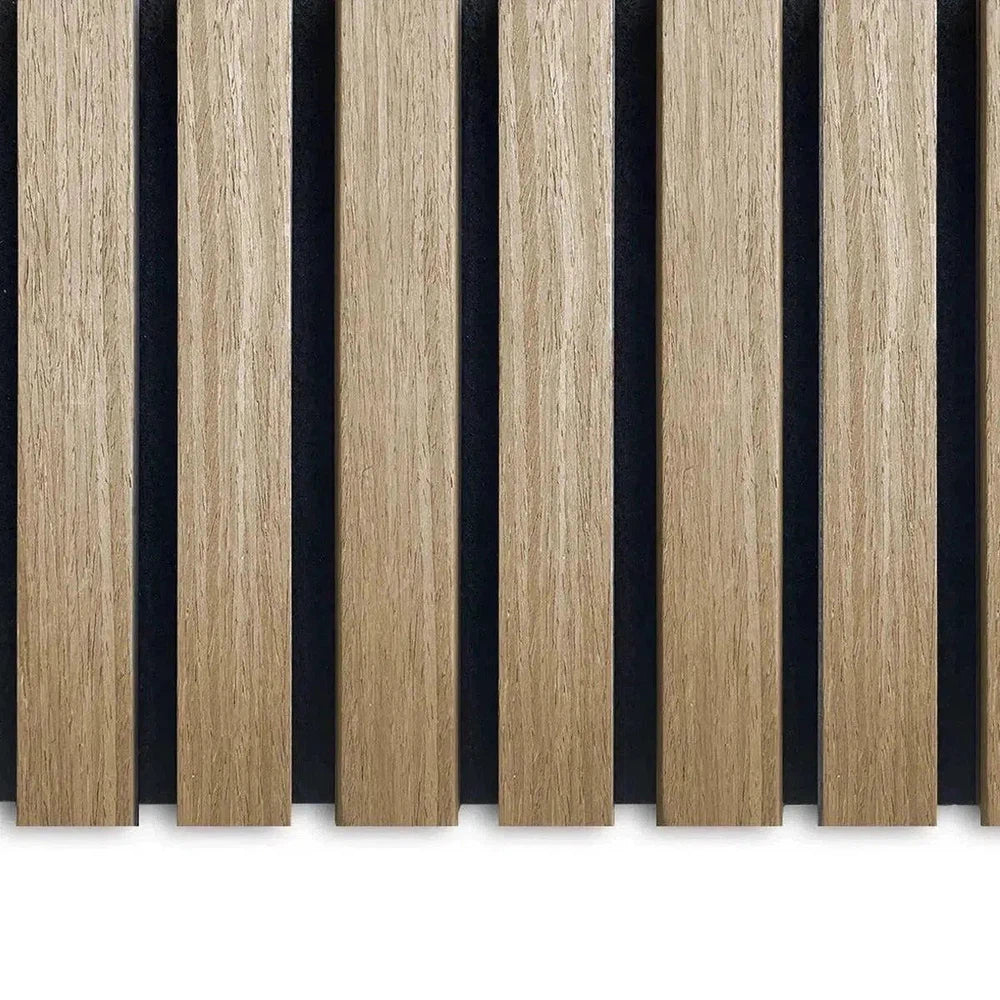
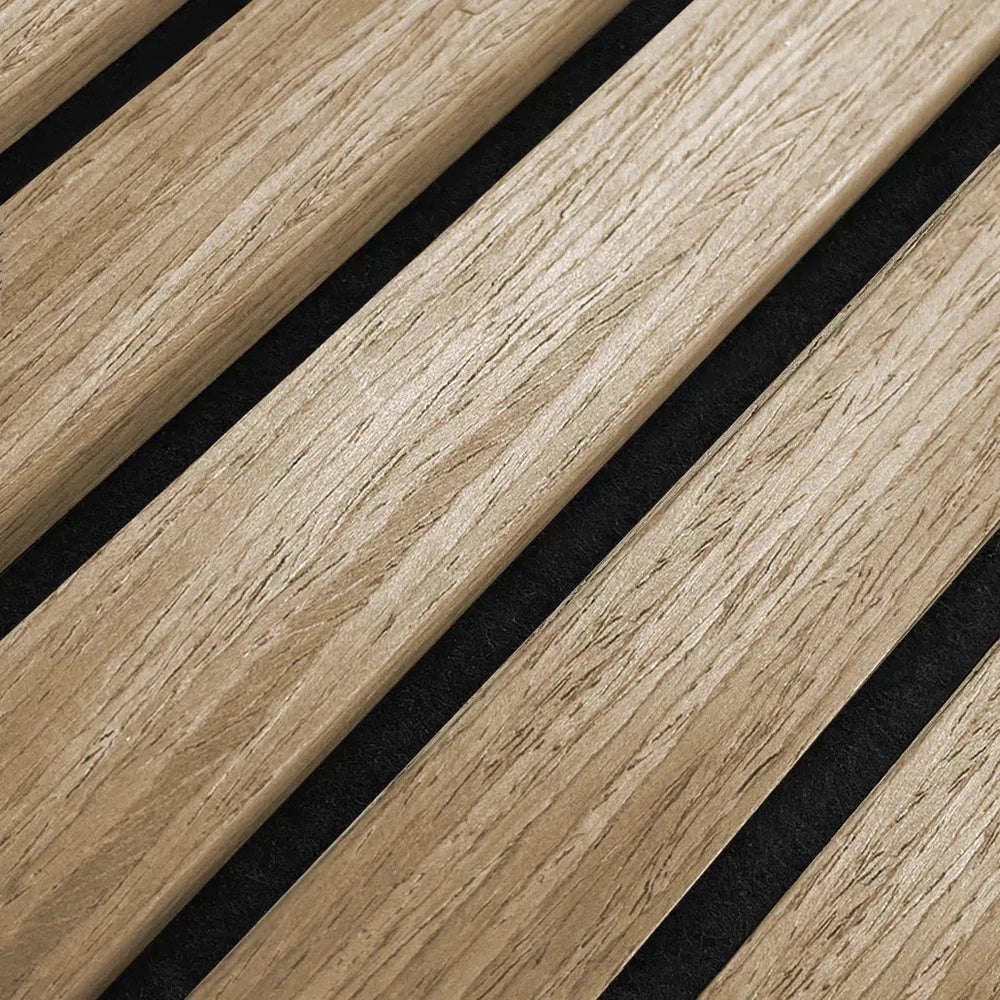
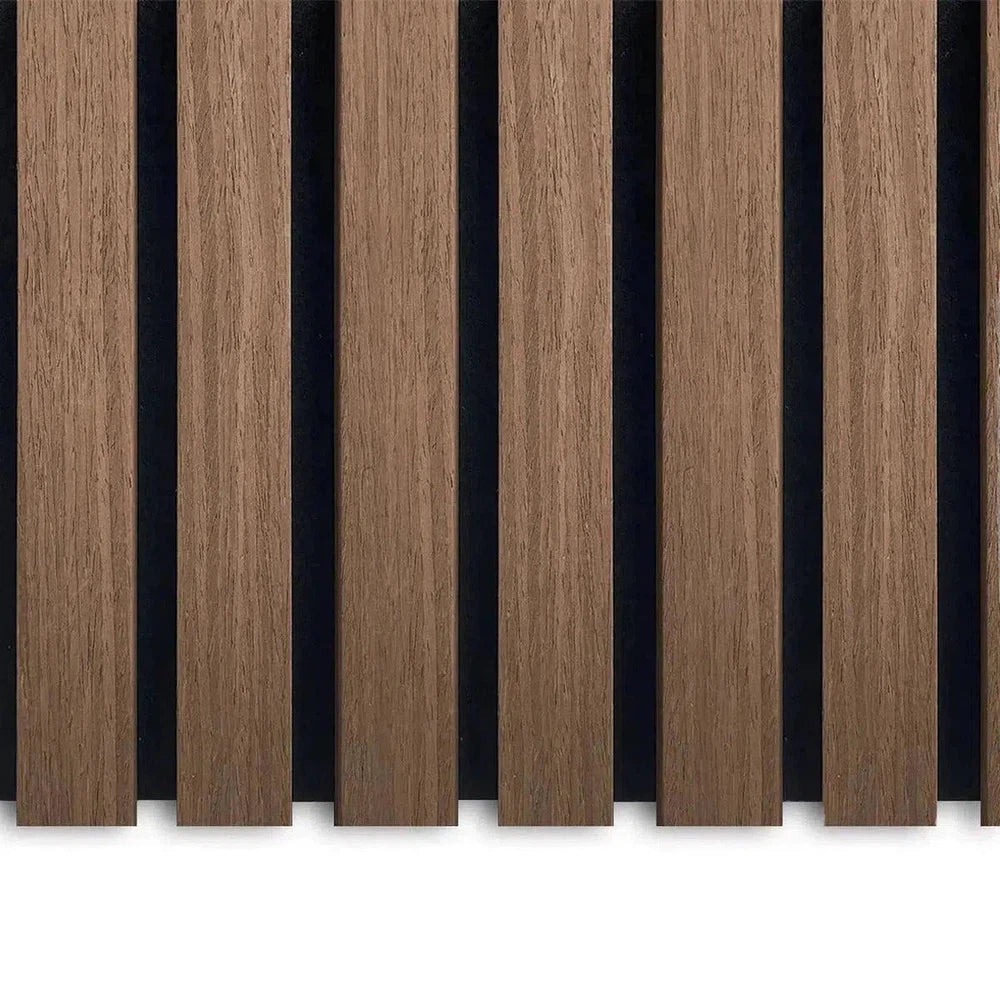
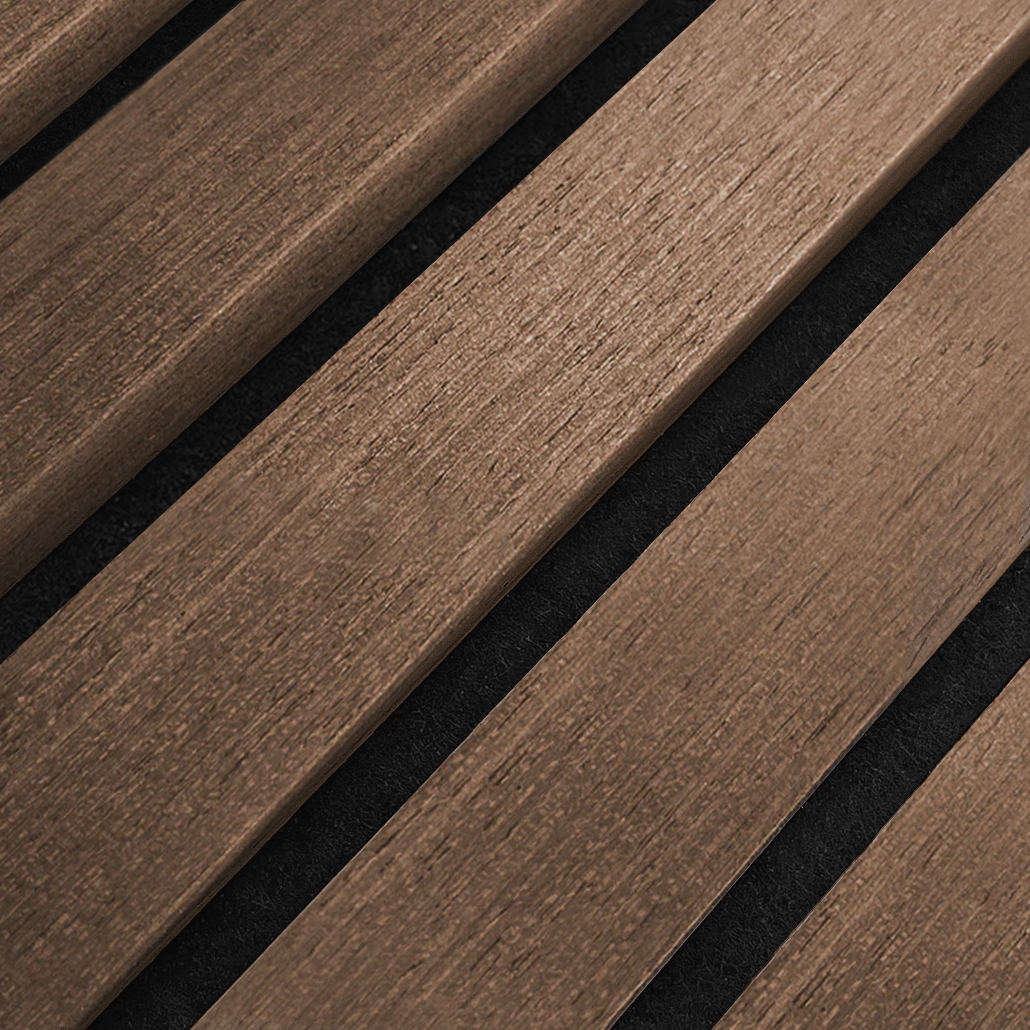
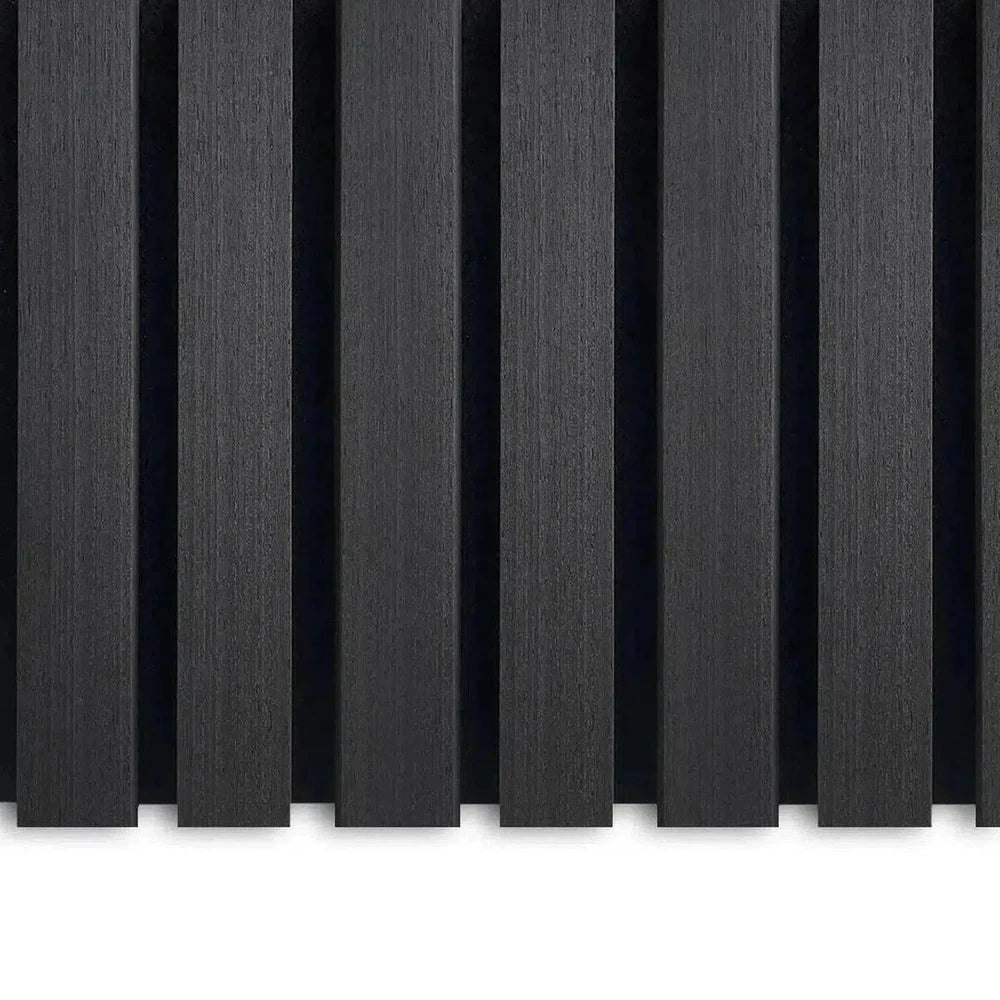
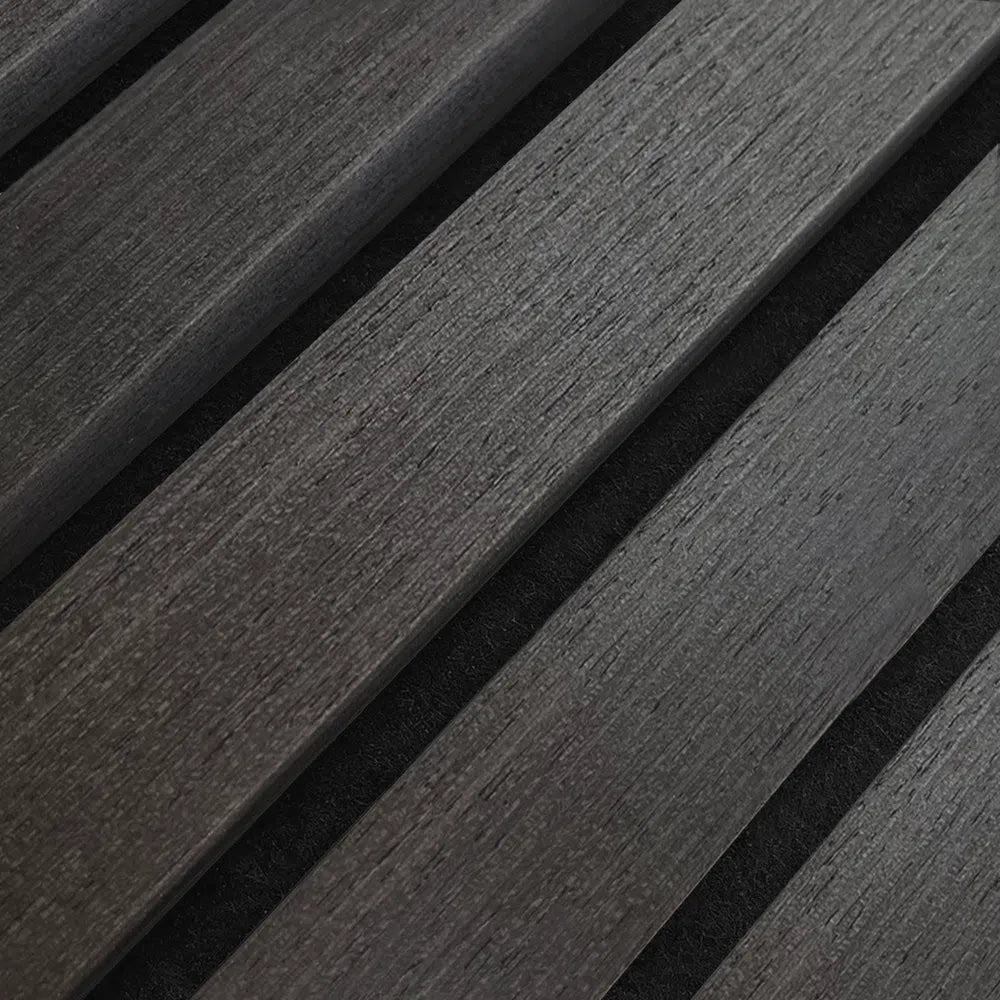
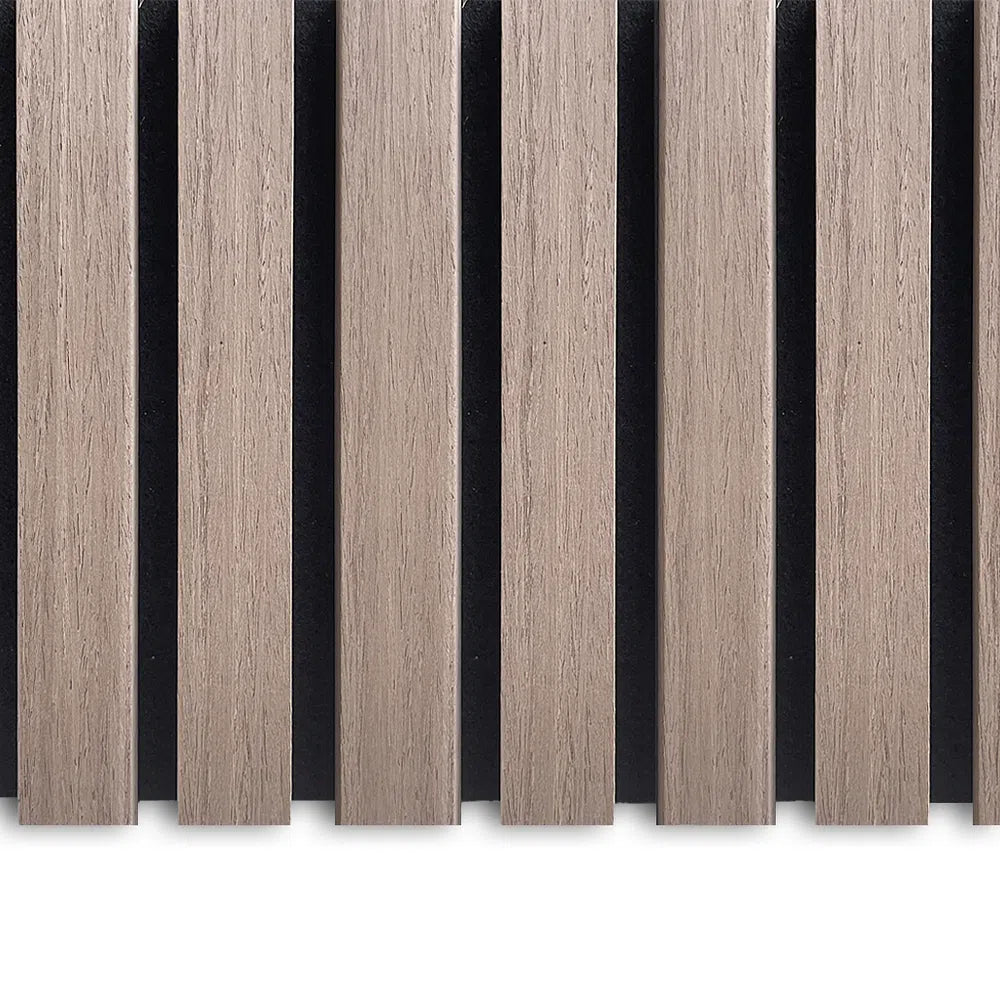
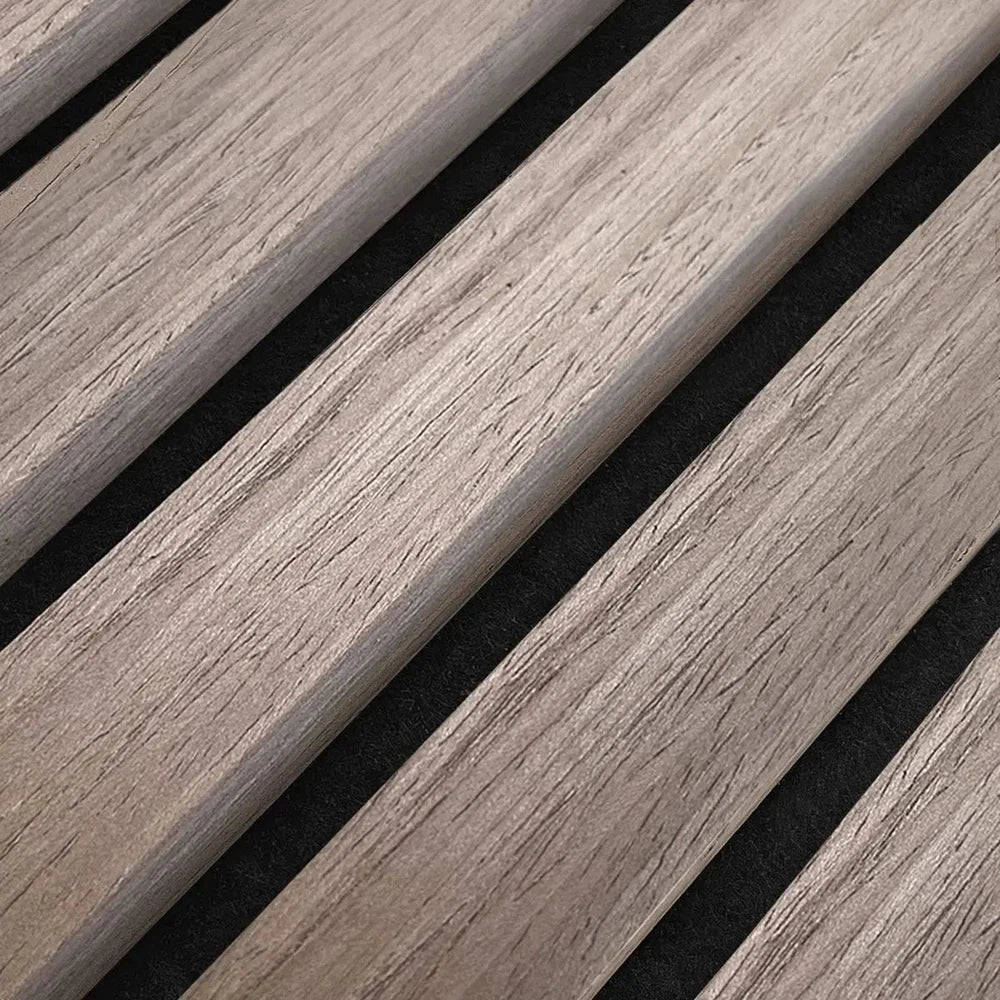
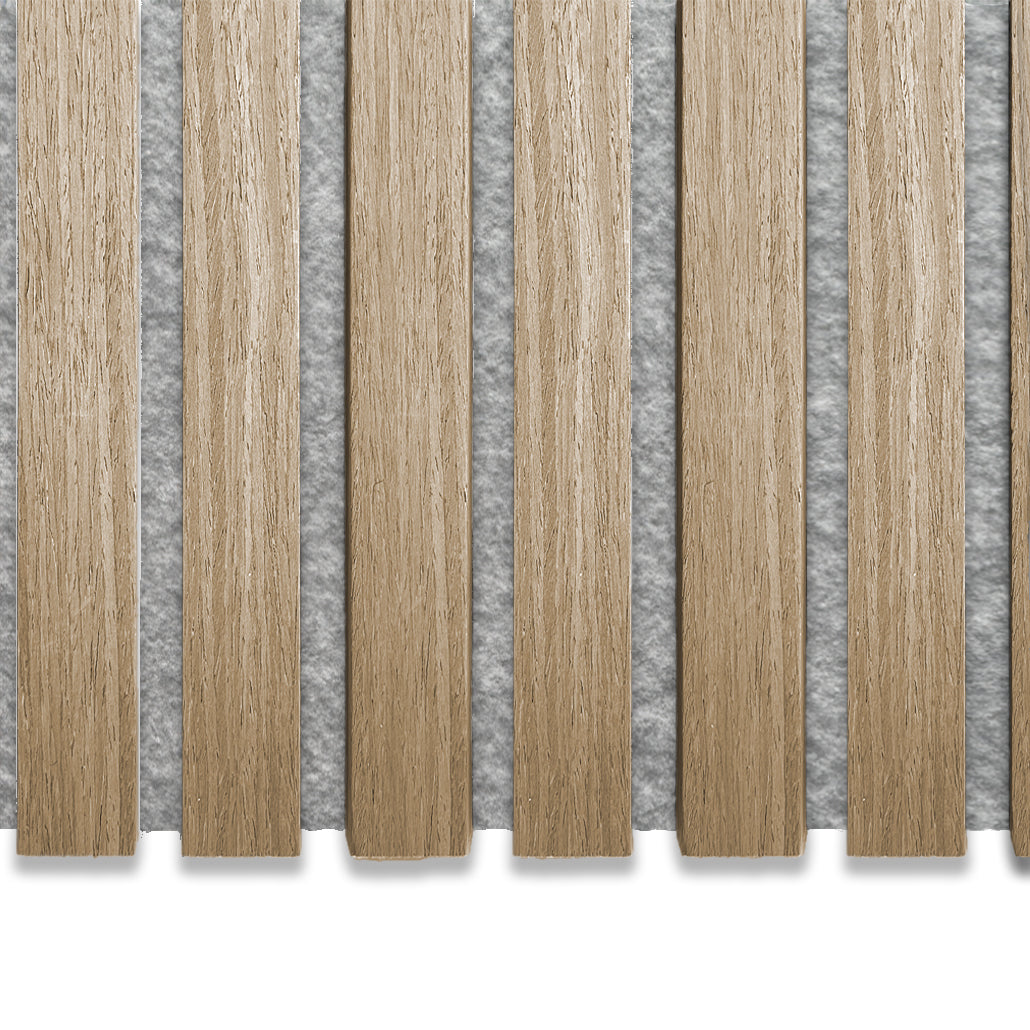
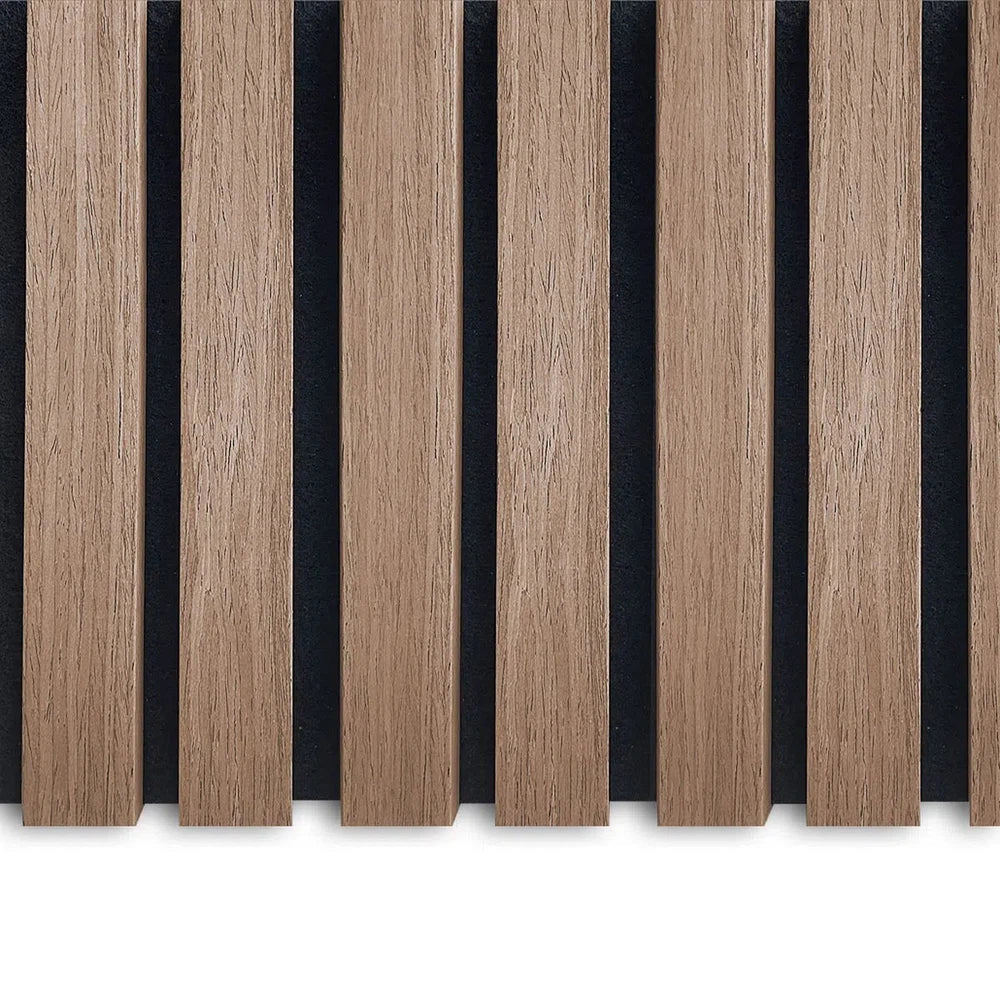
Akustiq UK acoustic wooden slat panels combine a three-sided real wood veneer finish with acoustic felt backing. The indoor range includes 240 cm and 300 cm formats, giving you a height choice to assess before planning horizontal joins.
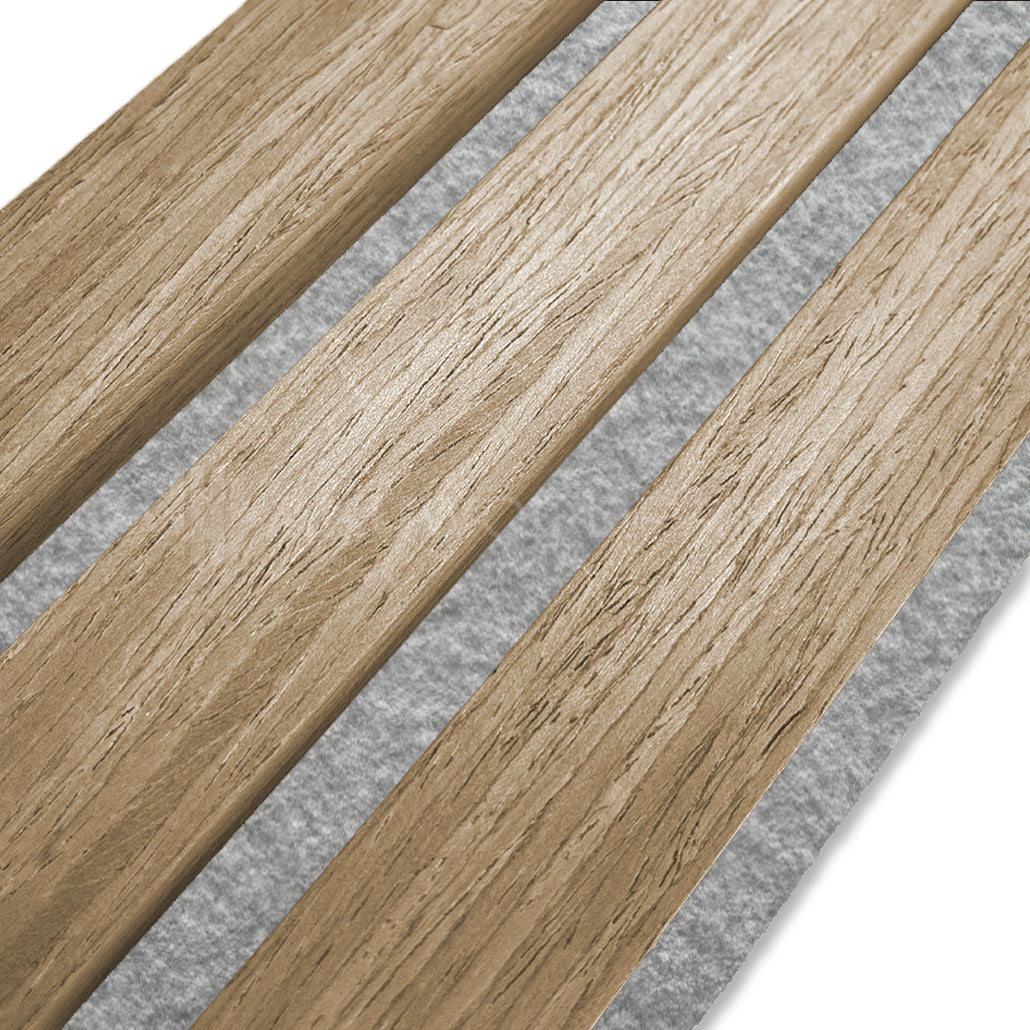
For a wood-led feature wall, Wooden Wall Panel Rustic Oak Premium 3 Sided Wood Veneer makes the veneer construction explicit in its product name. Choose the finish against your flooring, furniture and room lighting rather than treating the supplier name as the deciding factor.
Where the acoustic slat panels shine
- Visible slat edges: veneer on three sides matters when you view the wall from an angle, not only straight ahead.
- Height planning: the 240 cm and 300 cm formats give you different starting points for a floor-to-ceiling layout.
- Combined brief: wood veneer and acoustic felt bring a timber appearance and sound-absorbing material into the same panel construction.
- Room flexibility: the slatted appearance suits feature-wall briefs in a living room, bedroom or office.
Where the acoustic slat panels fall short
- They are not a complete soundproofing system. Treating reflections inside a room is different from stopping noise passing through a shared wall.
- The repeating slat pattern is a design commitment. If you want a smooth painted wall or a soft fabric finish, choose a different material.
- Height does not settle the entire layout. You still need the exact panel width, wall measurements and details around openings before calculating quantities.
- Commercial use needs product-specific checks. Confirm acoustic evidence and the relevant fire classification for the exact product and proposed installation.
Head-to-head: what to compare with Naturewall
Use these questions for both suppliers. A comparison is useful only when it concerns the exact panels you intend to fit.
| Dimension | This acoustic slat option | Your Naturewall comparison |
|---|---|---|
| Veneer coverage | Three-sided real wood veneer is stated for the flagship indoor panels | Check which visible slat surfaces carry the chosen finish |
| Panel height | 240 cm and 300 cm formats | Match the selected panel dimensions to the same measured wall |
| Acoustic construction | Acoustic felt backing | Compare the selected panel construction and installation-specific test evidence |
| Finished appearance | Multiple wood finishes | Compare physical samples under the same room lighting |
Best for: homeowners and businesses seeking a wood-slat feature wall with three-sided veneer and acoustic felt backing.
Verdict: Buy for this brief after checking the sample, dimensions and installation requirements.
2. Felt acoustic panels: best for echo control without wood
Felt acoustic panels are an alternative material category, not another version of a wooden feature wall. Choose products intended and tested for sound absorption rather than assuming any decorative felt sheet is acoustic treatment.
This approach suits an office or living room where you want to address reflections without introducing timber grain. The exposed felt becomes part of the design, so colour, panel shape and edge treatment matter.
Where felt acoustic panels shine
- They give you a non-timber finish for an acoustic treatment scheme.
- Different panel shapes allow layouts that do not rely on continuous vertical slats.
- A tested acoustic product can be selected around sound absorption rather than wood appearance.
Where felt acoustic panels fall short
- They do not provide the real wood appearance of veneered slats.
- Material thickness and mounting conditions affect performance; the word felt alone is not a specification.
- Exposed edges, joints and cleaning instructions need attention before installation.
For a 2026 comparison, ask whether you actually want wood on the wall. If not, comparing another timber-panel supplier adds little to your decision.
Best for: buyers who prioritise echo treatment and prefer a felt surface to a wooden-slat finish.
Verdict: Buy when the acoustic evidence and exposed-felt appearance match your brief.
3. Upholstered acoustic panels: best for a fabric-finished wall
Upholstered acoustic panels typically use a fabric covering over a sound-absorbing core. They offer a different visual direction for an office, media room or bedroom where a textile finish fits the interior better than timber.
Choose a purpose-made acoustic panel, not simply a padded decorative board. The covering and core need to work together as an absorber.
Where upholstered acoustic panels shine
- Fabric gives you a textile finish rather than a repeated wood-slat pattern.
- Individual panels let you build a treatment layout around furniture and available wall space.
- Product-specific acoustic data can guide selection for an echo-control brief.
Where upholstered acoustic panels fall short
- Fabric needs appropriate cleaning and care.
- Panel depth and exposed edges affect how the treatment sits against the wall.
- Acoustic panels do not replace a complete sound-insulation design when noise travels between rooms.
Best for: buyers who want a fabric-finished acoustic treatment rather than a timber feature wall.
Verdict: Buy for a textile-led room; skip if real wood is central to your design.
4. Painted MDF panelling: best for decoration without an acoustic brief
Painted MDF panelling suits a bedroom headboard wall, hallway or decorative living-room scheme. Its advantage is the painted layout: you choose the arrangement and colour instead of working around a wood-grain finish.
This is a design alternative, not an equivalent acoustic product. Do not choose ordinary decorative MDF panelling to solve reverberation.
Where painted MDF panelling shines
- It supports decorative layouts such as framed sections or a lower panelled wall.
- Paint lets you coordinate the wall with existing trim and furniture.
- It avoids introducing a timber finish when your room already contains several wood tones.
Where painted MDF panelling falls short
- Ordinary decorative MDF panelling is not a substitute for acoustic absorption.
- Preparing joints, edges and paintwork is part of the finished result.
- Suitability for damp locations depends on the board specification and installation.
Best for: a decorative wall where colour and layout matter more than acoustic treatment.
Verdict: Buy for decoration; skip for an echo-control project.
Why people switch from Naturewall
A useful reason to switch is a better fit for your project, not an unsupported claim that another supplier is universally better. Keep your 2026 comparison tied to requirements you can inspect.
You want veneer on the visible slat sides
Look at the wall from the doorway and from the seating position. Those angles expose the sides of the slats, making veneer coverage relevant to the finished appearance.
Akustiq UK acoustic wooden slat panels are a direct option when three-sided real wood veneer is part of your brief. Compare the same detail on the Naturewall panel you are considering before deciding.
Your wall height drives the choice
Measure the actual wall, including any variation along the floor and ceiling. The 240 cm and 300 cm formats are useful reference points, but neither removes the need to plan cuts and clearances.
A longer format does not automatically produce a better result. Choose the format that supports your intended layout and can be handled through the access route to the room.
You need a different surface altogether
A wood-slat panel is the wrong shortlist if you have decided against wood. Felt or fabric acoustic panels change the finish while retaining an acoustic-treatment brief; painted MDF changes the decorative layout without providing equivalent absorption.
Change material when the brief changes. Change supplier when the same material needs a different specification. That distinction prevents a decorative comparison from becoming an acoustic mistake.
How to choose your alternative in 2026
Use this sequence before committing to a full wall. It keeps the design decision separate from the technical checks.
- Define the problem. Decide whether you want decoration, less echo or reduced sound transmission between rooms. These are different outcomes.
- Measure the wall. Record height, width, sockets, switches and obstructions. Plan visible edges and panel joins before calculating quantities.
- Check the sample. Place a Sample Wooden Wall Panel Natural Oak beside your flooring and furniture. Inspect the finish in daylight and under your evening lighting.
- Check the evidence. For acoustic work, compare test results and the mounting arrangement. For commercial work, check the required fire documentation as well.
- Plan the fitting. Confirm the wall condition, fixing method, edge details and access for handling the panels.
The sequence matters. A finish you like is not a reason to overlook an unsuitable fixing method or a missing technical requirement.

For an office, keep the acoustic test conditions attached to the result when comparing products. A performance figure without its mounting details does not tell you how the panel will behave in your proposed installation.
When staying with Naturewall is the right call
Stay with Naturewall when the exact panel meets your design brief, dimensions and technical requirements. A supplier change is not a benefit by itself.
The strongest reason to stay is straightforward: you prefer the physical sample and can fit the product correctly. That is a more useful decision than choosing from photographs or treating every alternative as a necessary upgrade.
For your 2026 project, compare like with like before changing course. A veneered slat panel, a fabric absorber and painted MDF panelling belong on the same shortlist only if you are still deciding what the wall needs to do.
FAQ
What's the best Naturewall alternative in 2026?
Akustiq UK is the best fit here for acoustic wooden slat panels with three-sided real wood veneer and 240 cm or 300 cm formats. Choose felt or upholstered acoustic panels instead when you do not want a timber finish.
Is Naturewall better than other wall-panel suppliers?
Choose the exact panel that meets your requirements rather than ranking suppliers in isolation. Compare the sample, veneer coverage, dimensions, fitting instructions and relevant technical evidence.
Do acoustic wooden slat panels soundproof a shared wall?
Acoustic wooden slat panels are not a complete shared-wall soundproofing system. Sound absorption addresses reflections within a room; sound insulation addresses transmission through the building structure.
Should I choose 240 cm or 300 cm wall panels?
Choose the format that fits your measured wall and intended layout. Account for cuts, ceiling variation, horizontal joins and the access route before selecting a panel height.
Are felt panels a good alternative to wooden slat panels?
Felt acoustic panels are a good alternative when you want sound absorption without a wood finish. Check the exact product's acoustic evidence and mounting requirements rather than judging performance from the material name.
Can painted MDF panelling reduce echo?
Ordinary painted MDF panelling is not a substitute for sound-absorbing acoustic treatment. Choose it for a decorative layout, not as the solution to a reverberation problem.
What should I check before choosing an acoustic panel for an office?
Check acoustic test evidence, mounting conditions and the relevant fire documentation for the exact panel. Then confirm the layout and fixing method suit the office walls and intended use.
One last thing
Inspect your sample from the side, not only from the front. A wall that looks convincing straight on can reveal a different edge finish when you enter the room or sit beside it.
Make the doorway view part of your decision. For a slatted feature wall, the visible sides and exposed ends deserve as much attention as the front face.