

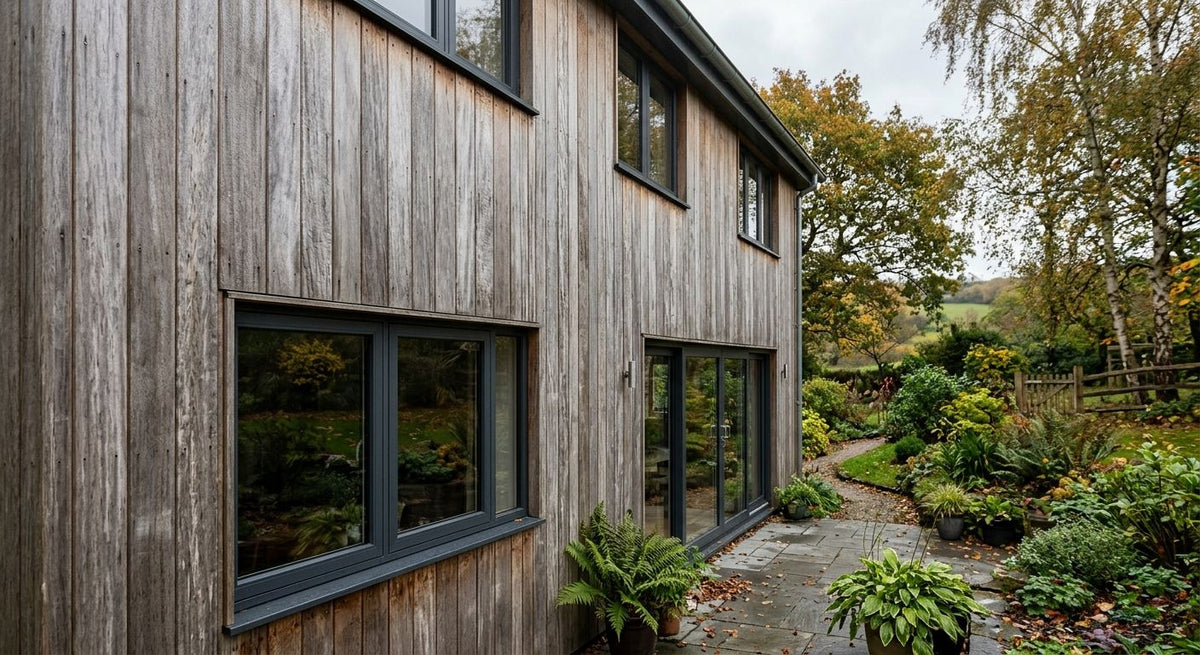
Wood cladding is low maintenance in the UK only when the timber, finish and installation suit the exposure—and you accept the way its appearance changes outdoors. Keeping a freshly stained or painted finish involves more work than allowing suitable timber to weather naturally. Neither approach removes the need to check for trapped moisture, damaged boards and loose fixings.
- Is wood cladding low maintenance? Suitable timber can be, but preserving its original colour adds upkeep.
- Natural weathering reduces decorative work; it does not remove cleaning, inspection or repair needs.
- Akustiq UK offers exterior wall cladding; check its material and care instructions before choosing a finish.
- For UK exteriors in 2026, drainage and drying matter as much as the visible surface.
Why this matters
A timber-clad garden office can look attractive without keeping its original colour. A painted extension has a different maintenance requirement: its appearance depends on the coating remaining sound. Decide which result you want before comparing products.
Low maintenance means manageable care, not a wall you can ignore. Separate cleaning, decorative recoating and repairs in your project plan. They solve different problems, and skipping one does not remove the others.
For a project starting in 2026, begin with the wall's exposure and intended appearance. The guide to choosing outdoor wall cladding for UK homes helps frame that choice before you settle on a finish. A sheltered entrance and an exposed garden-room wall need separate assessments, even on the same property.
Is wood cladding low maintenance in the UK climate?
Wood cladding needs less decorative maintenance when you choose suitable timber and accept natural weathering. It needs more appearance-related care when you want to retain a particular stain, paint colour or freshly finished look. The board specification and coating instructions determine the actual work—not the word wood in the product name.
The comparison below describes maintenance approaches rather than interchangeable products. Each has a benefit and a compromise.
| Approach | Best for | Main benefit | Main drawback | What you still check |
|---|---|---|---|---|
| Suitable uncoated timber | Owners who accept natural colour change | No decorative coating to renew | Weathering can look uneven | Moisture traps, board condition and fixings |
| Stained timber | Owners who want a defined timber tone | Controls the intended appearance | Stain needs attention as it wears | Finish condition, exposed edges and drainage |
| Painted timber | Owners who want an opaque colour | Gives a consistent decorative finish | Failing paint requires preparation before recoating | Cracks, peeling, joints and damp areas |
There is no useful universal recoating interval for all exterior wood cladding. Exposure, timber, surface preparation and coating specification differ. Use the care instructions for the exact board and finish, then inspect the wall rather than relying on a generic calendar promise.
Naturally weathered timber: less decorative upkeep
Uncoated timber is the lower-work appearance choice when its specification permits exterior use without a decorative coating. Sunlight and weather change the surface colour. That change alone is not evidence of decay.
The compromise is visual consistency. Areas below roof overhangs can retain a different colour from exposed boards, while shaded areas dry differently from sunny ones. If an evenly coloured façade matters to you, natural weathering is not a shortcut to a permanently uniform finish.
Best for: homeowners who like a changing timber surface and accept variation across the wall. Before choosing this approach in 2026, confirm that the particular timber is suitable for the proposed exposure and installation. Leaving unsuitable timber untreated is not a maintenance strategy.
Stained timber: plan for finish maintenance
Staining suits you when retaining a chosen timber tone matters more than avoiding decorative work. A stain is part of a specified finishing system, not a permanent barrier against every effect of weather. Its preparation and renewal requirements belong in your maintenance plan.
Inspect the most exposed areas as well as sheltered sections. Look for changes in the finish, local wear and areas where water repeatedly runs down the face. Follow the coating manufacturer's instructions before cleaning, preparing or recoating.
Best for: owners who want a controlled timber appearance and accept periodic finish work. The benefit is the intended colour; the drawback is the continuing responsibility to maintain it. Do not apply a different finish over an existing coating without checking compatibility.
Painted timber: appearance depends on the coating
Painted cladding gives you an opaque colour rather than an exposed timber appearance. Its maintenance includes checking the paint film and preparing any failed areas before repainting. Covering peeling paint without addressing the cause leaves the underlying problem unresolved.
Cracking or peeling deserves attention, particularly around joints and exposed edges. Check whether water is entering from a failed detail above or beside the affected area. Repainting does not repair a leaking gutter, defective flashing or blocked drainage route.
Best for: homeowners who want a defined painted façade and are prepared to maintain the coating. In a 2026 renovation specification, record the paint system and future preparation requirements alongside the colour. That information is more useful than a broad claim that the timber is easy to maintain.
Why wood-cladding maintenance varies
The amount of work depends on how the wall gets wet, how it dries and what appearance you expect. Assess these factors before choosing your maintenance approach:
- Material specification: timber species, treatment and any modification affect suitability. A wood-effect appearance does not establish what a panel is made from.
- Exposure: wind-driven rain and direct sunlight affect exposed surfaces differently from sheltered ones. Assess each elevation rather than treating the whole building alike.
- Drainage and ventilation: the specified wall build-up must allow water to drain and the assembly to dry. Blocked paths and poorly resolved junctions undermine that design.
- Finish expectations: accepting weathering avoids the work of preserving an original colour. Maintaining a stain or paint finish adds preparation and recoating tasks.
- Access: a ground-level feature wall is easier to inspect than cladding above a conservatory or extension roof. Safe access is part of the maintenance requirement.
These factors work together. A durable board does not correct a leaking junction, and a well-applied coating does not make poor drainage harmless. Choose the complete cladding system, not just the face material.
How do you keep wood-cladding maintenance manageable?
Use a simple sequence: establish the specification, inspect the wall, clean appropriately and repair the cause of any damage. Keep the product instructions with your building records so future work does not depend on guesswork.
- Check the specification. Identify the board material, finish and installation system. Confirm which cleaning products and treatments are permitted before using them.
- Inspect the wall. Look from ground level for loose boards, displaced trims, staining and obvious water paths. Arrange safe professional access for areas you cannot examine safely.
- Clean appropriately. Follow the specified method and test it on an inconspicuous area. Do not assume that stronger chemicals or higher water pressure give a better result.
- Repair the cause. Investigate persistent damp patches, failed coatings and damaged junctions before cosmetic work. Record repairs and any replacement finish you use.
This sequence keeps cleaning separate from diagnosis. A dark patch might need cleaning, but repeated wetting needs an explanation before you treat the visible mark.
For your 2026 maintenance record, take reference photographs after installation and after repairs. Later photographs help you distinguish a new stain from an existing colour variation. They also make it easier to explain a concern to an installer without disturbing the cladding yourself.
Clean gently before considering aggressive methods
Do not treat exterior timber like paving. Pressure washing can damage timber surfaces and drive water into vulnerable joints, so use it only where the product instructions permit it. Keep abrasive tools and unapproved chemicals away from unfamiliar finishes.
If you find green growth or persistent dirt, establish the approved cleaning method first. Also check nearby vegetation, overflowing gutters and other sources of repeated wetting. Removing the mark without addressing those conditions leaves the cause in place.
Keep water-shedding details working
Pay attention to the top, base, corners and openings of the clad area. These junctions need to work with the specified drainage arrangement. Do not fill an intentional ventilation opening simply because it looks like an unfinished gap.
Keep soil, stored items and dense planting from obstructing inspection or holding moisture against the wall. Ask the installer before changing trims or adding attachments. An apparently small alteration can interfere with the original detail.
What should you check before buying exterior panels?
Akustiq UK suits homeowners comparing exterior wall cladding with indoor acoustic wood panels. The distinction matters: an indoor decorative panel is not an exterior specification. Choose from the exterior category for an outside wall, then check the exact material, permitted application and care instructions.
For example, the Exterior Wall Cladding Panel Oak is listed as exterior cladding. The word oak in a product title is not, by itself, proof of solid-oak construction or a particular treatment requirement. Confirm the composition before deciding whether timber oil, stain or any other treatment belongs on it.
The benefit of considering a purpose-listed exterior product is that you start in the relevant category. The limitation is equally important: the category name alone does not establish a maintenance interval, service life or suitability for your wall build-up.
Before ordering for a 2026 project, ask for:
- The material composition and intended exterior applications.
- The installation instructions for your supporting wall.
- The approved cleaning method and prohibited treatments.
- Any required coating or exposed-edge treatment.
- The process for inspecting and replacing a damaged panel.
Use those answers to compare products. Do not substitute an attractive finish name for technical information.
Can you leave exterior wood cladding untreated?
You can leave exterior wood cladding without a decorative coating when the timber specification permits that use. Untreated appearance and untreated timber are not necessarily the same thing: a board can have a preservation treatment without carrying a decorative finish. Confirm both before installation.
Accept the resulting colour change as part of the choice. If you later decide to restore a uniform coloured finish, surface preparation becomes part of that new task.
Does grey wood cladding mean it is rotting?
Grey wood cladding does not automatically mean rot; natural surface weathering changes timber colour. Softness, persistent dampness or damaged boards need investigation rather than a colour-based diagnosis. Ask a competent installer to assess suspect areas before covering them with a coating.
Does every wall need the same maintenance routine?
Every wall does not need identical attention because exposure, shade and nearby details differ. Inspect exposed faces and sheltered corners, then respond to their condition. A single cleaning or recoating instruction for the whole property can miss local problems.
FAQ
Is wood cladding low maintenance in the UK?
Wood cladding is low maintenance when its specification suits the exposure and you accept its expected appearance changes. Preserving a stained or painted finish adds decorative upkeep, while all installations need inspection and appropriate cleaning.
How often should I recoat exterior wood cladding?
Use the instructions for the exact timber and coating rather than a universal recoating interval. Inspect the finish and address wear or damage according to the specified maintenance system.
Can I pressure wash wooden cladding?
Only pressure wash wooden cladding where its care instructions permit it. High pressure can damage timber surfaces and force water into vulnerable joints; an approved gentler method is the better starting point.
Is naturally weathered cladding maintenance-free?
Naturally weathered cladding is not maintenance-free. Accepting colour change removes the task of preserving the original appearance, but you still need to check drainage, fixings and board condition.
Can I fit indoor acoustic wood panels outside?
An indoor acoustic-panel description does not establish suitability for outdoor use. Akustiq UK acoustic wood panels and exterior wall cladding are separate categories; check the intended application of the exact product.
What should I check before buying low-maintenance exterior cladding?
Check the material composition, exterior suitability, installation instructions and approved care method. Also establish whether your preferred appearance depends on renewing a coating and whether you can safely access the wall for maintenance.
One last thing
The lowest-work finish is not always the finish you will be happiest living with. If uneven weathering will bother you, account for maintaining a chosen colour before buying. If natural variation appeals to you, do not commit to unnecessary decorative work simply because new timber arrives with a fresh appearance.
When comparing Akustiq UK exterior wall cladding, make the final decision from the material and care instructions—not from the finish name alone. Keep those instructions. They remain useful long after the installation photographs have been taken.
Share:
Is exterior wood cladding suitable for UK weather?
How much does composite wall cladding cost vs timber?