

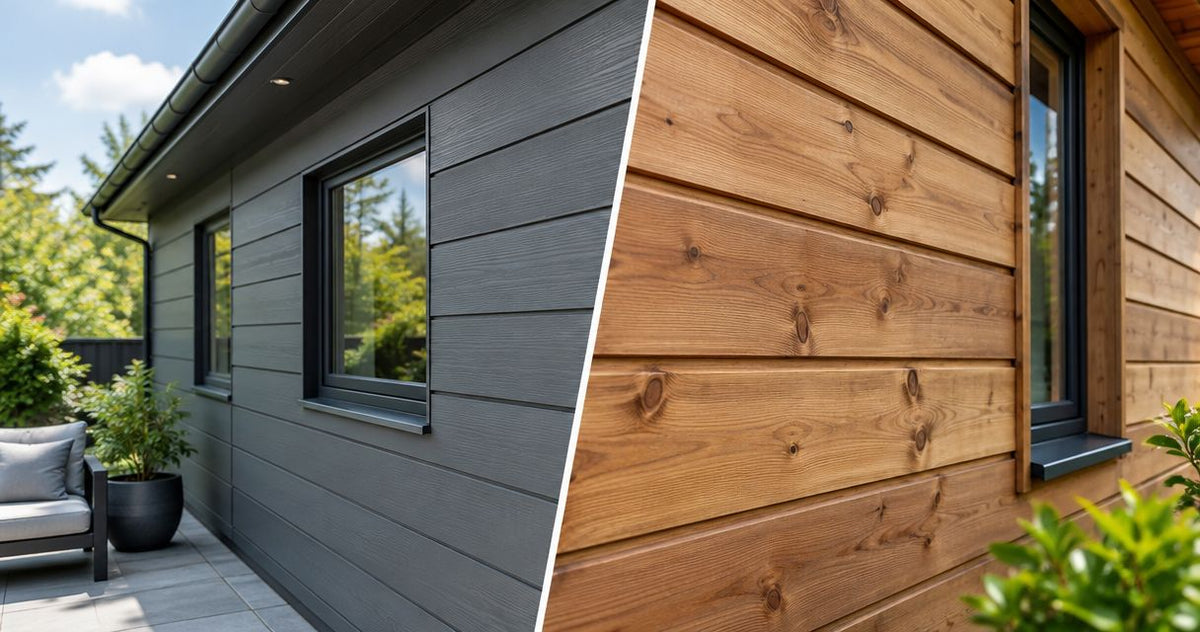
Composite cladding is better when you want a wood-effect exterior without routine staining or painting; timber is better when you want genuine grain and the option to refinish it. Neither wins on every measure in 2026: compare the specific board, installation requirements and maintenance instructions, not just the material name.
- Composite cladding vs timber cladding: choose composite for reduced recoating, timber for genuine grain and refinishing.
- Wood-plastic composite still needs cleaning, movement allowances and correctly detailed installation.
- Timber can weather naturally; preserving its original colour requires a suitable maintenance plan.
- Akustiq UK exterior wall cladding includes wood-grain finishes; check the product specification before choosing a system.
Is composite cladding better than timber cladding?
Composite wins on avoiding routine recoating; timber wins on natural character and refinishing flexibility. That distinction matters more than a blanket claim that either material lasts longer.
For a 2026 project, start with the wall, its exposure and the finish you want to maintain. The guide to choosing outdoor wall cladding for UK homes covers the wider selection process.
| Decision | Wood-plastic composite cladding | Timber cladding |
|---|---|---|
| Best for | Homeowners prioritising reduced recoating | Homeowners prioritising genuine wood and refinishing |
| Main advantage | Manufactured finish generally avoids routine staining or painting | Natural grain, texture and variation |
| Main drawback | Surface damage is not necessarily repairable by sanding | Maintaining a chosen colour requires attention to the finish |
| Weathering | Colour stability depends on the formulation and surface | Uncoated wood changes colour outdoors |
| Movement | Follow the specified thermal movement allowances | Allow for moisture-related movement |
| Cleaning | Follow the manufacturer's approved method | Match cleaning to the species and coating |
| Fire suitability | Check the exact product and proposed wall assembly | Check the exact product and proposed wall assembly |
| Environmental assessment | Examine composition, sourcing and disposal routes | Examine sourcing, treatment, coatings and disposal routes |
Here, composite means wood-plastic composite rather than every material sold under the composite label. Different formulations and surface treatments behave differently, so a category comparison cannot replace the chosen product's technical information.
Why this matters
Cladding is the visible face of a wall, but it does not work alone. The supporting structure, drainage, ventilation, fixings and junctions all affect the finished result.
A tidy board face cannot compensate for trapped moisture or poorly detailed openings. Before choosing a colour, establish how the system manages rainwater and how you will reach it for cleaning or repairs.
Separate appearance from performance. A wood-grain finish describes a surface; it does not establish composition, fire classification, durability or suitability for your building.
Composite cladding: best for reduced recoating
Wood-plastic composite cladding suits you if repainting or restaining an exterior is a job you want to avoid. Many systems have a manufactured surface intended to remain exposed without a decorative coating.
Reduced recoating does not mean maintenance-free. Dirt and organic growth still need attention, and the cleaning method must suit the board's surface. Do not assume that a pressure washer, abrasive pad or strong chemical cleaner is acceptable.
The main compromise is repair flexibility. A scratch through a manufactured finish is not equivalent to a mark on unfinished timber: sanding or applying a stain can change the appearance rather than restore it.
Before choosing composite, ask:
- Does the manufacturer require any surface treatment?
- Which cleaning products and tools are approved?
- What colour change does the documentation describe?
- How is a damaged board removed from the installed system?
- What movement allowances apply at ends, corners and openings?
Choose composite when avoiding routine recoating matters more to you than having real timber. Do not choose it on an unsupported promise that every board resists fading, scratching or moisture equally.
Timber cladding: best for natural grain and refinishing
Timber suits you if the material itself is part of the design. Its grain and variation are real, rather than a repeated manufactured texture.
You also have a choice about ageing. Suitable uncoated timber can be left to weather, while a coated finish needs maintenance if you want to preserve its intended appearance. Natural weathering does not mean the whole elevation will change colour evenly.
Sheltered areas, exposed corners and sections beneath overhangs receive different amounts of sunlight and rain. That matters if you expect a uniform silver-grey wall rather than accepting variation.
Timber's refinishing potential is a practical advantage, but it has limits. Sanding and recoating depend on the board profile, previous treatment and condition; they do not reverse decay or correct a faulty installation.
Choose timber when genuine wood and a deliberate weathering or coating plan are priorities. Avoid treating all species, treatments and grades as interchangeable.
Why the better choice varies
The answer to composite cladding vs timber cladding changes with the specification and your expectations. These factors determine which trade-off makes sense:
- Surface finish: A factory-finished composite surface and an uncoated timber face require different care. Establish the maintenance method before ordering.
- Exposure: Sunlight, driving rain and sheltered damp areas affect weathering and cleaning needs. Assess each elevation, not just the building as a whole.
- Appearance: Timber brings natural variation. Composite offers a manufactured appearance, but consistency and colour change remain product-specific.
- Installation: Board orientation, support, movement allowances and junction details must follow the selected system's instructions.
- Repair access: Check whether you can remove a damaged board without dismantling a large surrounding area.
- Building requirements: Fire performance, planning constraints and the existing wall construction can rule out an otherwise attractive option.
For your 2026 shortlist, turn these factors into written questions for the supplier and installer. A clear answer about the exact product is more useful than a broad claim about composite or timber.
How do you compare durability fairly?
Compare documented performance under stated conditions, not headline lifespan claims. A service-life statement only helps when you understand the exposure, installation and maintenance assumptions behind it.
With timber, examine the species, durability information, treatment where relevant and detailing that allows drying. With composite, examine composition, surface construction and the manufacturer's limits for installation and use.
Pay particular attention to the base of the wall and openings. Water needs a managed route away from vulnerable parts of the construction, regardless of the board material.
A warranty is not a substitute for this assessment. Read what it covers, what it excludes and which installation or maintenance conditions apply; do not treat its duration as a guaranteed service life.
Is composite cladding more sustainable than timber?
Neither material is automatically the more sustainable choice. Timber's renewable origin does not settle questions about sourcing, treatments or replacement, and recycled content does not settle the whole environmental impact of composite.
Ask for evidence covering the product you intend to buy. Relevant information includes responsible sourcing documentation, environmental product declarations where available, composition and realistic end-of-life routes.
Distinguish recyclability from an accessible recycling service. A material described as recyclable still needs a collection and processing route that accepts that particular product.
For a 2026 specification, compare evidence with the same scope. Avoid comparing a detailed assessment for one product against an unqualified environmental slogan for another.
How do you choose the right system before ordering?
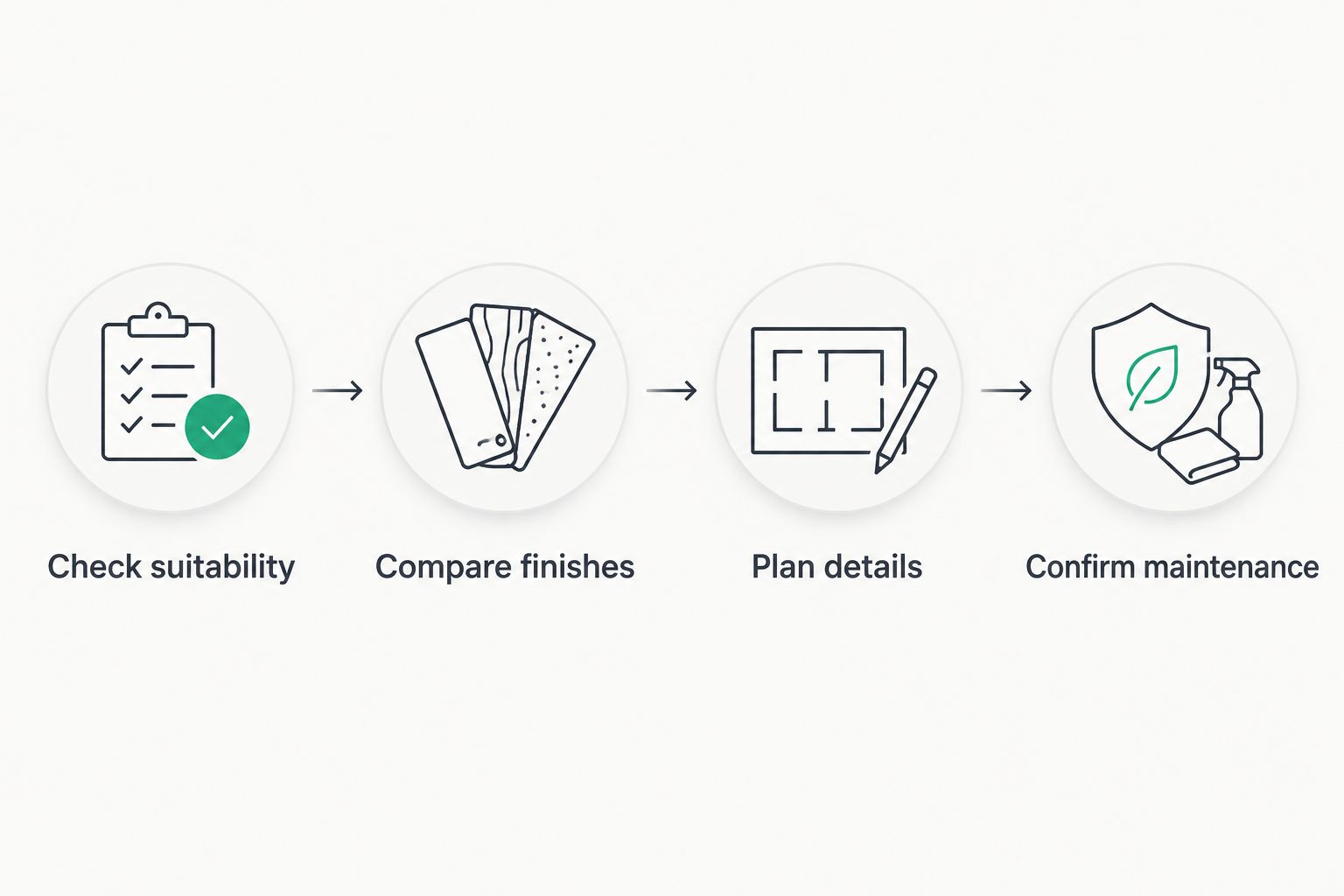
Use the same decision process for both materials. Settle the technical requirements before you commit to a finish.
- Check suitability. Identify the existing wall construction and ask the designer or installer to confirm which systems are appropriate. Resolve fire and planning requirements at this stage.
- Compare finishes. View physical samples outdoors against your windows, brickwork or render. Decide whether you prefer natural variation or a manufactured surface.
- Plan details. Work through corners, openings, roof edges and the wall base. Confirm the required supports, fixings, movement allowances and drainage arrangements.
- Confirm maintenance. Read the care instructions and agree how you will inspect, clean and repair the finished wall. Consider access as well as the work itself.
Ask the installer to identify any assumptions in the proposal. An unresolved detail around a window should not become an improvised decision after the cladding arrives.
Where does Akustiq UK exterior wall cladding fit?
Akustiq UK exterior wall cladding suits buyers seeking wood-grain exterior panels rather than indoor acoustic panelling. Keep those applications separate: an interior panel's appearance does not establish that it is suitable outdoors.
The Akustiq UK range includes the exterior panels below. Both are described as 290 cm panels with a 3D wood-grain finish; those details describe format and appearance, not a verified comparison with solid timber.
| Exterior panel | Stated format | Best for | Selection limit |
|---|---|---|---|
| Exterior Wall Cladding Panel Oak | 290 cm, 3D wood grain | Buyers seeking an oak-coloured exterior finish | The finish name alone does not establish material composition |
| Exterior Wall Cladding Panel Stone Grey | 290 cm, 3D wood grain | Buyers seeking a grey exterior finish | Colour and length do not establish fire or weathering performance |
The benefit is a choice of exterior wood-grain appearances. The limitation is equally important: you still need the chosen panel's technical information and installation instructions before deciding whether it meets your project requirements.
The corresponding Oak Finishing Trim is also listed at 290 cm and is described for closing off cladding edges. Include edge treatments in your layout rather than treating them as decoration to add at the end.
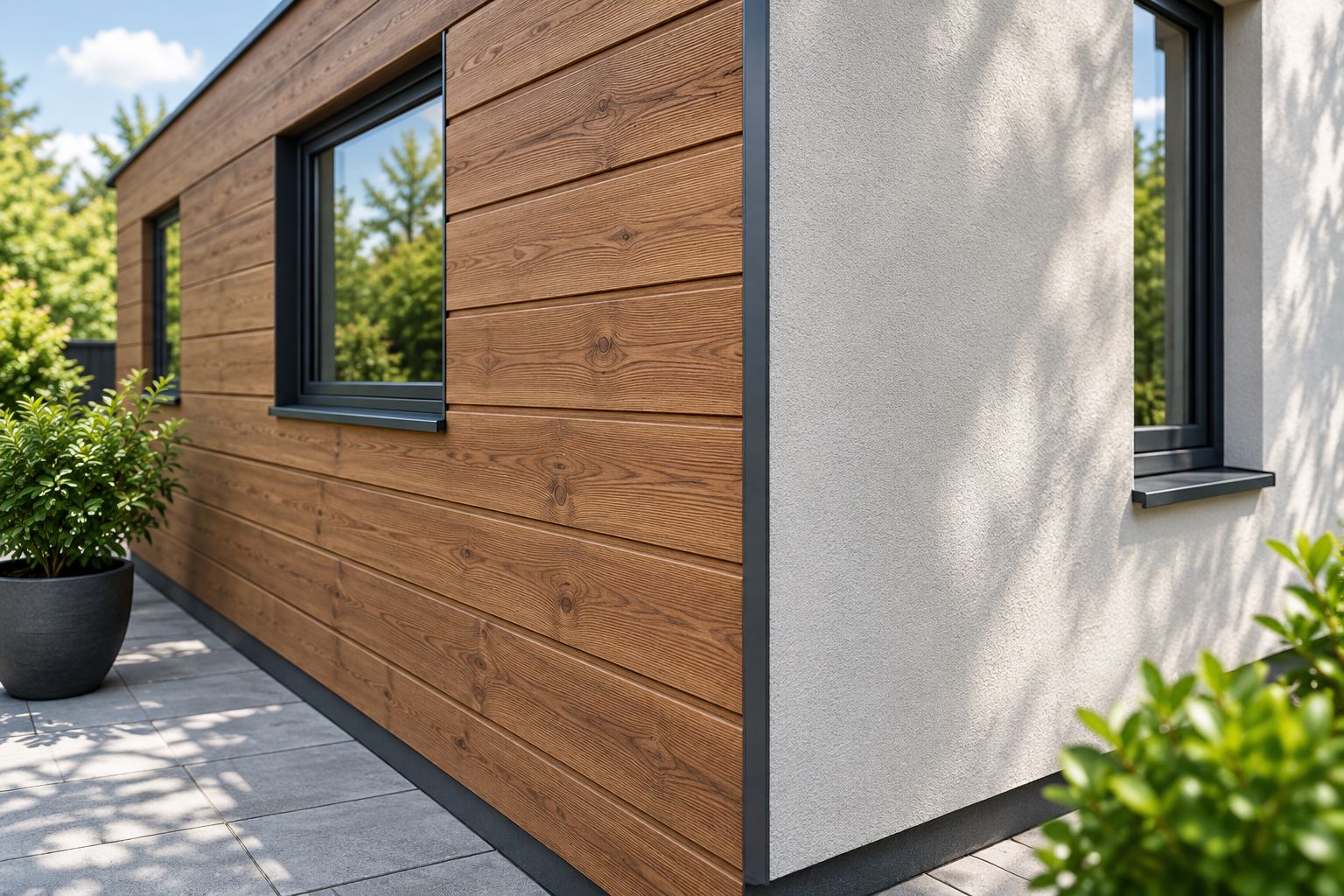
Before ordering, confirm how the panel, trims and fixings work together on your wall. A matching colour name is not a substitute for a complete installation detail.
Can you paint composite cladding instead of replacing it?
Do not plan to paint composite cladding unless the manufacturer permits it. A coating can alter the surface appearance and conflict with product care or warranty conditions.
If changing colour later is central to your plans, compare that requirement before choosing the material. Timber generally offers more refinishing flexibility, subject to its existing treatment and condition.
Does either material remove the need for ventilation?
Neither material removes the need to follow the wall system's ventilation and drainage design. Board choice does not override the requirements of the construction behind it.
Ask the installer to show how the proposed arrangement handles moisture. Use the specified cavity, membranes and junction details rather than copying a gap or fixing pattern from an unrelated product.
FAQ
Is composite cladding better than timber cladding for a UK home?
Composite cladding is better for avoiding routine recoating; timber is better for genuine grain and refinishing flexibility. Confirm that the specific system suits your wall and building requirements.
Does composite cladding need maintenance?
Composite cladding needs cleaning and inspection even when it does not need staining or painting. Follow the manufacturer's approved cleaning method and check joints, fixings and drainage details.
Will timber cladding always need staining?
Timber cladding does not always need staining. Suitable timber can be left to weather, but preserving a particular colour requires a suitable finish and maintenance plan.
Which cladding lasts longer, composite or timber?
Neither category has a universal lifespan advantage. Compare the exact products, exposure conditions, installation requirements and maintenance assumptions behind any durability statement.
Is composite cladding fireproof?
Do not treat composite cladding as fireproof. Check the exact product's fire classification and whether the proposed external wall assembly is permitted for your building.
Can I use acoustic wood wall panels outside?
Use only panels explicitly specified for exterior use. Indoor acoustic panels and exterior cladding serve different applications, even when their visible finishes look similar.
What should I check before choosing Akustiq UK exterior cladding?
Check the exact panel's composition, installation instructions, maintenance requirements and suitability for your building. Choose the finish after confirming those technical requirements.
One last thing
Decide what an acceptable older wall looks like before choosing a new one. If naturally changing timber appeals to you, weathering is part of the design; if you want to preserve a particular colour, make the maintenance commitment explicit.
For your 2026 project, ask to see weathered examples of the exact material where possible. A fresh sample answers the colour question today, not the appearance question over time.
Share:
Is acoustic wood panelling worth it in 2026?
Can you fit wood wall panels without a professional?