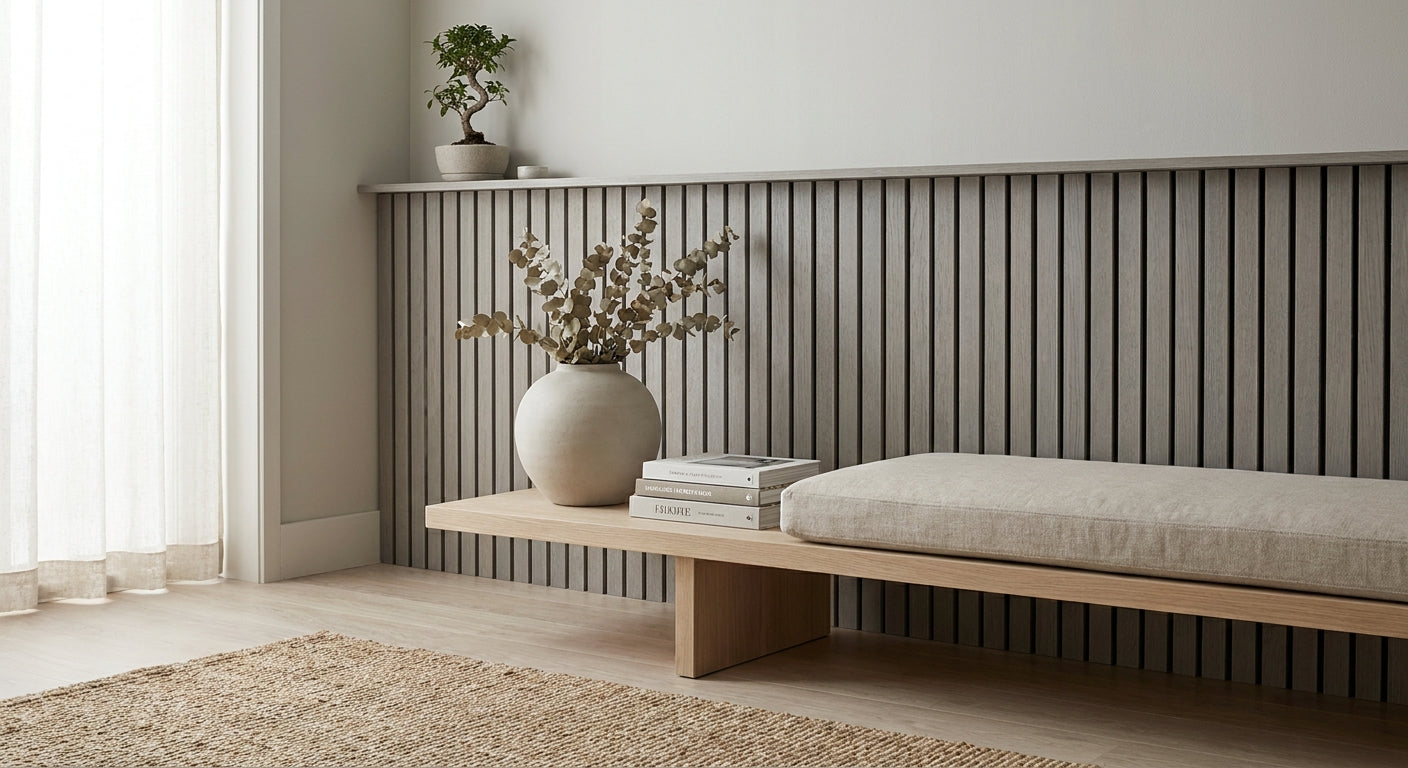
Japandi interiors run on restraint: warm neutrals, natural grain, and almost no clutter — which is exactly why grey oak wall panels have become the go-to finish for the style in 2026.
This guide is for anyone panelling a living room, bedroom or home office in a Japandi scheme and trying to work out whether grey oak, natural oak or another finish actually reads as Japandi rather than just "grey."
TL;DR
For a genuine Japandi interior in 2026, the grey oak wall panel is the Buy — its muted, slightly warm grey veneer sits closer to weathered timber than to cold industrial grey, which is the whole point of the style. Black oak reads too stark, high-gloss laminates read too showroom, and busy decorative patterns fight the minimalism Japandi is built on. Order a sample panel before committing a full wall, and pair grey oak with a grey felt backing if the room also needs acoustic softening. Skip anything glossy or heavily patterned.
Why this matters
Japandi isn't just "Scandinavian with beige." It's a specific colour logic — muted, low-saturation tones that avoid both stark white minimalism and rustic farmhouse brown. Grey oak sits precisely in that gap: warm enough to read as timber, cool enough to avoid looking like a cabin.
Get the tone wrong and the whole room tips into either cold-Scandi or heavy-rustic, neither of which is Japandi. That's the buying decision this guide solves.
Who this is for
This is written for homeowners and designers panelling a living room, bedroom or study in a Japandi scheme in 2026 — people who want the acoustic and textural benefit of wood slat panelling but need the tone to stay muted, not rustic, and not stark grey either.
What to look for in grey oak panels for Japandi rooms
Tone, not just colour name
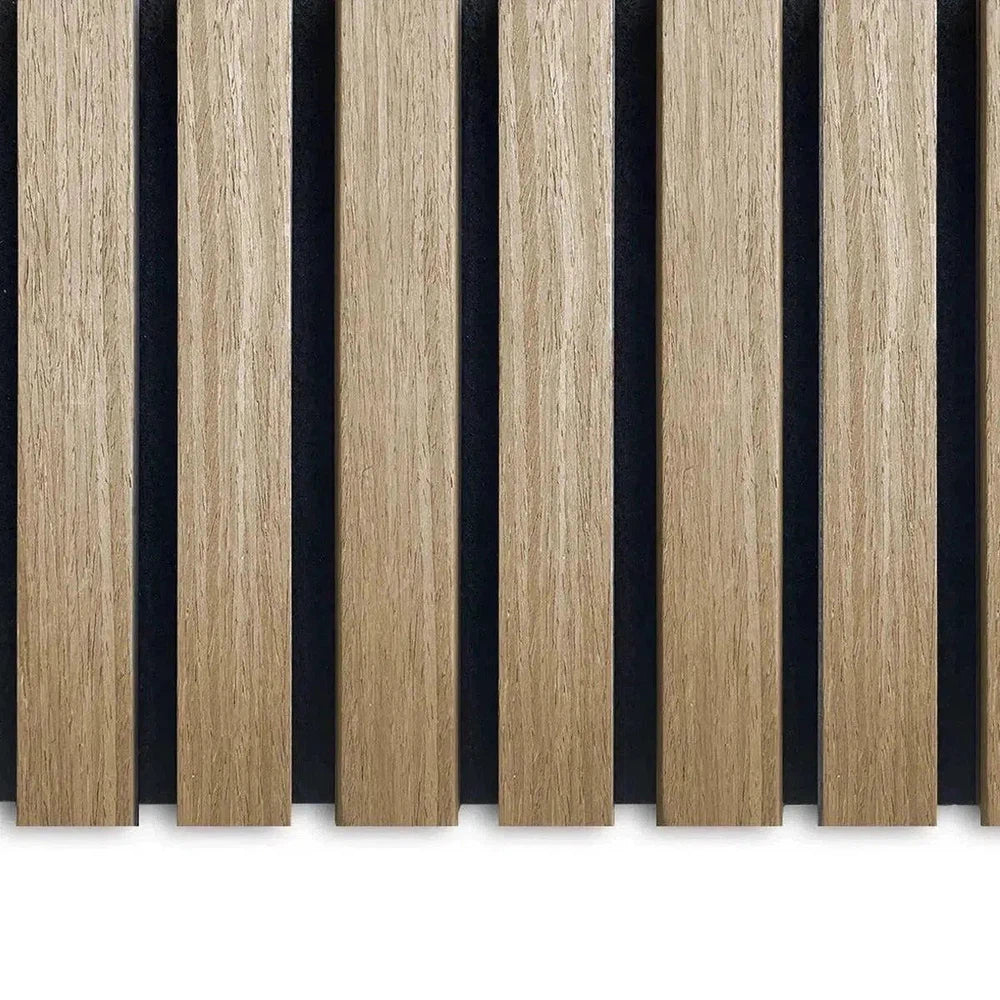
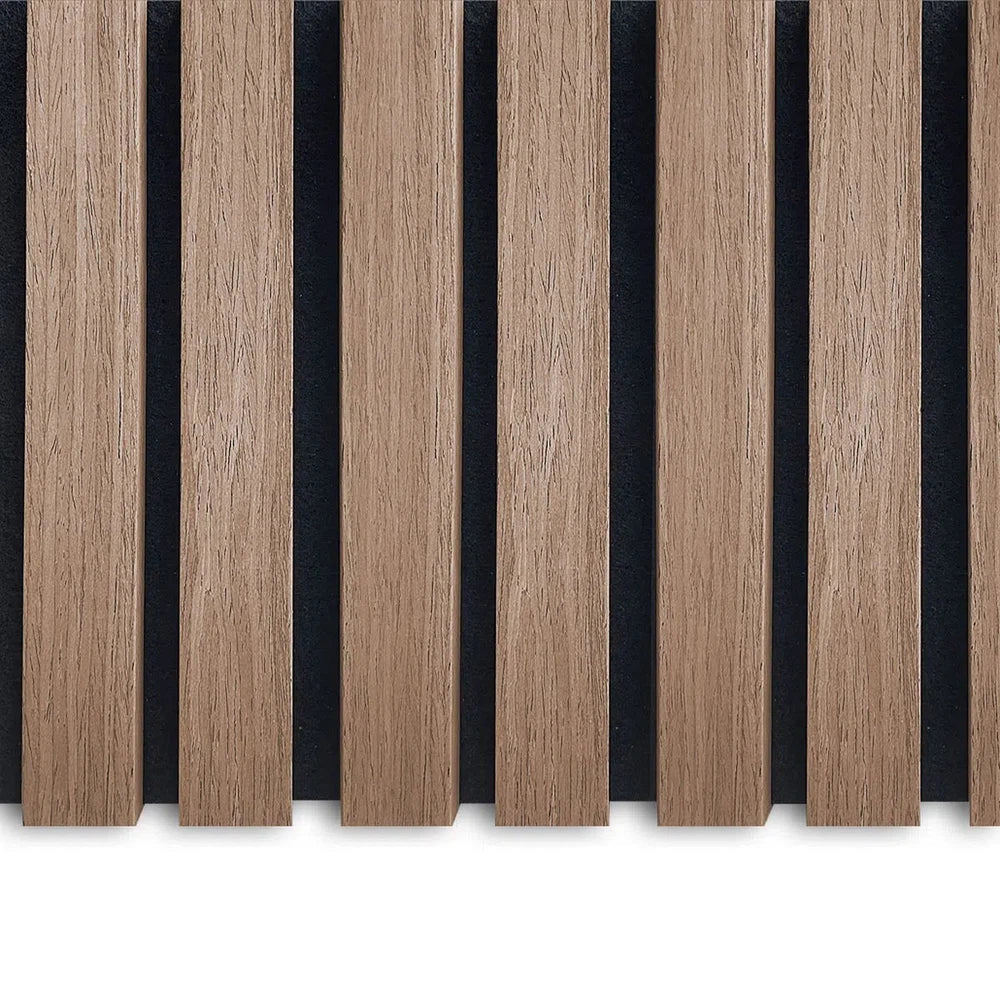
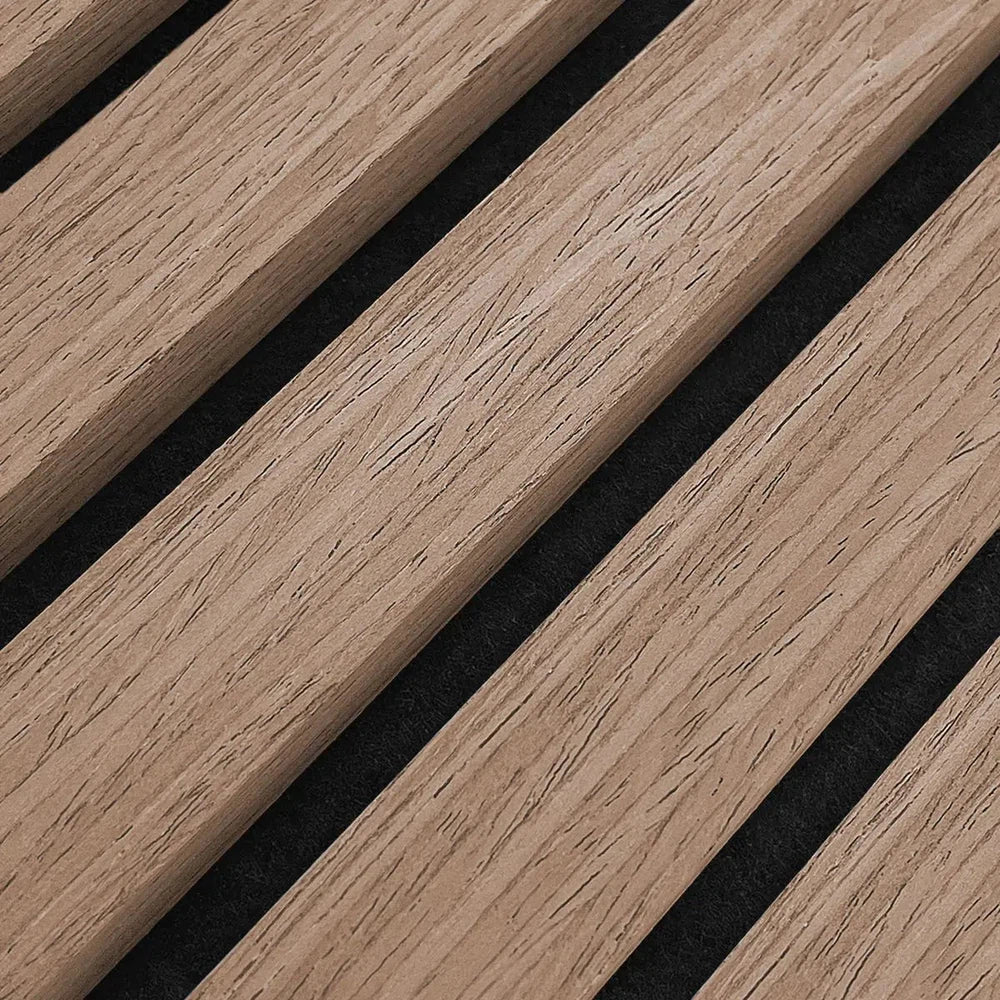
A panel labelled "grey" can still lean blue-cool or brown-warm depending on the veneer batch. Japandi wants warm-neutral grey — closer to driftwood than to concrete — so check the actual veneer swatch, not just the product name.
Real wood veneer over printed foil
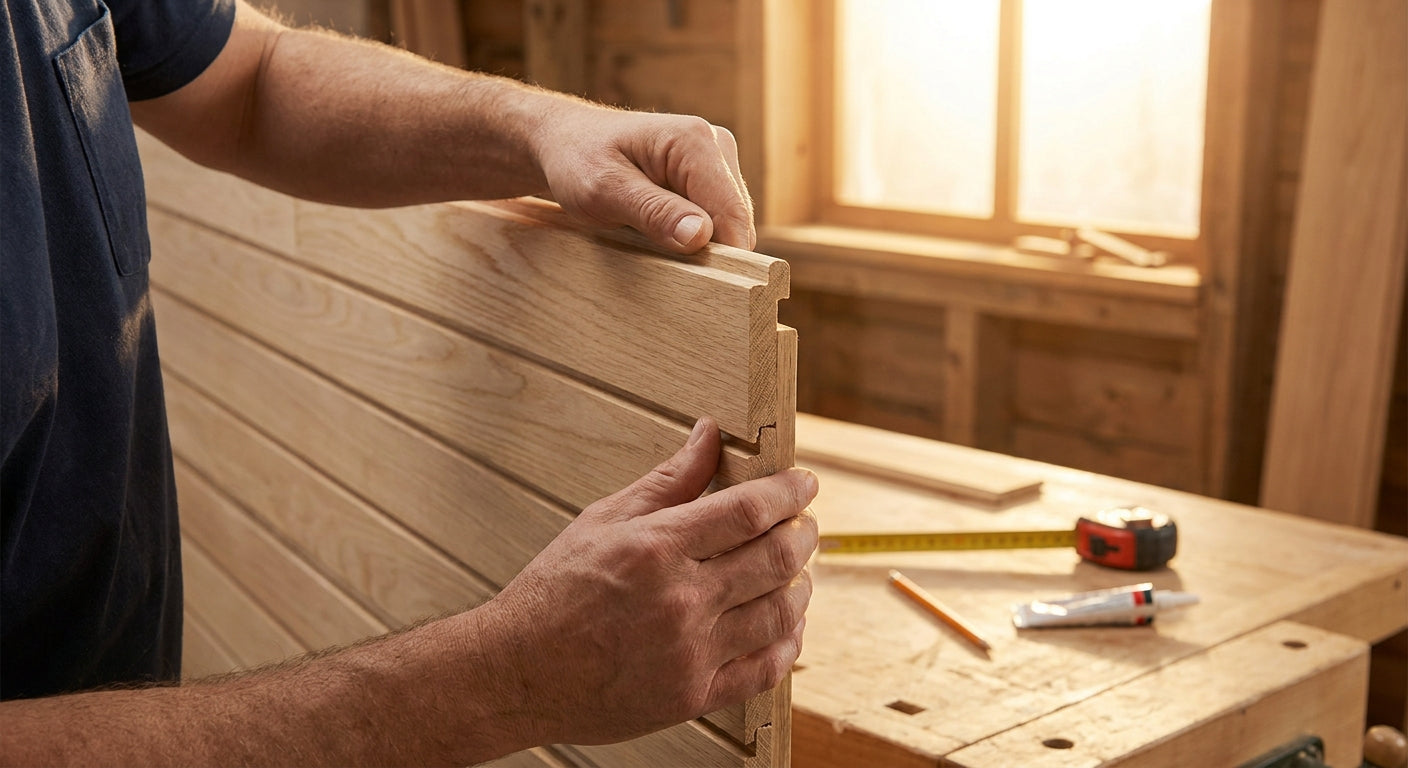
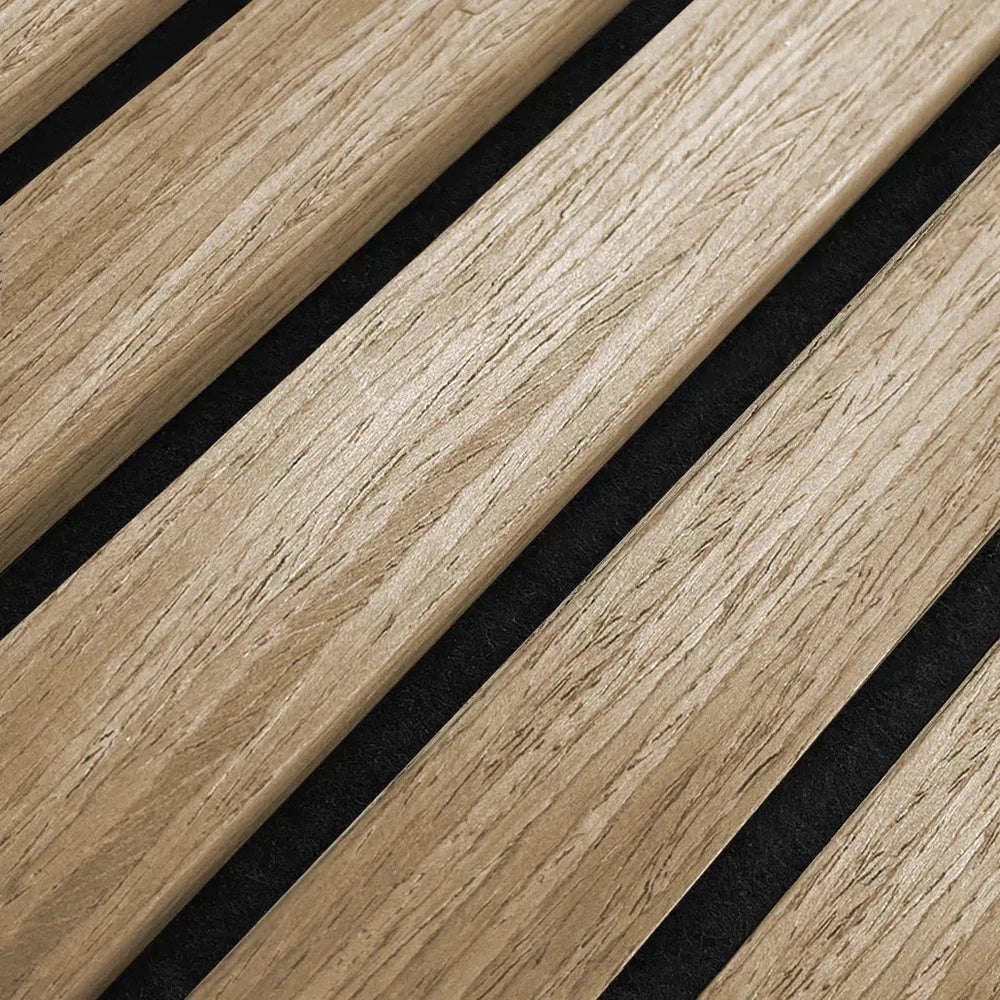
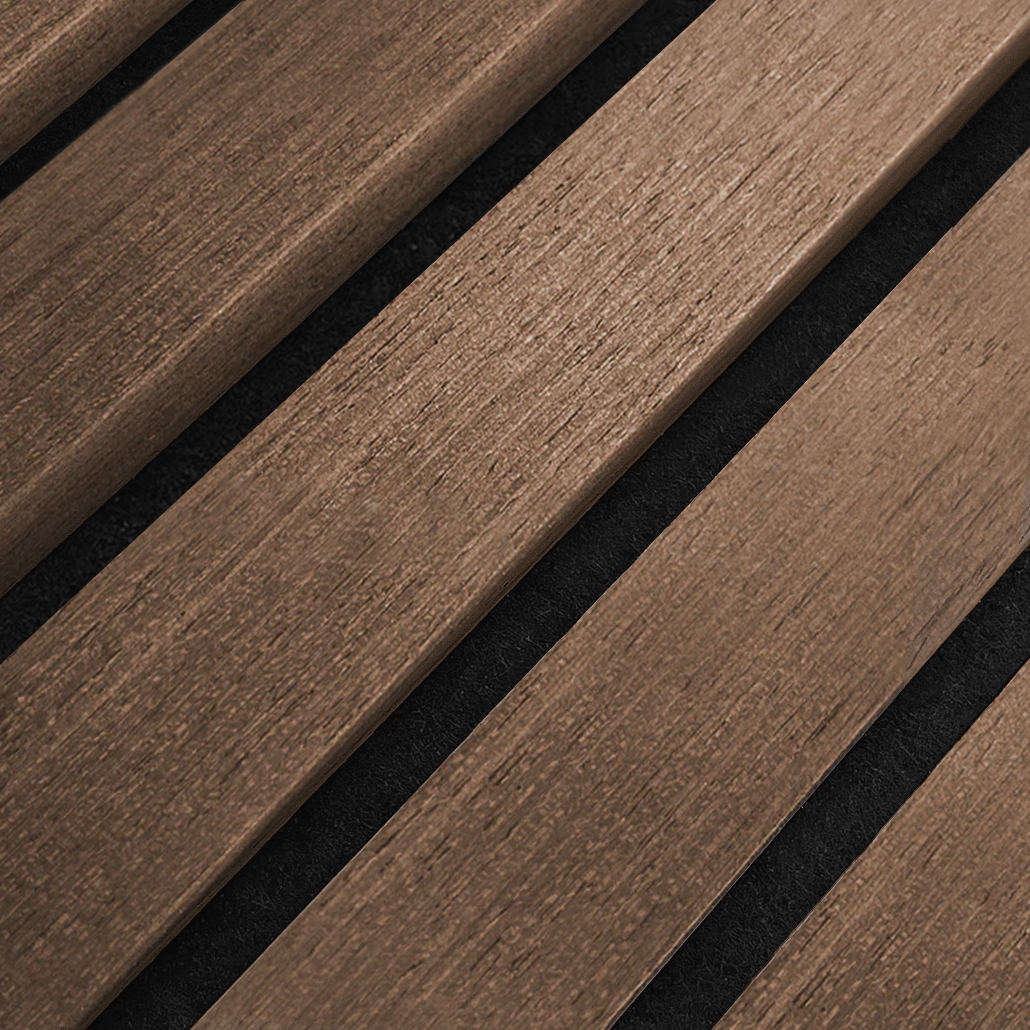
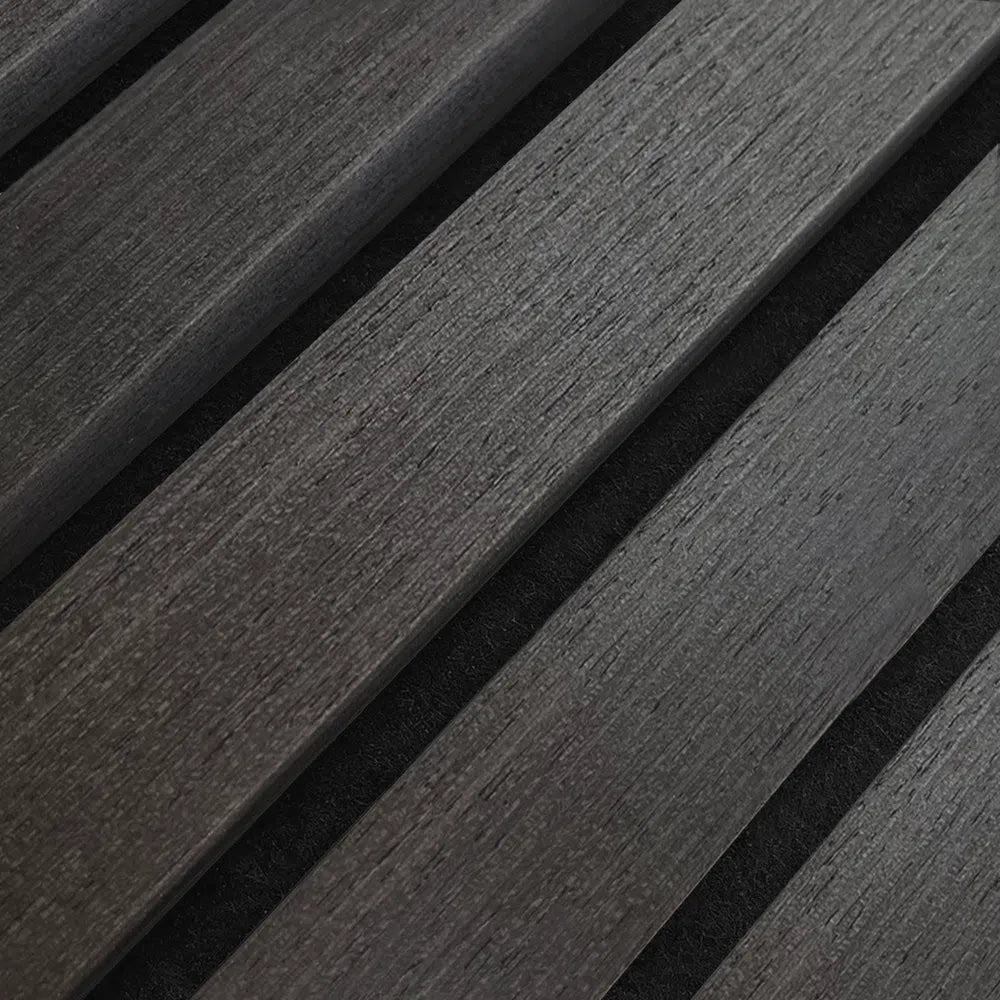
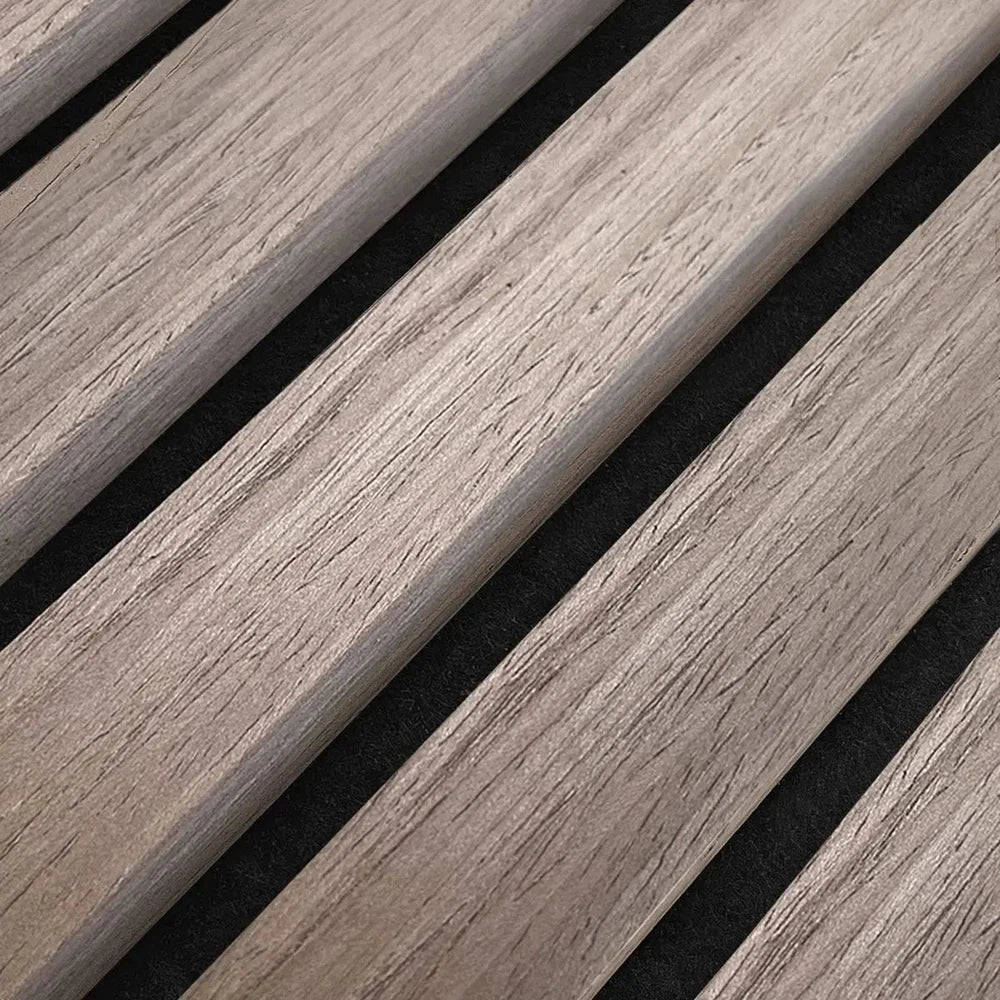
Japandi rewards visible grain and natural imperfection; a printed foil finish looks flat under daylight and breaks the illusion within a metre. A genuine 3-sided wood veneer holds up to close inspection, which matters in a style built on tactile honesty.
Acoustic backing where the room needs it
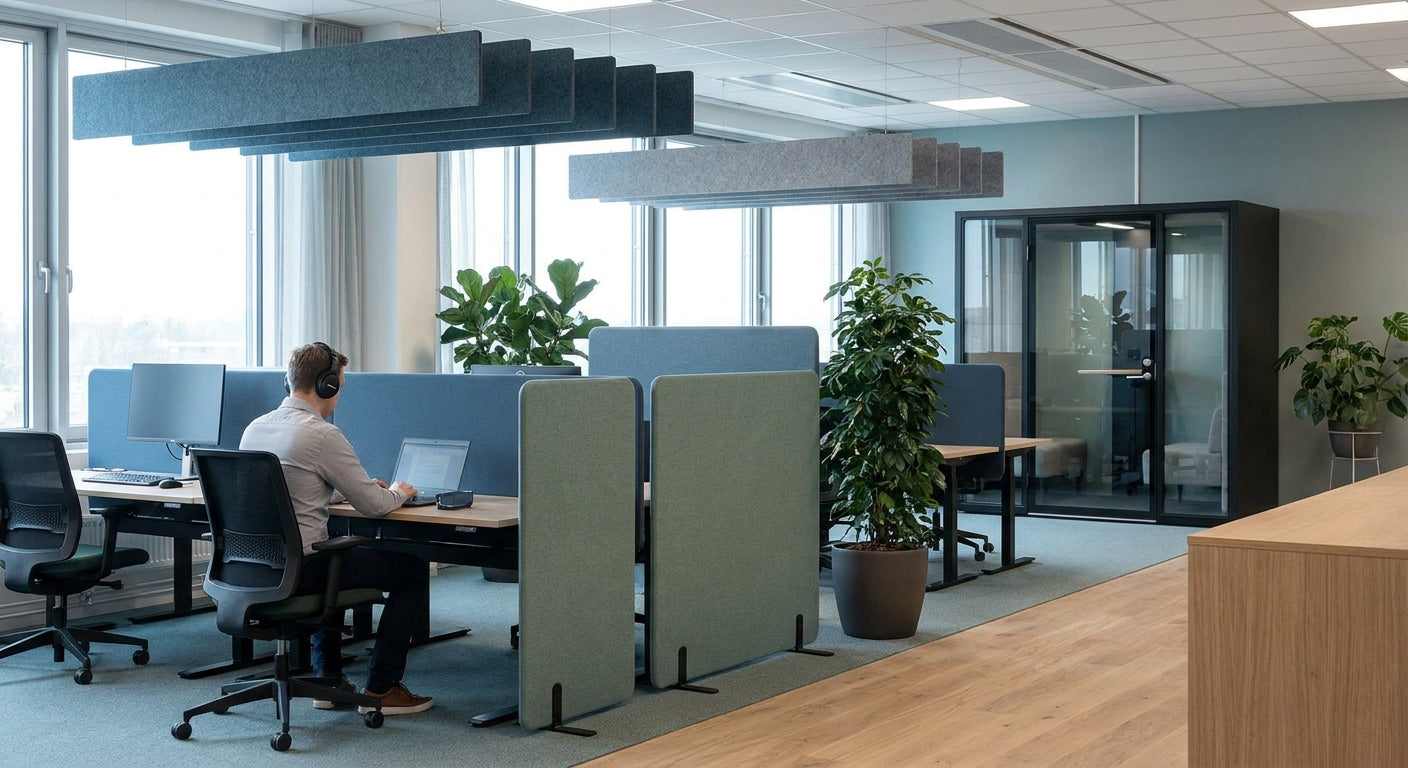
Open-plan Japandi living rooms with hard flooring and minimal soft furnishing often have real echo problems. A felt-backed acoustic panel solves that without adding curtains or rugs, which would clutter the aesthetic.
Felt colour coordination
A grey felt backing under a grey oak veneer keeps sightlines clean between the slats — a stark white or black felt backing draws attention to the gaps rather than the wood, undermining the calm the style needs.
Panel format matched to the room
The two available formats — 240 cm and 300 cm — change how a wall reads. A 300 cm panel run floor-to-ceiling suits taller Japandi living rooms; 240 cm suits standard UK ceiling heights without an awkward cut line.
Sample before full commitment
Grain and tone shift under different light temperatures. A sample panel checked against your actual wall, morning and evening, avoids an expensive re-order.
Top picks for Japandi interiors
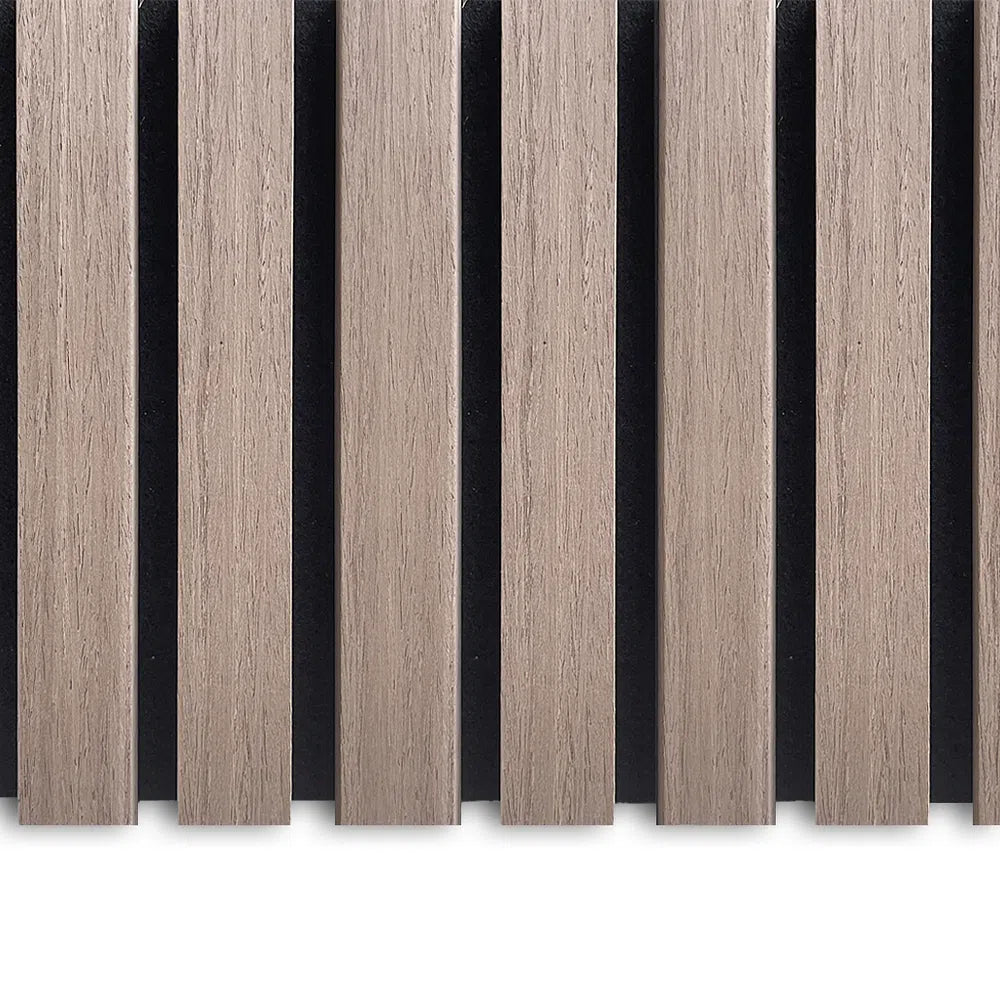
The true match — Grey Oak Wall Panel Spec that matters: 3-sided real wood veneer over acoustic felt backing, available in both size formats. This is the closest stock match to the muted, warm-grey tone Japandi calls for, and it's the panel most requests for this style land on. Buy — it's the grey oak wall panel built for exactly this brief.
The safe pick — sample first Spec that matters: same veneer batch as the full panel, small format, low cost of entry. Before panelling an entire wall in 2026, checking the grey oak panel sample against your actual wall lighting removes the single biggest risk in this purchase — tone mismatch. Buy for anyone who hasn't seen the finish in person yet.
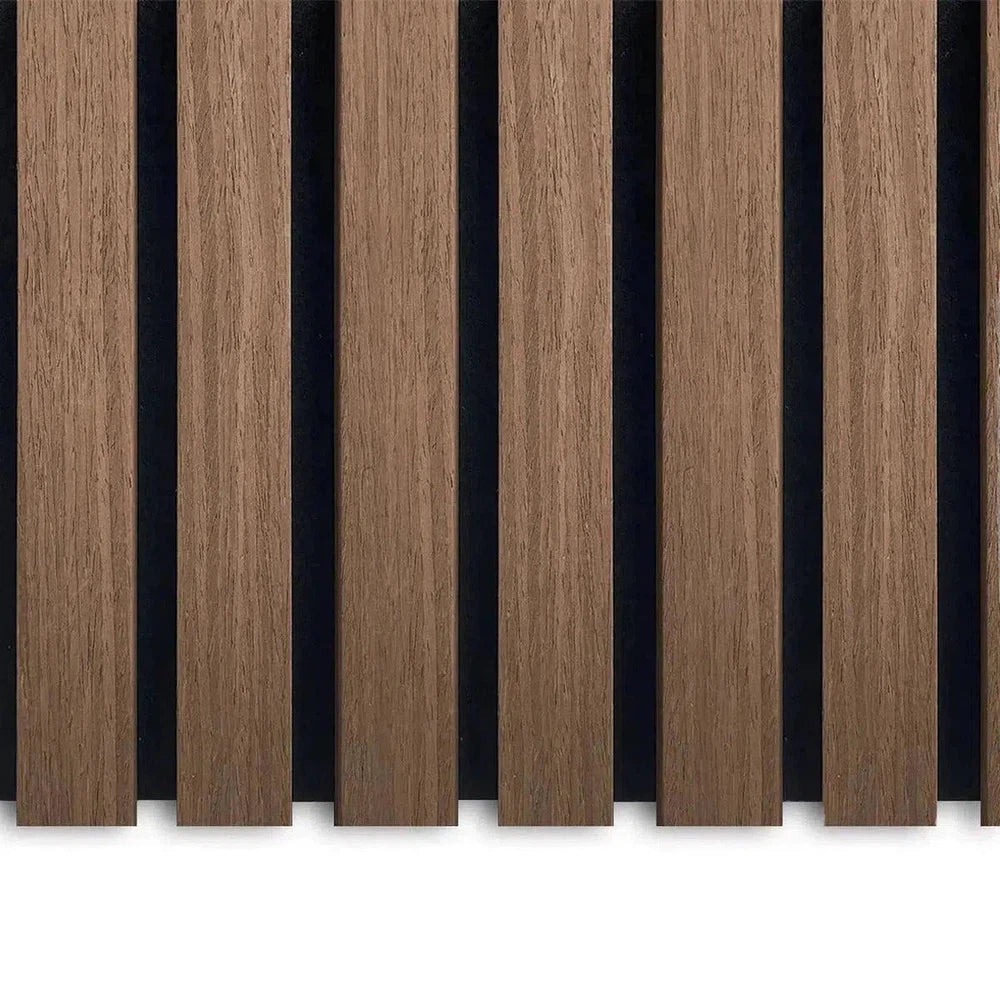
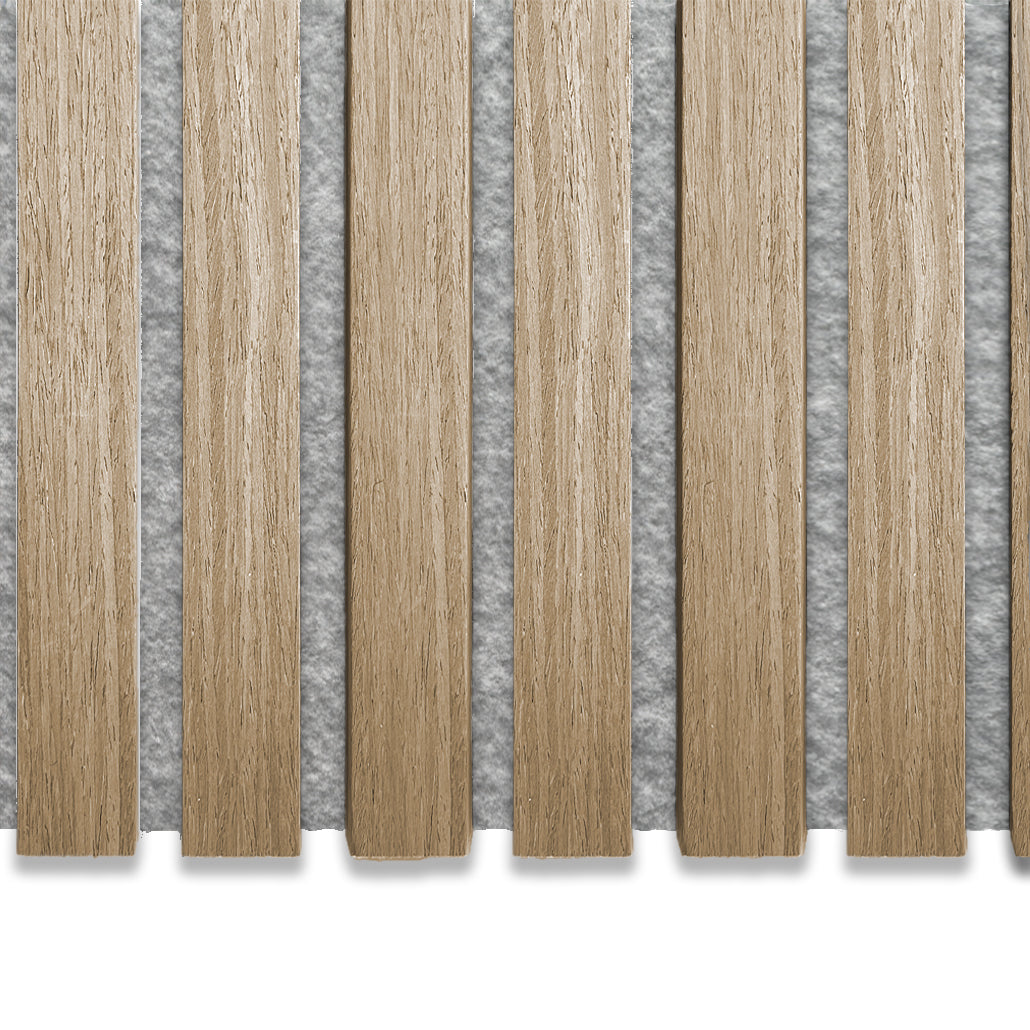
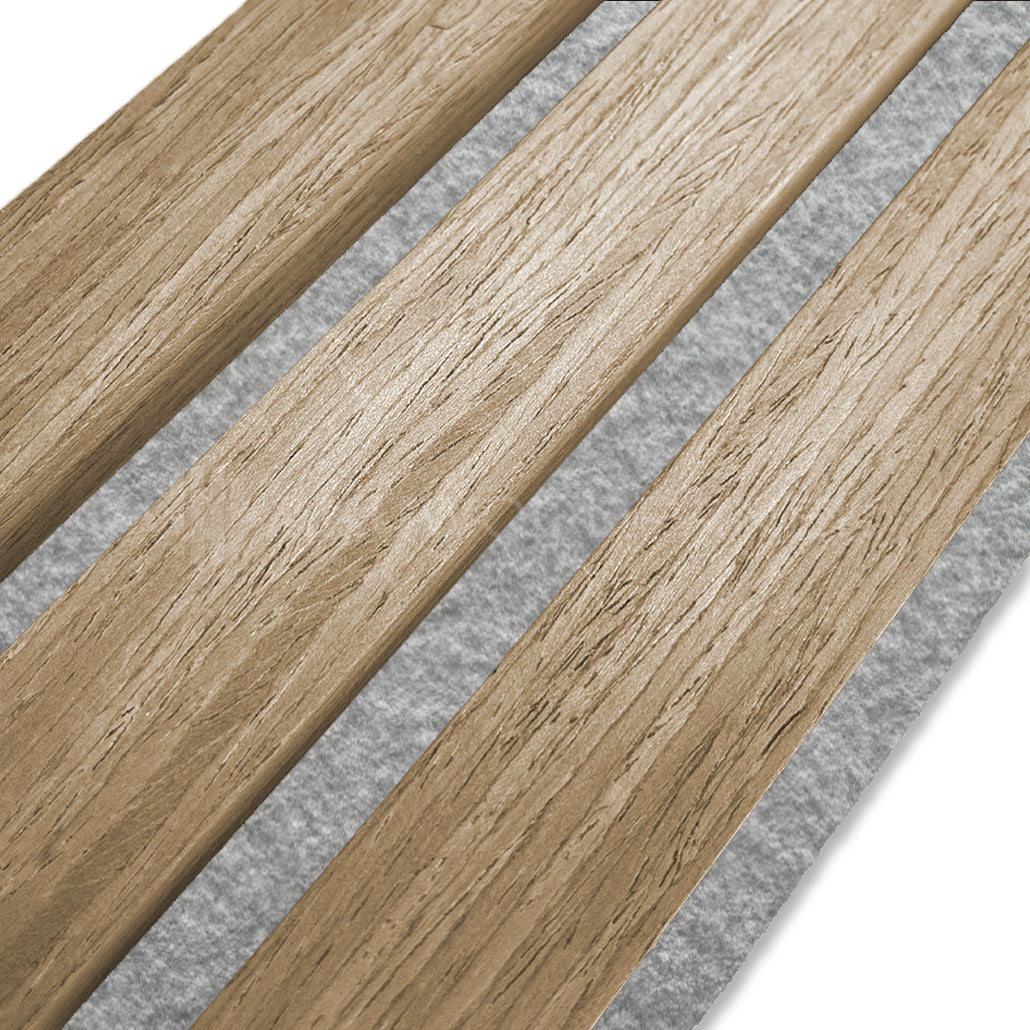
The acoustic upgrade — Natural Oak with Grey Felt Spec that matters: natural oak veneer paired with a grey felt backing rather than the standard felt colour. This swaps grey oak's grey veneer for grey in the backing instead, giving a slightly warmer surface tone while keeping the muted grey visible through the slats — useful in rooms where you want more warmth without losing the Japandi restraint. Natural oak grey felt panel: Consider if your room already runs warm.
The wildcard — Hexagon Acoustic Panel, Natural Oak with Grey Felt Spec that matters: geometric hexagon module instead of straight slats, same grey felt pairing. Hexagon geometry breaks from the straight-slat convention most Japandi rooms use, which works as a single feature wall but risks looking busy across a whole room. The hexagon acoustic panel is Consider for one accent wall only, Skip for full-room panelling.
What to avoid
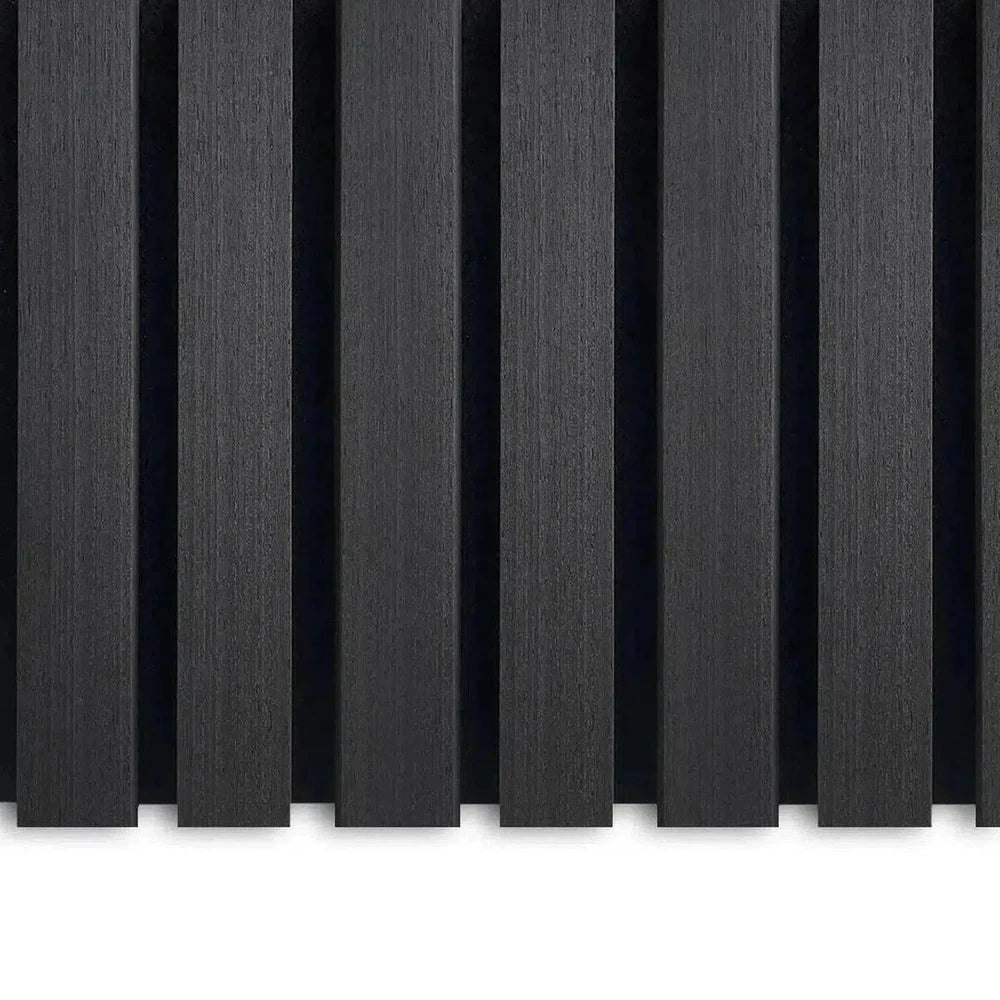
- Black oak — striking on its own, but its high contrast reads as moody-modern rather than Japandi's low-contrast calm.
- High-gloss or printed foil panels — the sheen and repeat-pattern grain break the natural-material honesty the style depends on.
- Heavily patterned decorative panels (clover, crimson-style 3D designs) — Japandi is defined by restraint; a busy repeat pattern pulls the eye and undoes the minimalism.
Verdict comparison
| Panel | Veneer tone | Felt colour | Best for | Verdict |
|---|---|---|---|---|
| Grey Oak Wall Panel | Muted warm-grey | Matched grey | Full-room Japandi walls | Buy |
| Sample Grey Oak Panel | Same as above | Matched grey | Testing tone before ordering | Buy |
| Natural Oak, Grey Felt | Warm natural oak | Grey | Warmer Japandi rooms | Consider |
| Hexagon Acoustic Panel, Natural Oak/Grey Felt | Warm natural oak | Grey | One accent wall | Consider |
| Black Oak | High-contrast dark | Black | Moody-modern, not Japandi | Skip |
FAQ
What's the best wood panel finish for a Japandi interior? Grey oak is the closest stock match to Japandi's muted, warm-neutral palette in 2026 — it avoids both the coldness of stark grey and the heaviness of rustic brown tones.
Is grey oak better than natural oak for Japandi rooms? Grey oak suits cooler, more restrained Japandi schemes; natural oak with a grey felt backing suits rooms that need more warmth while keeping the same muted grey visible through the slats.
Does grey oak wall panelling actually reduce echo? Yes, when it's backed with acoustic felt rather than a solid board — the felt layer is what absorbs sound, not the wood veneer itself.
Should I panel a whole room or just one wall in Japandi style? One feature wall is the safer, more restrained choice for hexagon or textured formats; straight grey oak slats read cleanly enough to run floor-to-ceiling across a full room.
What size panel format suits a standard UK living room? The 240 cm format suits most standard UK ceiling heights without an awkward cut; 300 cm suits taller rooms or floor-to-ceiling feature walls.
Can I order a sample before buying full panels? Yes — checking a sample panel against your wall's actual light is the single step most likely to prevent a tone mismatch, and it costs far less than reordering a full run.
Is black oak ever appropriate for a Japandi room? Rarely as a full wall — its high contrast tends to shift the room toward moody-modern rather than Japandi's low-contrast calm, though it can work as a small accent detail.
Do grey oak panels work with warm lighting? Yes, and they benefit from it — warm-temperature bulbs soften grey oak's cooler undertone, which is part of why it photographs and reads warmer in person than in a product photo.
One last thing
The detail that trips up most Japandi panelling projects isn't the wood tone — it's the felt colour behind it. A grey felt backing keeps the gaps between slats reading as shadow rather than as a visible seam, which is what makes a grey oak wall look considered rather than assembled. Check felt colour on the sample, not just the veneer.