


British Homes Direct remains a sensible choice when the exact product you have selected meets your room and installation requirements. Look elsewhere when your brief calls for a different panel construction, format or application—not simply a different retailer name. The best fit among British Homes Direct alternatives in 2026 is Akustiq UK for acoustic wooden slat wall panels with real wood veneer; decorative wall panels are the alternative when appearance, rather than acoustic treatment, is your priority.
- For British Homes Direct alternatives, shortlist Akustiq UK acoustic wooden slat wall panels for a wood-finished interior.
- Choose hexagon acoustic panels when you want a geometric layout rather than continuous vertical slats.
- Choose decorative wall panels for appearance; do not assume decorative products provide acoustic treatment.
- Use exterior cladding for outdoor projects, not indoor acoustic panels.
Why this matters
A living room with distracting echo needs a different solution from a bedroom that needs a feature wall. An exterior wall is a separate project again. Your shortlist should start with the job the panel must do, then move to finish, dimensions and installation.
Compare products for the same application before comparing suppliers. A similar-looking surface does not establish equivalent acoustic performance, moisture suitability or fixing requirements.
British Homes Direct alternatives at a glance
Use this 2026 shortlist to choose a product route. The British Homes Direct row represents the product you are already considering, not a claim that every product from that supplier has the same construction.
| Option | Best for | Standout feature | What to compare with British Homes Direct |
|---|---|---|---|
| British Homes Direct: your selected product | Keeping a specification that already meets your brief | The exact product you have shortlisted | Check its documented construction, dimensions and intended application |
| Wooden Wall Panel Natural Oak | A continuous wood-slat interior feature wall | The indoor slat range has real wood veneer and acoustic felt backing | Compare veneer coverage, backing and panel format |
| Hexagon Acoustic Panel Smoked Oak | A geometric wall arrangement | Hexagon format rather than long slat panels | Compare the layout and coverage your room needs |
| Decorative Wall Panel Clover Brown | A decorative interior focal point | A named decorative panel option | Compare appearance and intended use separately from acoustic claims |
| Exterior Wall Cladding Panel Stone Grey | An exterior wall project | A product designated as exterior cladding | Compare the complete exterior specification and installation requirements |
These are different product choices, not interchangeable substitutes. Choose the category first; otherwise, you risk comparing an acoustic interior finish with a decorative surface or an exterior covering.
1. Akustiq UK: best for acoustic wooden slat wall panels
Akustiq UK acoustic wooden slat wall panels suit homeowners and businesses looking for a wood-finished interior with acoustic felt backing. The flagship indoor panels have a 3-sided real wood veneer finish, with 240 cm and 300 cm formats in the range. Start here when you want a continuous slatted feature in a living room, bedroom or office.
Where the slat panels shine
- Veneer coverage: the stated 3-sided finish matters when you see the slats from an angle, not only straight ahead.
- Format choice: 240 cm and 300 cm lengths give you different starting points for a floor-to-ceiling layout.
- Finish choice: the catalogue includes natural oak, smoked oak, black oak, mocca and walnut options.
- Interior focus: the wood-and-felt construction brings the wall finish and acoustic treatment into the same product category.
Where the slat panels fall short
- Acoustic treatment is not the same as soundproofing a shared wall against neighbours.
- A long-panel layout still needs planning around sockets, skirting, corners and changes in wall height.
- A wood finish selected from a screen still needs checking against the room's actual lighting and materials.
For a 2026 refurbishment, compare the panel construction and proposed mounting arrangement—not just a photograph. Ask for acoustic evidence relevant to that arrangement if sound absorption is a deciding requirement.
Best for: a slatted interior feature wall where wood veneer and acoustic backing are both part of your brief.
Verdict: Buy for the specified interior application; skip as a stand-alone soundproofing solution.
2. Hexagon acoustic panels: best for geometric layouts
Hexagon acoustic panels offer a different layout from long, continuous slat panels. The catalogue includes smoked oak and walnut options, including versions named with grey felt. Consider this route when your design calls for a geometric composition rather than a full-height vertical rhythm.
Where hexagon panels shine
- The hexagon format gives you a clear alternative to rectangular slat-panel layouts.
- You can plan the arrangement around a particular wall area, such as a desk backdrop or bedroom feature.
- Named finish and felt variants give you specific combinations to compare rather than relying on a generic product image.
Where hexagon panels fall short
- A geometric arrangement needs careful setting out to keep the intended pattern consistent.
- A small decorative cluster does not establish that the room has enough acoustic treatment.
- More visible perimeter edges make the outline of the arrangement an important design decision.
Draw the complete pattern before fixing anything. Include the surrounding empty wall: the spacing around the composition affects how the finished feature reads.
Best for: an interior feature where the panel arrangement is part of the design.
Verdict: Buy for a planned geometric layout; hold if you have not settled the pattern or coverage.
3. Decorative wall panels: best for an appearance-led project
Decorative wall panels are the route to consider when changing the look of a room is the main objective. Clover Brown is one named option in the catalogue; other decorative entries include Snowdrop Smoked Brown and Aster Smoked Brown. Compare the individual design with your furniture, flooring and adjoining walls.
Where decorative panels shine
- They give you an alternative to the repeated lines of a slatted feature wall.
- Named designs make it easier to keep your shortlist specific.
- They suit an appearance-led brief without making acoustic performance the starting point.
Where decorative panels fall short
- A decorative designation alone does not establish sound-absorption performance.
- A prominent pattern needs checking alongside existing patterns and textures.
- Suitability for moisture, heat or a particular fixing method requires product-specific confirmation.
Best for: a living room, bedroom or hallway feature selected primarily for its appearance.
Verdict: Buy for the decorative brief; skip if you need documented acoustic performance that the selected product does not establish.
4. Exterior wall cladding: best for an outdoor project
Exterior cladding belongs on your shortlist when the surface is outside the building. The catalogue includes Stone Grey, Birch, Oak and Black exterior panel entries. Treat this as a separate specification from indoor acoustic wooden slat panels, even when both create a wood-related visual effect.
Where exterior cladding shines
- It provides a product route explicitly designated for exterior walls.
- The named finishes give you options to assess against windows, doors and adjoining render.
- It keeps your outdoor shortlist focused on exterior products rather than interior decorative panels.
Where exterior cladding falls short
- Choosing the face finish does not resolve the wall's drainage, ventilation or fixing details.
- A panel name does not establish suitability for every building, height or exposure.
- Corners, openings and junctions need planning alongside the main wall area.
Best for: an exterior wall project with a defined installation specification.
Verdict: Hold until the complete exterior assembly is checked; skip indoor panels as a substitute.
How to choose the right alternative in 2026
Define the problem
Write down whether you want less echo, a different appearance or an exterior wall finish. Be specific. Difficulty hearing conversation in a reflective living room is not the same problem as hearing speech through a shared bedroom wall.
Sound absorption addresses reflected sound within a space. Sound insulation addresses transmission between spaces. Do not buy an acoustic feature wall expecting it to replace a sound-insulating wall assembly.
Check the construction
For an indoor slat panel, compare the visible finish, veneer coverage and backing. For any acoustic claim, check the tested installation as well as the result. A performance figure without its mounting conditions does not give you a complete basis for comparison.
For exterior cladding, check the intended application and the supporting installation details. Do not transfer assumptions from an indoor panel to an exterior product simply because the colours look similar.
Measure the wall
Measure the actual height and width, including any variation along the wall. The difference between the stated 240 cm and 300 cm formats is 60 cm. That extra length affects your cutting plan, but it does not automatically make the longer format the better choice.
Mark sockets, switches, skirting, door frames and exposed edges on your drawing. Plan where joints and cuts will fall before deciding which format to use.
Check the finish
Assess a physical sample against the floor, furniture and wall colour wherever possible. Look at it in daylight and under the lighting you use in the evening. Keep the sample in its intended orientation rather than judging it flat on a table.
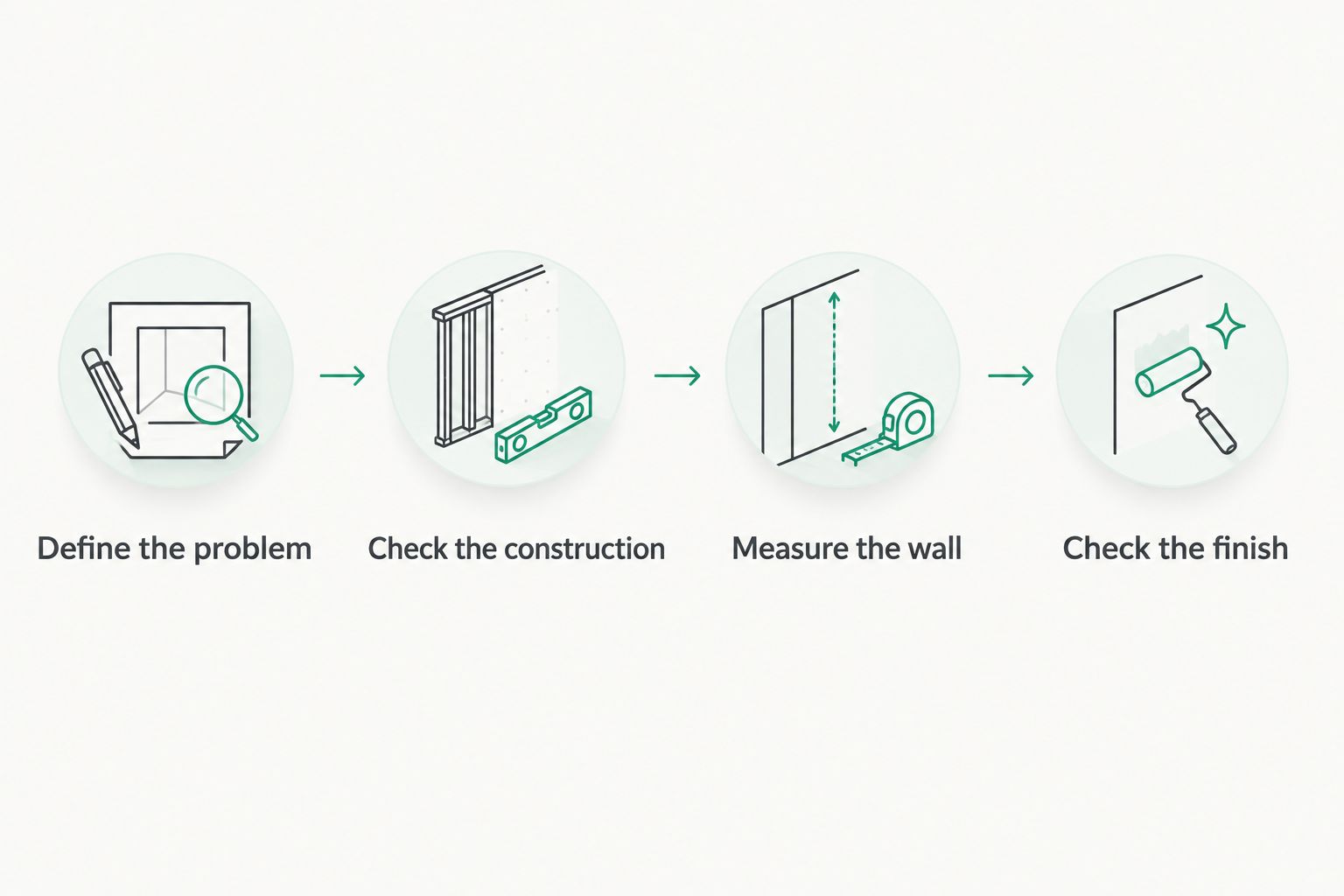
Once those checks are complete, take the same room brief to each supplier. Ask about the selected product, wall substrate, proposed fixing method and edge treatment so the answers address the same installation.
Check your panel specification
Discuss your room, panel format and intended application before choosing.
Why consider switching from British Homes Direct?
Switch when a different product better matches a written requirement. A supplier change needs a product-level reason, not an assumption that one retailer is better at everything.
Use these decision points for your 2026 shortlist:
- Veneer finish: switch if your chosen alternative provides the veneer coverage your design requires and your current selection does not.
- Panel length: switch if the alternative's confirmed dimensions produce the layout you want.
- Format: choose hexagons instead of slats when the geometric arrangement is the intended result.
- Application: move to exterior cladding when the project is outdoors, rather than adapting an indoor product.
- Evidence: change the specification when the selected product cannot demonstrate a requirement that matters to your project.
These are checks to make, not claims about shortcomings at British Homes Direct. Apply them equally to every supplier, including the alternatives on this page.
When staying with British Homes Direct is the right call
Stay with British Homes Direct if your selected product meets the intended application, its dimensions fit your layout, and its documentation supports the performance you need. If you have already checked the finish and resolved the installation details, a different supplier name is not a reason to restart.
Keep the product that satisfies the brief. Switch only when another specification solves a defined problem more directly.
FAQ
What's the best British Homes Direct alternative in 2026?
Akustiq UK is a fit for buyers seeking acoustic wooden slat wall panels with a 3-sided real wood veneer finish and acoustic felt backing. Choose decorative panels or exterior cladding instead when your project has a different purpose.
Is switching from British Homes Direct always worthwhile?
No. Keep your selected British Homes Direct product if its documented construction, intended application and dimensions meet your requirements. Switch for a specific product advantage that matters to your installation.
Will acoustic wooden panels stop noise from neighbours?
Acoustic wooden panels are not a stand-alone substitute for soundproofing a shared wall. Sound absorption treats reflections within a room, while reducing transmission between rooms requires assessment of the separating construction and sound paths.
Should I choose 240 cm or 300 cm wall panels?
Choose the format that fits your measured wall and planned joint positions. The stated lengths differ by 60 cm, so compare the cutting layout before choosing the longer panel.
Are hexagon acoustic panels better than slatted panels?
Hexagon panels are better for a geometric design brief, not automatically better for acoustic performance. Compare the selected products' evidence, coverage and installation arrangements before making a performance judgement.
Can decorative wall panels replace acoustic panels?
Only choose a decorative panel for an acoustic requirement when product-specific evidence supports that use. Appearance and sound absorption are separate selection criteria.
Can I use indoor acoustic panels on an outside wall?
Choose a product explicitly intended for exterior use rather than assuming indoor acoustic panels are suitable. Check the complete exterior installation, including fixings, junctions and moisture management.
What should I check before choosing a panel finish?
Check a physical sample against your room's flooring, furniture and lighting wherever possible. Review the face and exposed edges, then confirm the finish and format of the exact panel you intend to use.
One last thing
Check the edge before committing to the whole wall. A feature viewed from a doorway or beside a desk is often seen at an angle, so the slat sides and perimeter deserve the same attention as the front face.
For your 2026 project, choose Akustiq UK acoustic wooden slat wall panels when the stated veneer finish, felt backing and panel format match your interior brief—not simply because you want a different supplier.
Share:
Best hexagon acoustic panels in the UK in 2026
Best non-acoustic wall panels for feature walls in 2026