

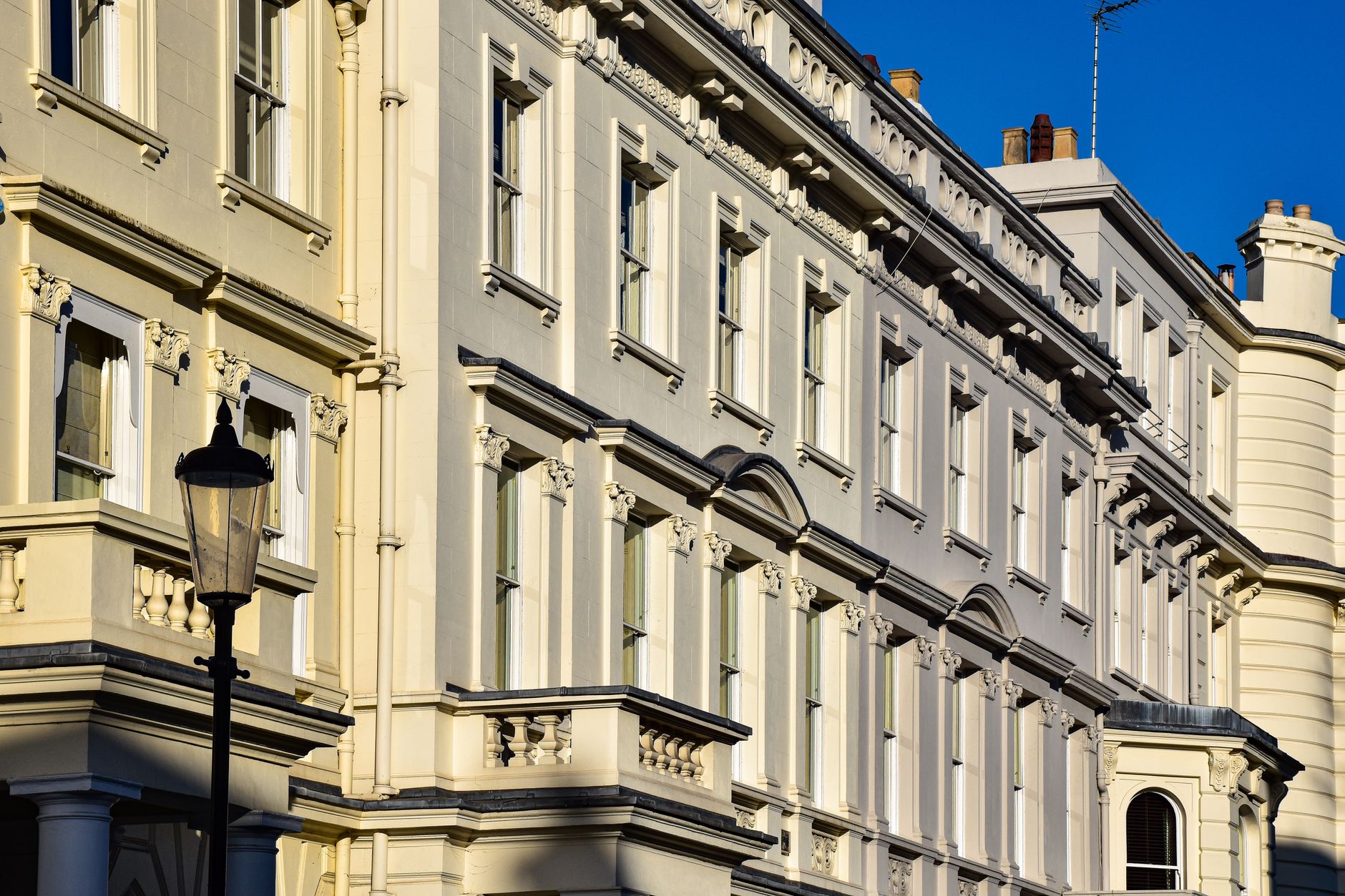
Choosing the right exterior cladding for period buildings means balancing planning consent, material authenticity, and long-term weather performance — and getting any one of those wrong can cost you both money and approval.
TL;DR: For listed and period buildings in 2026, the safest exterior cladding choices are natural timber (oak, birch), lime-render-compatible board systems, and composite wood panels engineered to replicate traditional grain. Aku Wood Panel's exterior cladding panel oak sits at the practical intersection of authentic appearance and engineered weatherproofing — a strong first choice for non-listed period homes. Always confirm with your local conservation officer before ordering.
Why this matters for period buildings in 2026
More than 500,000 listed buildings exist in England alone, and every one of them falls under Section 7 of the Planning (Listed Buildings and Conservation Areas) Act 1990. Unapproved external alterations — including cladding — can trigger enforcement action, fines, and mandatory reinstatement at your expense. Beyond legality, period buildings typically have solid-wall or timber-frame construction that responds very differently to moisture than modern cavity-wall builds. The wrong cladding traps damp, accelerates decay, and voids any conservation grant eligibility.
In 2026, the material options available are wider than they have ever been, but the planning hurdles are, if anything, tighter. Conservation officers increasingly scrutinise fibre cement and uPVC outright. Engineered timber and composite wood panels have, over the past decade, earned grudging acceptance because they replicate historic profiles without the maintenance burden of raw softwood.
How we ranked these options
This list is built on four criteria weighted for the conservation context:
- Planning acceptability — documented acceptance by English Heritage guidance and Historic Environment Scotland's technical advice notes.
- Moisture management — whether the system breathes or seals, critical for pre-1919 solid-wall construction.
- Authentic appearance — grain, shadow gap, and colour range against a period street scene.
- Practical installation — ease of fixing to uneven masonry or timber studwork without structural alteration.
Five material categories are ranked below from most to least suitable for the majority of listed and conservation-area scenarios.
The ranked list
1. Engineered oak exterior cladding panels
The conservation officer's safe bet
Oak has clad British buildings for over 400 years. Engineered oak panels compress that tradition into a dimensionally stable board that does not cup, split, or check the way green-sawn oak does. Tannins in the grain provide natural resistance to fungal decay — no biocide treatment required, which matters for listed building consent applications that scrutinise chemical treatments on historic fabric.
Aku Wood Panel's exterior cladding panel oak is one of the most directly relevant products here: an engineered composite with a real oak finish rated for exterior use. Pair it with matching exterior cladding corner trim oak for clean quoin detailing that reads as considered craftsmanship rather than a retrofit.
For period homes outside the listed category, this is the strongest combination of period authenticity and low maintenance available in 2026.
Verdict: Buy — first choice for conservation areas and unlisted period homes.
2. Birch composite exterior cladding
The versatile secondary choice
Birch-finish composite sits a step lighter in tone than oak, making it appropriate for vernacular buildings in regions where softwood boarding — larch, Scots pine — was historically dominant. The pale, even grain reads as contemporary-traditional, a profile many conservation officers accept for 20th-century period buildings (inter-war semis, 1930s bungalows) where strict oak vernacular is not mandated.
The engineering advantage is dimensional consistency: birch composite does not move seasonally the way natural birch does, so shadow gaps stay tight over multiple winters. On a bay-fronted Edwardian terrace where movement cracks in cladding are the first thing neighbours notice, that stability is worth paying for.
Verdict: Buy — strongest choice for inter-war and Edwardian contexts where light-toned boarding is appropriate.
3. Stone-grey composite cladding
The render-replacement option
Many Georgian and Victorian terraces were originally rendered. Where render has failed and cannot be lime-reinstated economically, a stone-grey composite board offers a sympathetic alternative that conservation officers have accepted on a case-by-case basis since approximately 2018. The key argument: it replicates the flat, muted tone of sand-and-cement render without the cracking and water-ingress risk.
Stone-grey does not suit all contexts — it would look wrong on a half-timbered cottage — but for stucco-fronted Victorian villas or rendered inter-war pebbledash, it is a defensible substitution. Use with matching finishing trim to keep shadow lines consistent.
Verdict: Consider — appropriate only where render was the original finish and lime reinstatement is not viable.
4. Lime render over breathable substrate
The purist choice — but slow and expensive
For Grade I and Grade II* listed buildings, lime render applied to a breathable backing board remains the only finish that conservation officers will approve in the majority of cases without conditions. It is vapour-permeable, historically accurate, and — when correctly specified — outlasts cement render by decades. The catch: it requires specialist contractors, takes 2–4 weeks to cure properly, and costs roughly 40–60% more per square metre than composite boarding.
Lime render is not a product Aku Wood Panel supplies, and it belongs on this list because specifying the wrong material where lime is required will result in a refusal. Know the category of your listing before committing to any modern panel system.
Verdict: Buy (for Grade I / Grade II*) — non-negotiable on the most sensitive designations.
5. Fibre cement cladding
Looks affordable, carries planning risk
Fibre cement boards have improved significantly in appearance since 2015 and are now manufactured in convincing timber-grain finishes. On unlisted buildings in non-designated areas, they represent good value. The problem for period buildings is planning: fibre cement is visually identifiable at close range, and conservation officers in most English and Scottish authorities have standing objections to it on pre-1945 buildings within conservation areas.
If your building is unlisted and outside a conservation area, fibre cement is worth pricing. If either condition applies, treat this as a high-risk choice.
Verdict: Wait / Skip — usable on unlisted, non-designated buildings only; high planning risk elsewhere in 2026.
Comparison table
| Material | Planning risk | Breathability | Period authenticity | Relative cost |
|---|---|---|---|---|
| Engineered oak panel | Low | Moderate | High | Mid |
| Birch composite | Low–moderate | Moderate | Medium–high | Mid |
| Stone-grey composite | Moderate | Low–moderate | Medium (render contexts) | Mid |
| Lime render | Very low | Very high | Very high | High |
| Fibre cement | High (conservation areas) | Low | Low–medium | Low–mid |
Where to buy — 3 sourcing rules
- Order samples before full-panel quantities. Colour on screen and colour in natural light against aged brick or stone are different. Aku Wood Panel offers free samples including an exterior cladding panel birch sample — use it before committing to a full order.
- Buy fixings from the same manufacturer as the panels. Mismatched fixings are the most common cause of delamination and water ingress at the board edge. Purpose-made screws and corner trims are engineered to the panel's specific thickness tolerances.
- Get conservation officer pre-application advice in writing. Most local planning authorities offer a paid pre-application service. The written response gives you a material-specific green light you can use if the decision is later challenged.
FAQ
What is the best exterior cladding for a listed building in 2026? Lime render remains the most consistently approved finish for Grade I and Grade II* listed buildings. For Grade II listings and conservation area properties, engineered oak or birch composite panels are accepted in most jurisdictions, provided they replicate the historic material palette of the area.
Do I need planning permission to re-clad a period building? Yes, if the building is listed or sits within a conservation area. Re-cladding counts as a material alteration to the external appearance and requires listed building consent or conservation area consent respectively. Unlisted buildings outside conservation areas may proceed under permitted development, but confirm with your local authority before starting work.
Is composite wood cladding suitable for Victorian houses? Engineered composite panels with oak or birch finishes are suitable for unlisted Victorian houses and are increasingly accepted in conservation areas where the shadow-gap profile matches historic boarding patterns. They are not appropriate for Grade I or II* listings without specific conservation officer approval.
How long does exterior timber cladding last on a period property? Engineered oak and birch composite panels carry typical manufacturer warranties of 15–25 years for exterior use. Natural green-sawn oak, properly maintained and painted, lasts 30–50 years. Actual lifespan on a period building depends heavily on detailing at junctions, eaves, and reveals — poor detailing fails in 5–7 years regardless of the board quality.
Is uPVC cladding allowed on a listed building? No. uPVC is refused outright on listed buildings by virtually every conservation officer in England, Wales, and Scotland. It is also incompatible with the breathable-wall construction typical of pre-1919 buildings and will accelerate moisture damage to the underlying structure.
What colour cladding is best for a period building? Natural and mid-tone timber colours — oak, birch, smoked finishes — read most sympathetically against aged brick and stone. Conservation officers broadly reject high-gloss whites and strong primary colours on pre-1945 buildings. Stone grey is acceptable in render-replacement contexts. Check the local authority's design guide, many publish specific colour palette guidance for conservation areas.
How much does exterior cladding cost for a period house in 2026? Composite wood panel systems run approximately £40–£80 per square metre supplied, before installation. Lime render costs £90–£140 per square metre including specialist labour. Total project costs for a typical 3-bedroom period terrace (front elevation only, approximately 35 m²) range from £1,400 to £5,000 depending on material and access difficulty.
Can I install exterior cladding panels myself on a period building? On unlisted properties outside conservation areas, DIY installation is legally permissible. On listed buildings or within conservation areas, any external alteration — including self-installation — requires prior written consent. Beyond the legal question, uneven masonry on pre-1919 buildings often requires counter-battening and damp-proofing that is difficult without trade experience.
One last thing
The single most common mistake on period cladding projects in 2026 is selecting the material correctly but detailing the junctions badly. Water enters at the head of windows, at verges, and at corners — not through the face of the panel. Budget at least 15% of your cladding material cost for matching trims, corner pieces, and seals. A £3,000 cladding job with £200 spent on detailing will fail. The same job with £600 spent on detailing will still look right in 15 years.
Share:
Best Wall Panels for Rented Properties 2026
Best Acoustic Ceiling & Wall Panel Combos 2026