

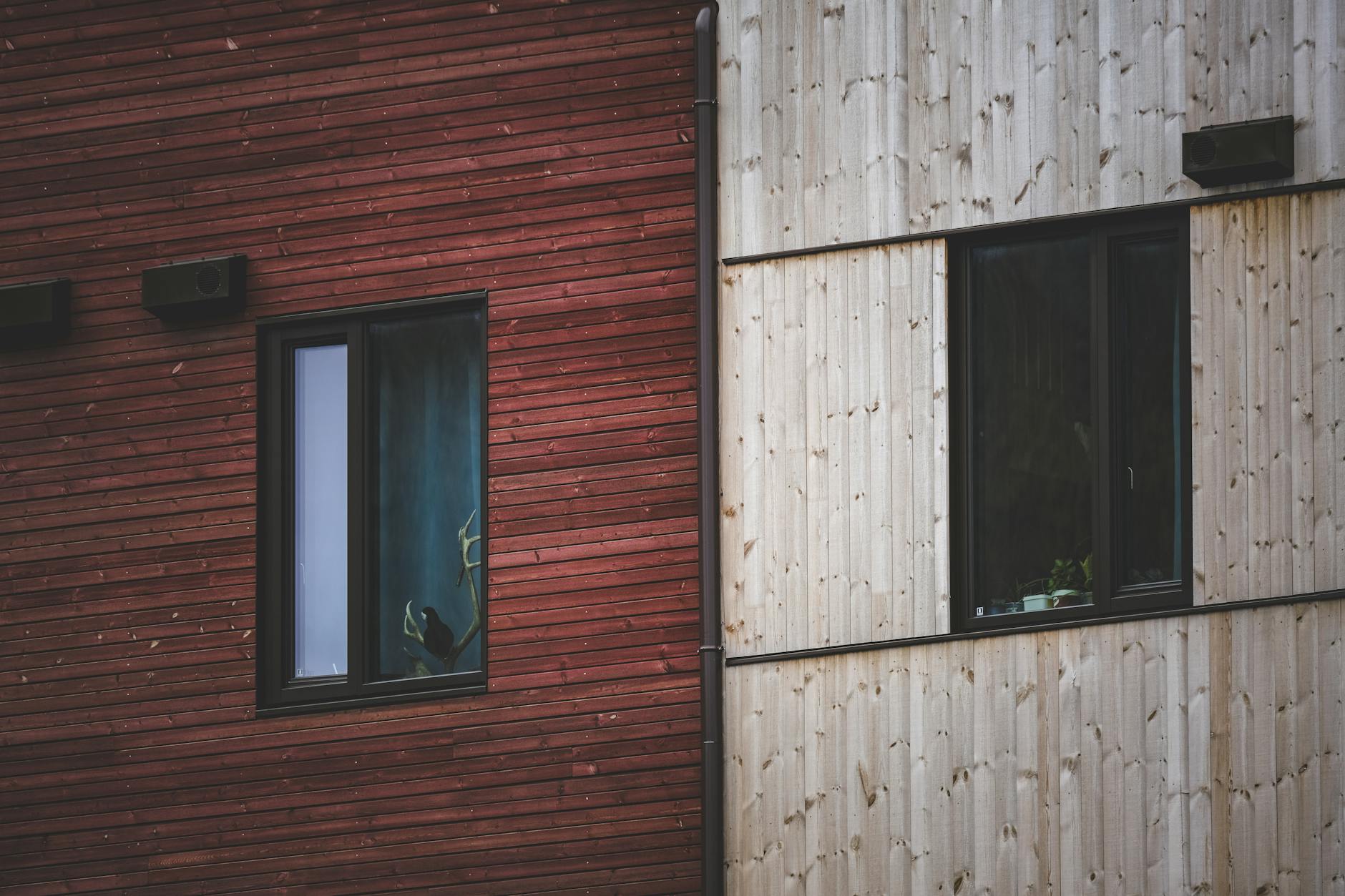
Choosing the best outdoor cladding panels for a wet climate is not the same decision as choosing them for a dry one. The UK gets an average of 1,200 mm of rainfall per year across many regions — and that sustained moisture exposure separates panels that last a decade from panels that warp, delaminate, or fade within two seasons.
TL;DR: The best outdoor cladding panels for wet UK climates in 2026 are those built with moisture-resistant substrates, UV-stable finishes, and a mechanical fixing system that allows water to drain freely behind the panel face. Aku Wood Panel's exterior cladding range — available in Birch, Oak, Black, and Stone Grey — is purpose-built for exterior use and consistently outperforms standard interior-grade wood panels in damp conditions. Buy the exterior-specific range. Avoid repurposing interior panels outdoors.
Why wet-climate cladding is its own category
Most wood panel failures in the UK happen because buyers source interior-grade products and assume they will perform outdoors. They do not. Interior panels lack the sealed edges, moisture-stable cores, and treatment depth that exterior exposure demands. In a wet climate, the failure mode is predictable: water ingresses at cut edges, the substrate swells, the face finish cracks, and within 18 months the panel is lifting or staining the wall behind it.
The 2026 market has matured enough that dedicated exterior cladding panels are widely available at accessible price points. The guidance below covers what separates good from poor, ranks the options worth specifying, and tells you what to ignore.
How we ranked these panels
Rankings are based on four criteria applied specifically to wet-climate performance: substrate moisture resistance, finish durability under UV and rain cycling, fixing system design (drainage gap provision), and finish colour range. Interior acoustic panels — regardless of their acoustic performance — are excluded from this ranking because they are not rated for exterior exposure. Panels are ranked in order of suitability for high-rainfall UK conditions.
Ranked: best outdoor cladding panels for wet climates in 2026
1. Exterior Wall Cladding Panel — Stone Grey
The all-weather safe pick.
Stone Grey sits at the neutral end of the spectrum and does something clever: it hides the weathering that invariably occurs on exterior surfaces over time. Light-coloured panels show tide marks and algae growth fastest; Stone Grey minimises both visually while the substrate handles the structural load. The panel is purpose-built for exterior wall applications, with a moisture-resistant core and a finish designed to cycle through rain and dry periods without surface cracking. Pair it with the exterior wall cladding finishing trim stone grey for clean edge termination that prevents water ingress at panel ends — the single most common failure point in any cladding installation.
Verdict: Buy. The most practical finish for UK north-facing or heavily shaded elevations where algae and moisture marks are constant.
2. Exterior Wall Cladding Panel — Black
The contrast choice that holds its finish.
Black exterior panels have become the dominant aesthetic choice in 2026 for good reason: the finish masks surface weathering, and on a dark substrate, UV fade is far less visible than on lighter tones. The Aku Wood Panel Black exterior cladding is rated for outdoor use with the same moisture-resistant substrate as the rest of the exterior range. Black is the go-to for contemporary extensions, garden offices, and rendered house exteriors where contrast with light masonry is the design intent. Order a sample outdoor wall panel black before committing to a full run — colour perception changes significantly between monitor and physical surface, especially in outdoor light conditions.
Verdict: Buy. First choice for modern aesthetic briefs and the most forgiving finish for visible weathering.
3. Exterior Wall Cladding Panel — Oak
The warm-tone option with the right credentials.
Oak finish on an exterior panel is a harder brief to get right than black or stone grey, because natural wood tones will shift over time with UV exposure — even on treated exterior panels. The Aku Wood Panel exterior Oak cladding uses a finish calibrated for outdoor conditions, but buyers should understand that some patina development is normal and expected. What it is not is structural failure. The Oak finish works well on timber-frame houses and garden buildings where a warmer tone complements the surrounding materials. Use the matching exterior wall cladding corner trim oak at all external corners — unsealed corners are where moisture gets in first.
Verdict: Buy, with the expectation of managed patina over 3–5 years. Not a maintenance-free choice.
4. Exterior Wall Cladding Panel — Birch
The lightest tone; requires the most management.
Birch is the palest finish in the exterior range and the most demanding in a wet climate. Light-toned panels on north or west-facing UK elevations will accumulate green algae within 12–24 months without periodic cleaning. The substrate itself is exterior-rated, so structural performance is not the concern — appearance maintenance is. Birch suits south-facing elevations with good air movement, where the panel surface dries quickly after rain. For heavily exposed or shaded positions, step up to Stone Grey or Black.
Verdict: Consider for south-facing, well-ventilated elevations only. Skip for north or west-facing positions with limited sun exposure.
5. Cladding Boards — Oak and Stone Grey
The individual board format for traditional elevations.
Where full-panel systems feel too contemporary, individual cladding boards deliver the same exterior-rated performance in a more traditional horizontal or vertical board profile. The Oak and Stone Grey cladding boards from Aku Wood Panel suit period properties, agricultural buildings, and projects where the architect needs a board-and-gap aesthetic rather than a flush panel face. Board-format cladding also simplifies partial replacement if one section is damaged, without disturbing the full elevation.
Verdict: Hold unless the brief specifically calls for a board profile rather than a panel system. The panel format installs faster and achieves a cleaner finish on flat elevations.
Comparison table — wet-climate performance
| Panel | Moisture Resistance | Finish for Wet Climate | Best Elevation | Maintenance Demand |
|---|---|---|---|---|
| Stone Grey | Exterior-rated | Excellent — hides weathering | Any | Low |
| Black | Exterior-rated | Excellent — UV fade minimal | Any | Low |
| Oak | Exterior-rated | Good — patina develops | South-facing | Medium |
| Birch | Exterior-rated | Adequate — algae risk | South-facing only | High |
| Cladding Boards | Exterior-rated | Good | Any | Medium |
What to avoid in wet climates
Interior acoustic panels used outdoors. Aku Wood Panel's acoustic wood panel range — Natural Oak, Walnut, Smoked Oak, and others — is manufactured for interior applications. The felt backing absorbs moisture. The MDF or composite substrate is not sealed for sustained exterior exposure. These panels will fail outdoors. They are not a cheaper alternative to the exterior range; they are a different product category.
Panels without a drainage detail. Any cladding system that sits flush against the substrate wall without a cavity or drainage gap traps water behind the panel face. Over a UK winter, that standing water causes substrate damage regardless of how good the panel itself is. Always fix exterior cladding with a battened system that provides a minimum 25 mm ventilated cavity behind the panel.
Skipping sample orders on light finishes. Birch and Oak finishes look significantly different on a full elevation in overcast UK daylight than they do on screen or in a showroom. Order a physical sample — Aku Wood Panel supplies sample-sized exterior panels — before placing a full order. Colour corrections on a finished elevation cost more than a sample.
Where to buy
- Order directly from Aku Wood Panel for the full exterior cladding range including matching trims, corner profiles, and screws. Buying trims and fixings from the same manufacturer eliminates the colour-match problems that appear when sourcing accessories separately.
- Use the sample service before ordering full quantities on any finish lighter than Black or Stone Grey.
- For projects requiring both panel and board formats, confirm with Aku Wood Panel that batch colours are matched — production runs can shift slightly between orders.
For more context on exterior applications, the guide on waterproof exterior wall cladding for UK homes covers installation and substrate preparation in detail.
FAQ
What are the best outdoor cladding panels for a wet UK climate in 2026? Exterior-rated panels with moisture-resistant substrates and UV-stable finishes. Stone Grey and Black finishes are the most practical for wet UK conditions because they conceal weathering and algae growth better than light tones.
Can I use interior wood panels outside? No. Interior panels — including acoustic wood panels with felt backing — are not manufactured for exterior moisture exposure. They will warp, delaminate, or develop mould within one to two seasons outdoors.
How long do exterior cladding panels last in the UK climate? A correctly installed exterior-rated panel with proper ventilation behind it should last 10–15 years without structural failure. Surface appearance will change over time depending on finish colour and elevation aspect.
What colour cladding panels are easiest to maintain in wet weather? Black and Stone Grey require the least maintenance because surface weathering and algae growth are least visible. Birch and other light-toned finishes require periodic cleaning on north-facing or shaded elevations.
Do I need special screws for exterior cladding panels? Yes. Exterior wall cladding screws should be stainless steel or hot-dip galvanised to prevent rust streaking on the panel face. Aku Wood Panel supplies colour-matched exterior cladding screws in all four panel finishes.
Is a ventilation gap necessary behind exterior cladding? Yes. A minimum 25 mm ventilated cavity behind the cladding allows moisture that gets behind the panel face to drain and dry rather than accumulate. Installing panels direct to a masonry wall without a cavity significantly shortens panel life in wet climates.
Can exterior cladding panels be used on garden buildings and sheds? Yes. The exterior panel format is well suited to garden offices, sheds, and outbuildings. The fixing and trim system allows for complete coverage including corners and edge terminations.
What is the difference between exterior cladding panels and cladding boards? Panels are large-format sheets that install quickly and produce a flush or shadow-gap face. Cladding boards are individual narrower profiles — typically used where a traditional horizontal or vertical board aesthetic is required. Both are exterior-rated; the choice is primarily aesthetic.
One last thing
The most expensive mistake in exterior cladding is not buying the wrong panel — it is installing the right panel with the wrong fixing detail. A panel rated for exterior exposure will still fail if fixed without a drainage cavity, or if cut edges are left unsealed before installation. In 2026, the product quality across exterior-rated cladding ranges is generally reliable; the installation detail is where most project failures actually originate. Read the fixing specification before you order, not after.
Share:
Outdoor Cladding Panels for Flat-Roof Extensions 2026
Composite Wall Panels for Modern Interiors 2026