

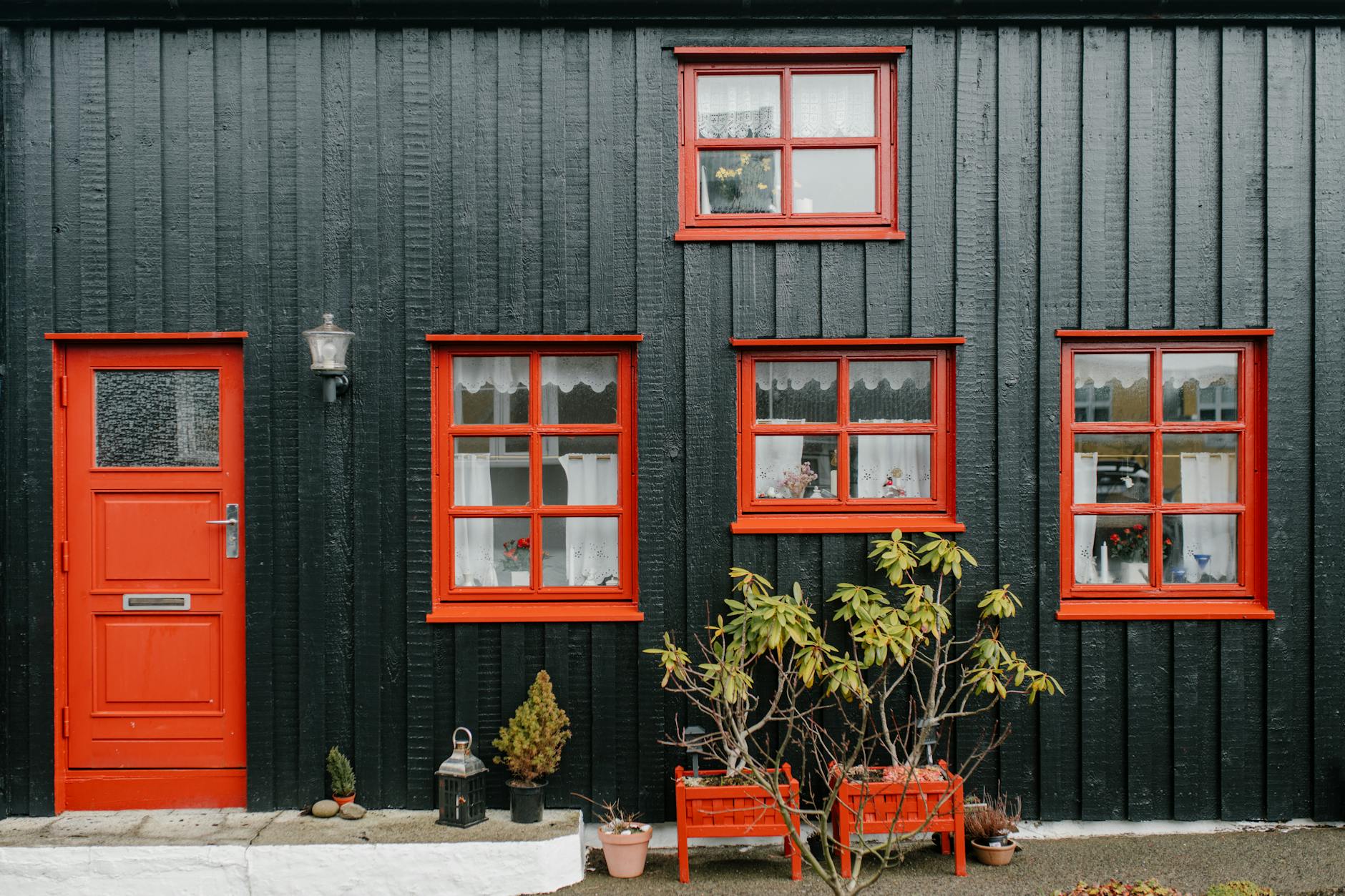
Outdoor wall cladding on a rendered house is one of the sharpest ways to break up a flat façade, add texture, and give the exterior a character that plain render alone never achieves. This guide covers every practical decision — material, fixing method, maintenance, and which Aku Wood Panel products suit a rendered background — so you can get it right before a single screw goes in.
TL;DR: For a rendered house in 2026, the strongest outdoor wall cladding choice is a weather-rated timber panel that tolerates UK moisture cycles without cupping or splitting. Aku Wood Panel's exterior wall cladding panel birch is the direct pick for exposed façades. Natural oak variants suit sheltered gable or porch sections. Avoid PVC-effect boards over fresh render — thermal movement pulls fixings within 18 months.
Why cladding over render works — and when it doesn't
Render is a monolithic finish. It moves as one skin, and hairline cracks are almost inevitable within 3–5 years on most UK homes due to seasonal temperature swings of 30°C or more. Fixing cladding over a rendered wall creates a second skin with a drained, ventilated cavity behind it — that cavity handles moisture vapour and reduces thermal bridging. The result is a more resilient exterior in 2026 than render alone.
The scenario where it fails: cladding fixed directly onto cracked or delaminating render with no batten spacer. Moisture gets trapped, the render deteriorates faster, and the cladding distorts. Always assess render condition before specifying any panel system.
Who this guide is for
This is written for homeowners, self-builders, and small contractors working on UK residential properties — detached, semi-detached, or terraced — where the existing or new finish is a sand-cement, monocouche, or silicone render. It is equally relevant if you are cladding a rendered garden building, porch, or extension. If you are working on a listed building or within a conservation area, check permitted development rules before installing any external cladding.
What to look for in outdoor wall cladding for a rendered house
Weather resistance rated for UK conditions
The UK's west-facing walls take driving rain at wind speeds that regularly exceed 60 mph in winter. Any panel specified for a rendered house exterior needs a moisture resistance classification suitable for exposed Use Class 3 conditions (BS EN 335). Untreated softwood fails this without factory pre-treatment. Birch-core panels with a sealed face perform consistently across wet-dry cycles without the warping that affects MDF-core products.
Ventilated cavity behind the panel
Building Regulations Part C requires adequate moisture resistance for external walls. A 25–38 mm batten void between the render face and the back of the cladding board allows moisture to drain and vapour to escape. Skip this detail and you are trapping water against the render — which accelerates efflorescence and mould behind the panels within one or two winters.
Fixing method compatible with render substrate
Render is not a structural substrate. Fixings must pass through it into the masonry or timber frame behind. For brick or block behind render, 60 mm stainless steel screws into rawl-plugged holes at 400 mm centres work reliably. For timber frame, 50 mm ring-shank stainless nails or screws direct into studs. Never fix solely into the render skin — it will pull free.
Thermal movement allowance
Timber panels expand and contract with humidity. A 120 cm panel can move 1.5–2 mm seasonally. Fixing systems that grip the board rigidly at both ends will cause splitting at the face. Secret-fix clip systems or slotted hole fixings at one end absorb this movement without visible cracking. This matters more on south- and west-facing elevations.
Finish and colour retention outdoors
Oak-faced panels with a UV-stable factory oil or lacquer retain their tone for 3–5 years in sheltered positions. Exposed elevations oxidise faster — expect silver-grey weathering on uncoated oak within 12–18 months outdoors. If you want to maintain the original tone, specify a pre-oiled panel and plan for a maintenance coat every 2 years. Smoked oak weathers to a consistent dark-grey that many homeowners find acceptable without maintenance.
Panel size relative to the wall area
Larger panels (600 mm × 2400 mm range) install faster and have fewer joints, but they are harder to handle on scaffolding and amplify any substrate irregularity. Smaller modular panels — including hexagonal formats — allow tight coursing around windows and eaves without excessive cutting waste. On a rendered house with multiple penetrations (windows, pipes, meters), modular sizing reduces waste to under 10% on a typical elevation.
Top picks from Aku Wood Panel
The primary exterior pick — exterior wall cladding panel birch Hook: the direct-rated exterior board. Birch core construction handles moisture cycling better than MDF-core competitors. This is the panel to specify for an exposed elevation — north-facing or west-facing walls with no overhang protection. Verdict: Buy for any rendered house exterior where weather exposure is the primary concern.
The sheltered-elevation pick — wooden wall panel natural oak Hook: the character panel. Natural oak facing delivers the warm, open-grain aesthetic that drives most homeowners toward timber cladding in the first place. Best on south-facing gables, covered porches, or canopy-sheltered sections where direct rain exposure is limited. The oak face rewards a maintenance oil coat every 24 months to hold colour. Verdict: Buy for sheltered sections; Consider for exposed elevations if you accept the weathering patina.
The low-maintenance dark finish — wooden wall panel smoked oak Hook: the maintenance-light option. Smoked oak's darker tone masks surface weathering and minor staining far better than natural oak. On a rendered house with a contemporary dark-frame window scheme — popular in 2026 new builds — smoked oak cladding reads as a deliberate design choice rather than weathering. Verdict: Buy for homeowners who want timber character without the upkeep of oiling a pale surface.
The acoustic-and-aesthetic hybrid — wooden wall panel natural oak grey felt Hook: the dual-purpose panel. Where a covered outdoor room, open-sided garage, or semi-enclosed porch meets a rendered wall, the grey felt backing adds sound absorption to the cladding function. Not rated for fully exposed rain contact — specify only in covered external zones. Verdict: Consider for sheltered semi-outdoor spaces; Skip for open façades.
What to avoid
- Foam-backed composite boards over fresh render. Render needs 28 days minimum to cure before any cladding is fixed over it. Foam-backed boards trap curing moisture and cause blistering. In 2026, contractors still skip this and create callbacks 6 months later.
- Untreated or builder's-grade softwood. Feather-edge and shiplap pine from a builders' merchant is Use Class 2 at best. It will absorb moisture, swell at joints, and allow mould ingress within 2–3 UK winters unless treated to UC3 standard and end-coated on every cut. Factory-finished panels eliminate this variable.
- Horizontal boards without a bottom edge drip detail. Horizontal cladding on rendered walls holds water at the bottom rail unless there is a drip groove or a metal flashing directing water clear of the render surface. This is one of the most common defect patterns on residential timber cladding jobs in the UK.
Comparison table
| Panel | Best elevation | Weather exposure | Maintenance interval | Acoustic benefit | 2026 verdict |
|---|---|---|---|---|---|
| Exterior cladding panel birch | Any | High (exposed) | Low | None | Buy |
| Wooden wall panel natural oak | South/sheltered | Moderate | Every 24 months | None | Buy (sheltered) |
| Wooden wall panel smoked oak | Any | Moderate–high | Low | None | Buy |
| Natural oak grey felt | Covered/semi-outdoor | Low only | Low | Yes | Consider |
FAQ
What is the best outdoor wall cladding for a rendered house in 2026? For a fully exposed UK elevation, a birch-core exterior-rated panel is the safest specification. For sheltered or design-led sections, natural oak or smoked oak panels deliver the timber aesthetic with manageable maintenance.
Can you fix cladding directly onto render? No. Render is not a structural substrate. Fixings must pass through the render into masonry or timber frame behind. Always use a batten system to create a 25–38 mm ventilated cavity.
How long does timber cladding last on a rendered house exterior? Factory-finished, exterior-rated timber panels typically last 20–30 years with periodic maintenance. Untreated softwood in UK outdoor conditions degrades noticeably within 5 years.
Do I need planning permission to clad a rendered house? In most cases, re-cladding an existing house exterior falls under permitted development in England and Wales, provided the materials are of a similar appearance. Listed buildings and conservation area properties require prior consent. Always confirm with your local planning authority before starting.
Is smoked oak cladding suitable for a north-facing wall? Yes. Smoked oak's darker tone is less affected by the algae and green mould that accumulates on north-facing surfaces because surface staining is less visible. A biocide wash once a year keeps the surface clean.
How do I prepare a rendered wall before installing cladding panels? Check for delamination by tapping — hollow areas must be cut out and re-rendered. Treat any mould or algae with a biocide solution and allow to dry fully. Mark stud or masonry positions behind the render before battening out, since you need to fix into structural material, not the render skin.
What gap should I leave between cladding boards? For secret-fix systems, follow the manufacturer's clip spacing — typically 3–5 mm per joint for movement allowance. For face-fixed horizontal boards, a 5 mm open joint or a 3 mm sealed joint is standard. Never install boards tight to each other — the first summer heat cycle will cause buckling.
Can timber cladding be used on a rendered extension as well as the main house? Yes, and mixed-material façades — render on the main block, timber cladding on the extension — are one of the most common residential treatments in 2026. The contrast between the two materials defines the extension as a distinct addition, which planners often prefer to an exact material match.
One last thing
Rendered houses that use timber cladding as a feature panel — not a full wrap — typically achieve a higher visual impact per pound spent than full re-cladding. A single timber-clad bay, gable, or ground-floor strip against a plain white render background reads as a considered design decision. Specifying one or two panels of exterior wall cladding panel birch as a feature section rather than covering every elevation keeps costs controlled and gives you a test of the material's performance before committing to a full façade in 2026.
Share:
Best Hexagon Acoustic Panels for Home Decor 2026
Oak Wall Panels for Hallways: Best Picks 2026