

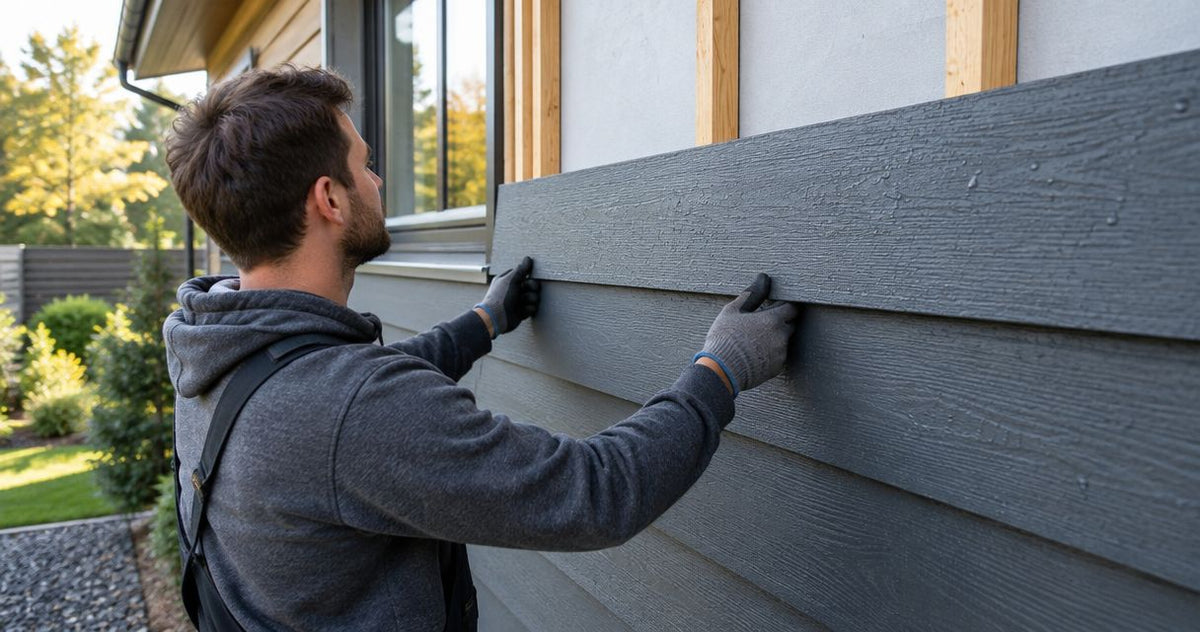
Best default shortlist: exterior-grade uPVC cladding for a simple domestic wall. Best for a wood-effect finish: exterior composite cladding. Best for utility buildings: coated steel panels. When comparing cheap waterproof exterior wall panels in 2026, choose a complete exterior-rated system, not a panel face advertised as waterproof.
- Shortlist exterior-grade uPVC for straightforward domestic cladding; compare complete systems rather than panel-only quotes.
- Cheap waterproof exterior wall panels still need correctly designed joints, flashings and drainage.
- Composite suits wood-effect projects; coated steel suits utility buildings; fibre cement suits painted façades.
- Akustiq UK offers exterior wall cladding; keep indoor acoustic wood panels out of exposed exterior specifications.
Why this matters
A water-resistant panel does not make a watertight wall. Rain protection depends on how the panels, joints, openings and underlying wall work together.
For your 2026 project, separate appearance from weather protection before choosing a finish. Akustiq UK sells exterior wall cladding as well as indoor acoustic panels, but those categories are not interchangeable.
Akustiq UK exterior wall cladding is best considered by buyers comparing exterior finishes, not as a substitute for a designed weatherproof wall assembly. Start with the building and its exposure, then narrow the material and colour.
What makes the best cheap waterproof exterior wall panels?
Use these criteria before comparing material types:
- Exterior suitability: Written confirmation that the exact product suits the proposed outdoor application.
- Water management: Installation details covering joints, openings, drainage and any required cavity or membrane.
- Complete-system scope: Panels, fixings, supports, flashings and trims included in the comparison.
- Installation fit: A system compatible with your wall construction, access and installer’s skills.
- Maintenance requirements: Clear instructions for cleaning, coating and replacing damaged sections.
- Building requirements: Evidence covering the relevant fire, structural and exposure requirements for your project.
A finish name is not a material specification. Likewise, a bathroom panel’s resistance to splashes does not establish its suitability for sunlight, wind and outdoor temperature changes.
Exterior wall panels at a glance
This 2026 shortlist ranks materials by practical use case, not verified supplier pricing. No material wins every project: the wall construction and installation requirements determine the final choice.
| Rank and option | Best for | Standout characteristic | Key limitation |
|---|---|---|---|
| 1. Exterior-grade uPVC cladding | Simple domestic walls | Non-timber surface without a timber repainting schedule | Requires product-specific movement and fixing details |
| 2. Exterior composite cladding | Wood-effect garden buildings | Wood-effect appearance without specifying exposed natural timber | Composition and installation requirements differ between products |
| 3. Coated steel wall panels | Garages and utility buildings | Profiled metal sheets for functional exterior coverage | Cut edges, coatings and condensation need attention |
| 4. Fibre-cement cladding | Painted-look house façades | Board or panel formats suited to a defined façade layout | Cutting, handling and dust controls require planning |
| 5. Aluminium cladding | Contemporary feature areas | Folded or profiled details for precise exterior lines | Fabrication and junctions need careful specification |
1. Exterior-grade uPVC: best for simple domestic walls
Exterior-grade uPVC cladding provides an outer covering using plastic boards or panels. Put it first on your shortlist when you want a straightforward domestic finish without the coating routine associated with painted timber.
Specify exterior cladding explicitly. Indoor PVC decorative panels and outdoor uPVC cladding are different product categories, even when photographs look similar.
Exterior-grade uPVC pros:
- Does not require the same repainting approach as painted timber.
- Offers board and profile choices for different wall layouts.
- Suits a simple, consistent exterior finish.
Exterior-grade uPVC cons:
- Movement allowances and fixing positions must follow the exact system instructions.
- Impact resistance, colour stability and fire performance require product-specific evidence.
Best for: Homeowners comparing uncomplicated cladding for a domestic wall or outbuilding.
Before ordering, ask how the system finishes at corners, window reveals and its bottom edge. A panel that looks simple across an uninterrupted wall still needs those junctions resolved.
Verdict: Buy only an exterior-rated system with complete installation details.
2. Exterior composite cladding: best for wood-effect garden buildings
Exterior composite cladding combines constituent materials into boards or panels, often with a wood-effect surface. It belongs on your shortlist when you want that appearance on a garden office or extension.
Do not treat composite as a single specification. Composition, profiles, fixing methods and weathering behaviour differ between products.
Exterior composite cladding pros:
- Offers a wood-effect alternative to exposed natural timber.
- Provides repeatable profiles for a planned façade layout.
- Allows you to compare coordinated boards and finishing components within a system.
Exterior composite cladding cons:
- Movement gaps and support requirements are product-specific.
- A wood-effect description does not establish water absorption, fire performance or maintenance needs.
Best for: Buyers prioritising a wood-effect exterior on a garden building.
For a 2026 garden-room project, request the exact board specification before choosing accessories. Confirm whether the intended orientation is permitted and how the manufacturer handles exposed ends.
Verdict: Buy for the appearance after checking the complete exterior specification.
3. Coated steel panels: best for garages and utility buildings
Coated steel wall panels use profiled metal sheets as an exterior covering. They suit projects where a functional building finish matters more than a domestic timber-style appearance.
The coating, fixings and junctions form part of the specification. Bare cut edges and unsuitable fasteners must not become afterthoughts.
Coated steel panel pros:
- Suits functional garage, workshop and storage-building façades.
- Profiled sheets create a consistent industrial appearance.
- Matching flashing details can define corners and openings.
Coated steel panel cons:
- Coating damage and cut edges require the specified treatment.
- Condensation control needs consideration within the whole wall assembly.
Best for: Utility buildings where a metal exterior matches the intended use.
Distinguish single-skin sheets from insulated panel systems when comparing proposals. They are not equivalent wall constructions, and one description must not stand in for the other.
Verdict: Buy for functional buildings with the coating and condensation details resolved.
4. Fibre cement: best for painted-look house façades
Fibre-cement cladding comes in board and panel formats for exterior façades. Consider it when your priority is a painted-look elevation with a deliberate arrangement of boards or joints.
A fibre-cement face is not a reason to omit the required weather-management layers. Follow the specified assembly behind it.
Fibre-cement cladding pros:
- Suits painted-look domestic elevations.
- Offers board and panel approaches to façade design.
- Lets you plan visible joints as part of the finished appearance.
Fibre-cement cladding cons:
- Handling and support requirements need checking before installation.
- Cutting requires suitable equipment and dust controls, including controls for respirable silica where applicable.
Best for: Homeowners who want a defined painted-board or panelled façade.
Ask whether edges require treatment and which cutting method the manufacturer specifies. Resolve those questions before the installer starts, not after panels have been cut.
Verdict: Buy when the desired finish justifies the handling and cutting requirements.
5. Aluminium cladding: best for contemporary feature areas
Aluminium cladding provides a metal exterior in sheet, folded or profiled forms. It suits a contemporary entrance, extension feature or other area where precise junctions are central to the design.
Treat solid aluminium and aluminium composite panels as separate specifications. The word aluminium alone does not describe the complete product.
Aluminium cladding pros:
- Suits crisp, contemporary exterior detailing.
- Allows folded components around selected junctions.
- Offers an alternative to wood-effect or painted-board appearances.
Aluminium cladding cons:
- Fabrication, support and movement details need coordination.
- Dents and finish damage require a defined repair or replacement approach.
Best for: Design-led feature areas with carefully planned metalwork.
Ask the supplier to identify the complete panel construction and finish. For a tight budget, compare a targeted feature area with a full elevation rather than assuming both require the same material.
Verdict: Hold until fabrication and junction details are included in the proposal.
Waterproof panels versus a weatherproof wall
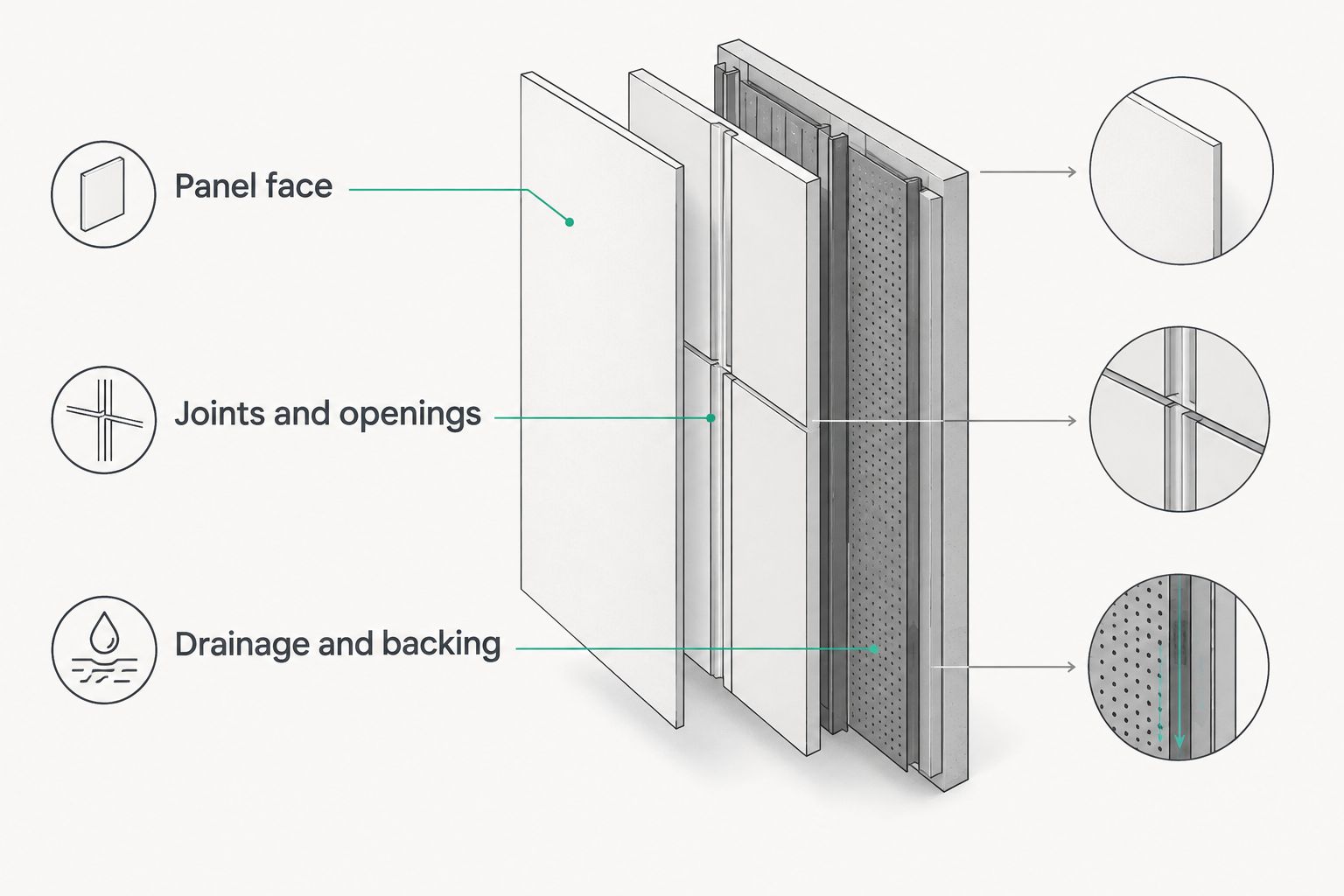
When searching for cheap waterproof exterior wall panels, separate these parts of the assembly:
- Panel face: The exposed material that sheds rain.
- Joints and openings: Connections around boards, windows, doors and penetrations.
- Drainage and backing: The specified arrangement that manages water behind the outer face.
Those parts work together. Some cladding systems are designed as rainscreens, where the outer layer sheds much of the rain while the backing assembly manages water that passes through.
Do not seal every visible opening by instinct. Where a system requires ventilation or drainage, blocking those routes defeats the intended design. Use the manufacturer’s details for the exact product and wall type.
How to compare complete proposals in 2026
Ask each supplier or installer to quote against the same measured elevation. Record wall dimensions in metres, calculate area in square metres, and keep the cutting layout alongside the area calculation.
Check these inclusions before deciding:
- Coverage: Effective installed coverage, not just the board’s overall dimensions.
- Supports: Required battens, rails or other supporting components.
- Weather details: Membranes, flashings and drainage components where specified.
- Finishing: Corners, starter pieces, end treatments and opening surrounds.
- Installation: Access, preparation, fitting and removal of existing finishes where needed.
Compare the completed wall, not an isolated panel listing. A proposal that excludes openings and corners does not describe the same job as one that includes them.
Keep maintenance instructions with your project documents. Cleaning methods, coating requirements and replacement procedures belong in the buying decision, not just the handover folder.
Where Akustiq UK exterior cladding fits
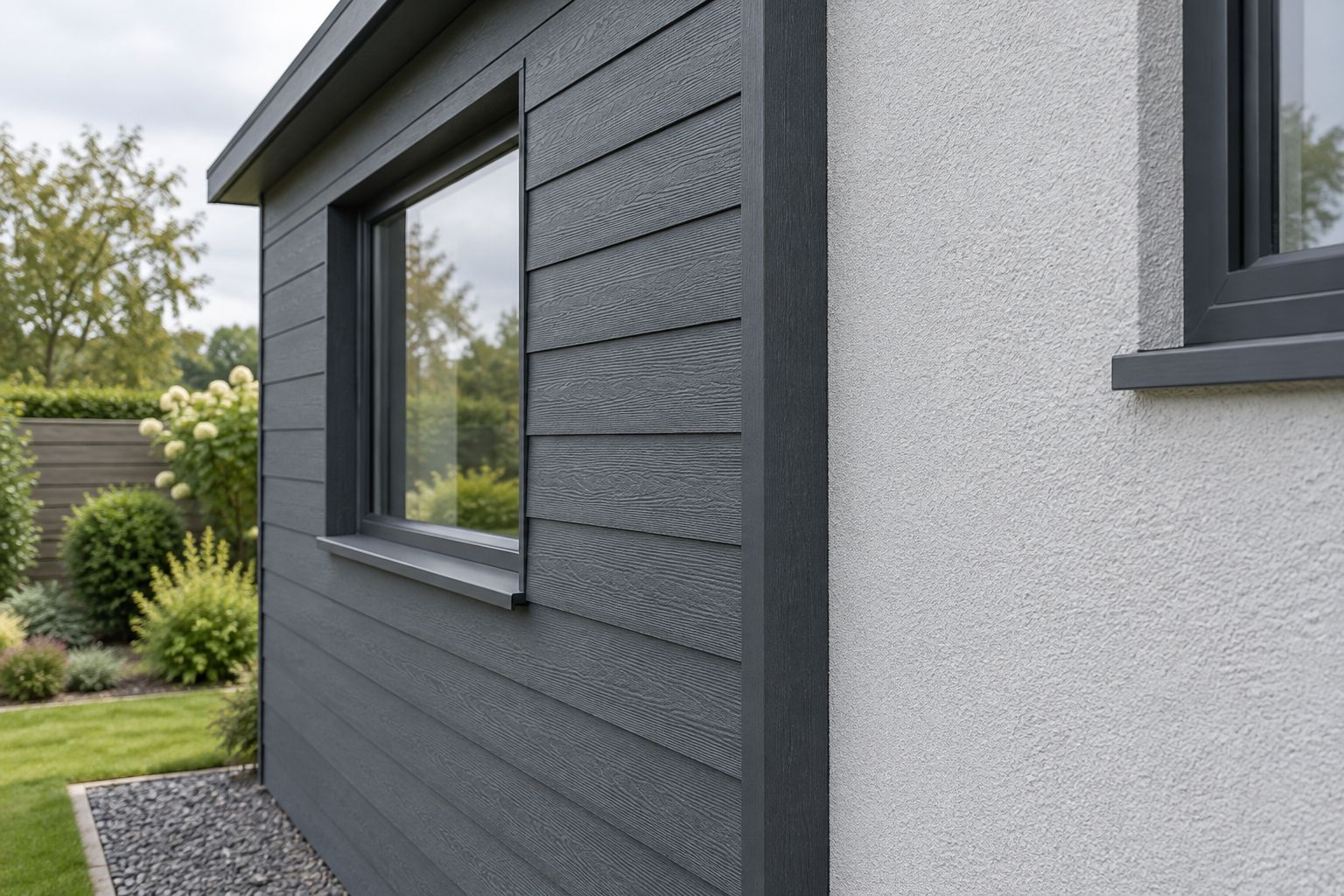
Akustiq UK exterior wall cladding includes Stone Grey exterior wall cladding panels and Oak exterior wall cladding panels. Use those finish options to narrow the appearance you want, then request the material and installation specification for the selected panel.
Do not infer that an Oak finish means solid oak, or that Stone Grey means stone. A finish label identifies appearance; it does not establish composition or waterproof performance.
Keep indoor products separate from that exterior shortlist. The indoor acoustic wood-panel range includes 240 × 60 cm and 300 × 60 cm formats with 3-sided wood veneer; those dimensions and finishes do not establish outdoor suitability.
How the shortlist is ranked
The 2026 ranking prioritises a clear use case, an identifiable exterior application and the ability to specify the whole installation. It is a material-selection guide, not a claim that one supplier or product has the lowest quote.
Exterior-grade uPVC takes the default shortlist position for a simple domestic finish. Composite serves wood-effect projects, steel serves utility buildings, fibre cement serves painted-look façades, and aluminium serves precisely detailed feature areas.
Which exterior wall panels should you choose?
Start with exterior-grade uPVC if you want a straightforward domestic wall finish. Choose composite for a wood-effect brief, coated steel for a functional outbuilding, fibre cement for a painted-look elevation, or aluminium for a planned metal feature.
Then apply the same stop rule to every option: do not order until exterior suitability, fixing details, water management and relevant building requirements are clear. If your wall is already damp, identify the cause before covering it.
FAQ
What are the best cheap waterproof exterior wall panels?
Exterior-grade uPVC is the default shortlist choice for a simple domestic wall finish. Compare it with composite, coated steel, fibre cement and aluminium according to the building and desired appearance; select a complete exterior-rated system.
Are waterproof wall panels enough to stop rain getting into a wall?
No, a waterproof panel face alone does not make a watertight wall. Joints, openings, flashings and the specified drainage or backing arrangement must also manage rain.
Can I use indoor acoustic wood panels outside?
Do not use indoor acoustic wood panels on an exposed exterior unless the manufacturer explicitly approves that application. A wood veneer finish and felt backing do not establish outdoor suitability.
Is composite cladding better than uPVC?
Composite is the stronger shortlist choice when a wood-effect appearance is your priority; exterior-grade uPVC suits a straightforward domestic finish. Compare the exact products because movement, maintenance and installation requirements differ.
Can I fit exterior cladding straight onto brick?
Fit cladding directly to brick only when the exact system instructions permit that construction. Other systems require supports, a cavity or additional layers, and the brickwork must be suitable for the proposed fixings.
What should an exterior cladding quote include?
An exterior cladding quote should define the completed wall assembly. Check panels, supports, fixings, trims, flashings, required backing layers, access and installation rather than comparing panel listings alone.
Does exterior cladding fix a damp wall?
Exterior cladding does not automatically fix a damp wall. Diagnose the source of moisture and resolve the wall condition before designing the new covering.
One last thing
Before you commit, ask for a drawing of the bottom edge and a window opening. Those details reveal how the proposed wall drains, how exposed edges finish and whether the proposal includes more than attractive panels.
For your 2026 purchase, make that drawing part of the decision. Choose the documented wall system before the finish.
Share:
Best shed cladding panels in 2026
Best wood effect cladding for gardens and outbuildings 2026