

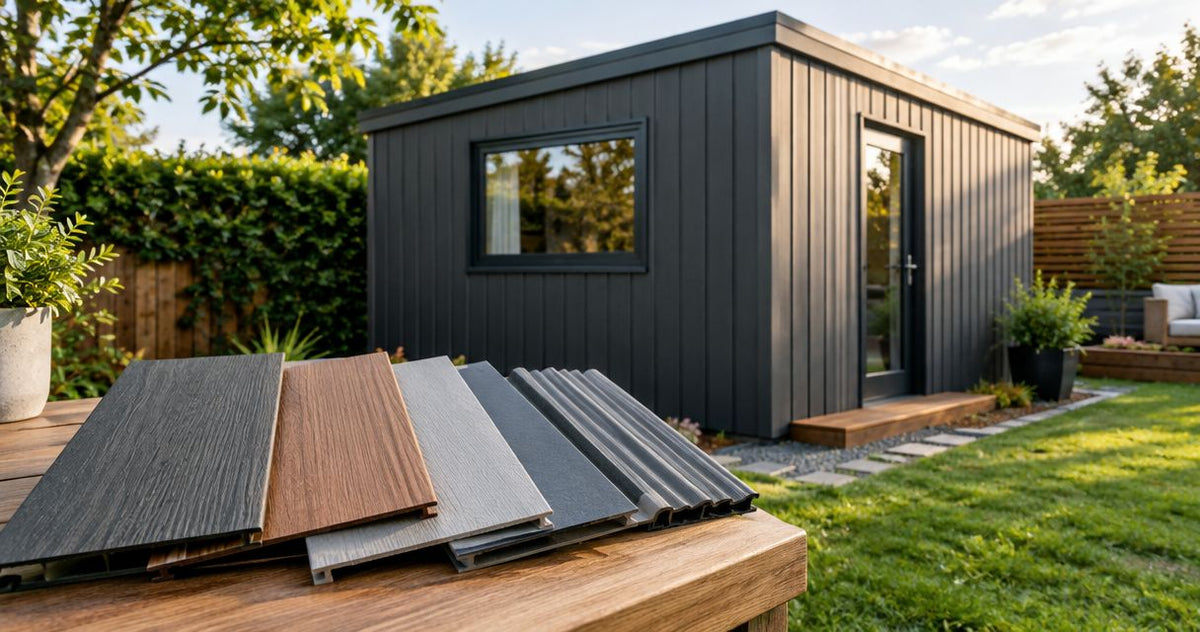
Best overall for a warm garden finish: Oak exterior wall cladding panels. Best for grey surroundings: Stone Grey. Best for a pale scheme: Birch. Best for dark contrast: Black. This 2026 guide compares shed cladding panels by appearance, finishing details and installation checks—not unverified durability claims.
- Akustiq UK shed cladding panels offer four exterior finishes: Oak, Stone Grey, Birch and Black.
- Choose Oak for warmth, Stone Grey for grey surroundings, Birch for pale schemes, or Black for contrast.
- The listed exterior panels are 290 cm long; check effective coverage before calculating quantities.
- Exterior wall cladding needs sound supports and planned edges; panels do not repair a failing shed.
Why this matters
Shed cladding changes the outside finish, but it does not correct rotten framing, leaking roof edges or poor drainage. Check the building first, then choose the finish.
What makes the best shed cladding panels?
- Exterior purpose: choose panels intended for outdoor walls.
- Appearance: match the garden, not just a product photograph.
- Coverage: confirm effective width and usable length.
- Edge details: plan corners, openings and terminations.
- Installation requirements: check supports, fixings and movement allowances.
Shed cladding panels at a glance
| Pick | Best for | Standout feature | Key limitation |
|---|---|---|---|
| Oak exterior wall cladding panel | Warm garden schemes | Oak finish with 3D wood grain; 290 cm length | Not the choice for a grey or monochrome scheme |
| Stone Grey exterior wall cladding panel | Grey paving and surroundings | Stone Grey finish with 3D wood grain; 290 cm length | Does not provide an oak-coloured appearance |
| Birch exterior wall cladding panel | Pale garden schemes | Birch finish with 3D wood grain; 290 cm length | Not the choice for a deliberately dark exterior |
| Black exterior wall cladding panel | Strong contrast | Black finish with 3D wood grain; 290 cm length | Unsuitable if you want a pale shed exterior |
The differences above are finish choices, not a ranking of weather resistance. A colour name does not establish material composition, fire performance, maintenance requirements or service life. Check the technical information for the exact panel before specifying it for your shed.
1. Oak: best shed cladding panels for a warm garden scheme
Oak exterior wall cladding panels provide an oak-coloured, wood-grain finish for outdoor walls. The listed panel is 290 cm long, with corresponding Oak corner trims and finishing trims included in the exterior range.
Choose Oak when you want your shed to sit alongside timber furniture, warm paving or other wood-toned garden features. Compare those colours together before committing: an oak finish does not need to match every wooden object, but it should look intentional beside them.
Akustiq UK Oak shed cladding panels are the default pick for homeowners who want a warm, wood-grain exterior. That is an appearance recommendation, not a claim that Oak outperforms the other finishes outdoors.
Oak pros:
- Gives you a warm-toned alternative to grey or black.
- Includes a 3D wood-grain finish.
- Has corresponding corner and finishing trim options.
Oak cons:
- Does not suit a brief centred on cool grey tones.
- The Oak name alone does not confirm solid-oak construction.
Best for: a shed visible from a patio or seating area where warmth is the main design aim.
For a 2026 refurbishment, view the proposed finish beside the existing door, roof edge and paving. Keep those fixed elements in the decision rather than choosing the cladding in isolation.
Verdict: Buy Oak for a warm exterior, after confirming the installation requirements.
2. Stone Grey: best shed cladding panels for grey surroundings
Stone Grey exterior wall cladding panels give an outdoor wall a grey finish with 3D wood grain. The listed panel is 290 cm long, and the range includes Stone Grey corner trims, finishing trims and exterior cladding screws.
Choose Stone Grey when your main reference points are grey paving, grey window frames or a nearby grey boundary. It gives you a clear colour direction without introducing an oak tone into the scheme.
Do not assume all greys match. Compare the proposed panel finish with the surrounding surfaces in daylight, particularly where the shed sits directly beside a patio or house wall.
Stone Grey pros:
- Provides a grey alternative to the wood-coloured finishes.
- Retains a wood-grain surface appearance.
- Has corresponding trim and screw options in the range.
Stone Grey cons:
- Does not deliver the warm-coloured effect of Oak.
- Needs a colour check against existing grey finishes rather than an assumed match.
Best for: a shed beside grey hard landscaping or a garden scheme already built around grey tones.
The useful question is not whether grey is fashionable in 2026. It is whether Stone Grey connects the shed to surfaces you are keeping. If those surroundings are warm and varied, compare Oak before deciding.
Verdict: Buy Stone Grey when grey surroundings set the colour brief.
3. Birch: best shed cladding panels for a pale garden scheme
Birch exterior wall cladding panels offer a birch-coloured option with 3D wood grain. The listed panel is 290 cm long, with corresponding Birch corner trims, finishing trims and exterior cladding screws in the range.
Choose Birch when you want a pale-looking exterior rather than a dark feature wall. Assess the whole elevation, including the shed door and roof: those elements remain part of the finished appearance even when you replace the wall covering.
A pale colour is a design choice, not evidence of better thermal performance or lower maintenance. Keep those technical questions separate from your colour decision.
Birch pros:
- Provides a pale alternative to Black and Stone Grey.
- Includes a 3D wood-grain finish.
- Has corresponding trims for corners and exposed edges.
Birch cons:
- Does not provide the strong dark contrast of Black.
- The Birch name alone does not establish solid-birch construction.
Best for: homeowners planning a pale exterior alongside light-coloured garden furniture or surrounding finishes.
Before ordering for a 2026 project, compare Birch against the colour of the existing door. Decide whether you will retain that door finish or change it; leaving the decision until fitting day risks an unintended combination.
Verdict: Buy Birch for a pale scheme, not for assumed material properties.
4. Black: best shed cladding panels for a contrasting exterior
Black exterior wall cladding panels provide a dark finish with 3D wood grain. The listed panel is 290 cm long, and the exterior range includes Black corner trims, finishing trims and matching-colour cladding screws.
Choose Black when you want the shed wall to contrast with lighter paving, planting containers or adjacent surfaces. Consider the roof edge and door frame at the same time; a dark wall makes their relationship to the cladding part of the design.
Black pros:
- Gives you a clearly dark option within the range.
- Combines a black finish with wood-grain texture.
- Has corresponding trims and cladding screws.
Black cons:
- Does not suit a brief for a pale exterior.
- Colour alone does not establish heat-related installation requirements.
Best for: a deliberate dark feature wall or a shed exterior designed around contrast.
Check the manufacturer's movement and fixing instructions for the exact panel. Do not invent expansion gaps from the colour or copy details from an unrelated cladding system.
Verdict: Buy Black for deliberate contrast; skip it if a pale exterior is your priority.
Picture the finish before you order
Stand where you normally see the shed—from the kitchen, patio or garden path. Choose the finish from that viewpoint, not only at arm's length, and include the surrounding paving and planting in your decision.
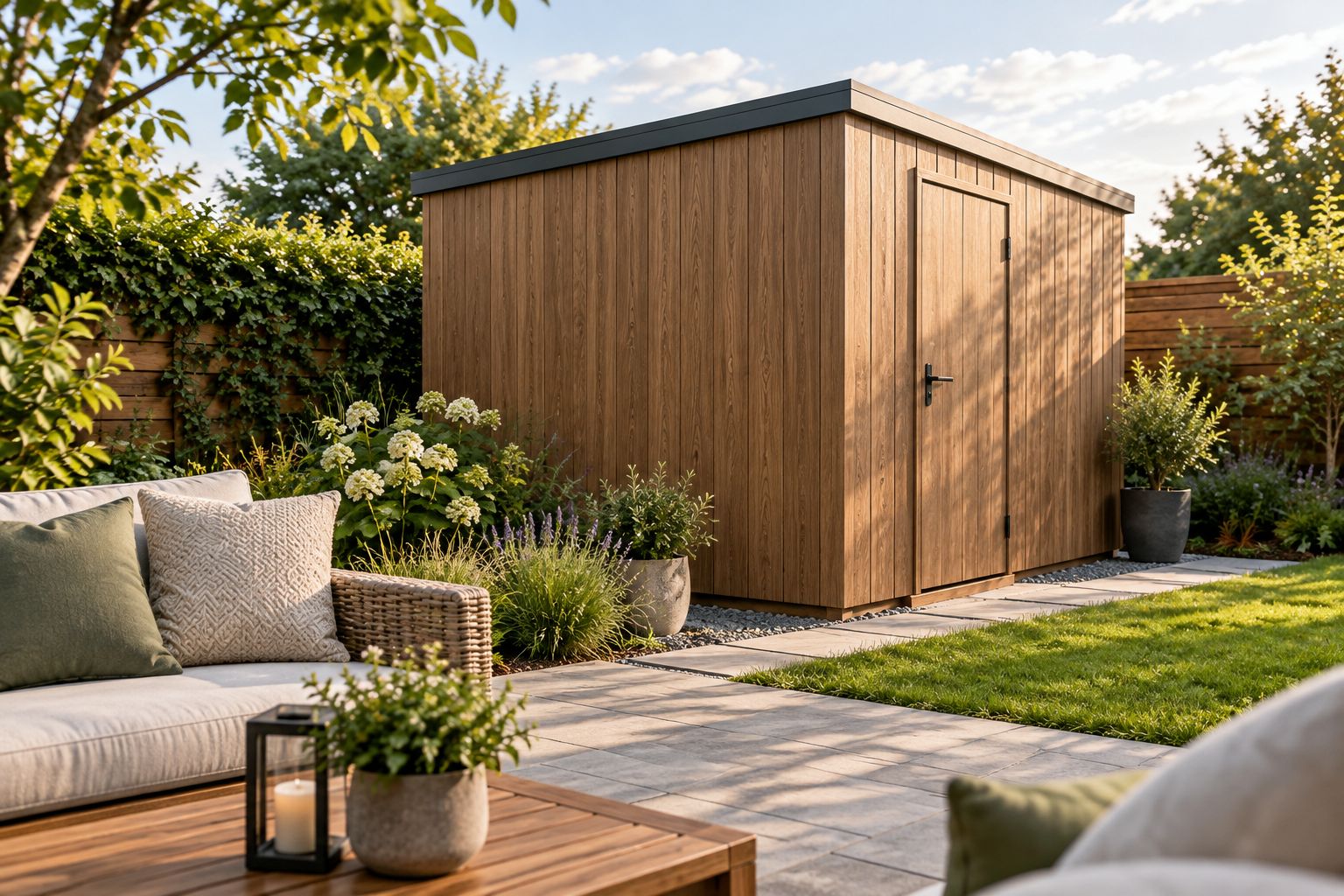
Once you have chosen a colour direction, compare the exact product information. These Akustiq UK exterior panels share a listed 290 cm length; confirm effective coverage and fitting details before turning a finish preference into an order.


Check the shed before fitting new cladding
A good-looking panel is only one part of an exterior wall. For your 2026 shed project, resolve the following checks before cutting or fixing anything.
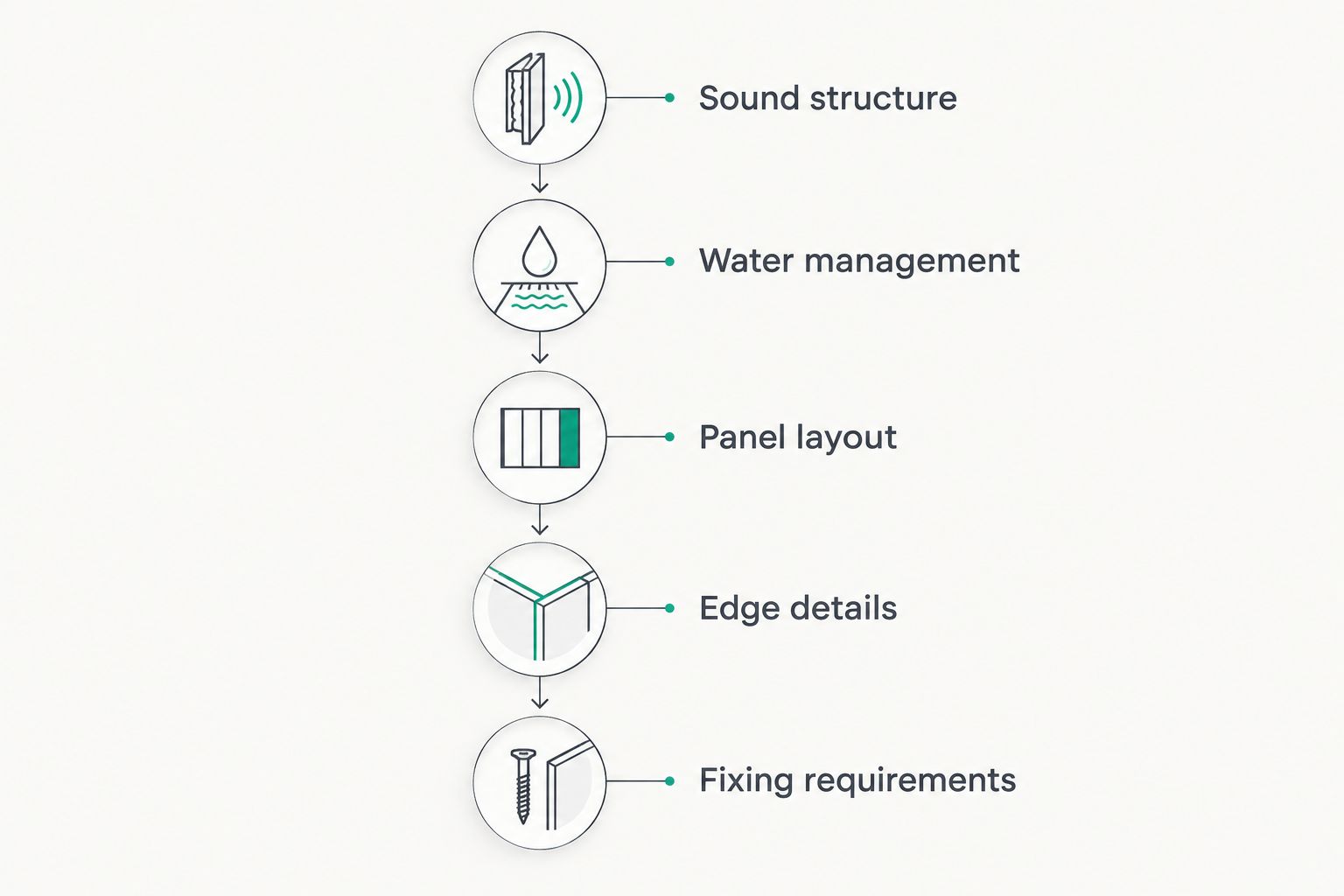
Sound structure
Inspect the framing and existing covering for rot, loose sections and movement. Repair defects before adding a new finish; cladding must not become a way to hide a failing support.
Water management
Trace how rain leaves the roof and passes the door, windows and wall base. Plan the appropriate weathering details for the chosen system, and keep drainage routes clear rather than sealing every visible gap indiscriminately.
Panel layout
Measure each elevation and opening separately. Use the panel's effective coverage—not just its overall dimensions—to calculate quantities, and draw the cut layout before deciding how much spare material your particular job needs.
Edge details
Mark external corners, exposed ends and junctions with other materials. Corner trims finish outside corners; finishing trims close exposed edges. Neither description makes a trim a substitute for correctly designed flashing or drainage.
Fixing requirements
Confirm the support arrangement, fixing type, spacing and movement allowances in the exact installation instructions. Do not transfer indoor acoustic-panel glue methods to an exterior shed wall without explicit approval for that application.
Stop the job if you cannot identify a sound fixing support or a workable drainage detail. Ask a competent installer to assess the shed rather than improvising around the problem.
How these shed cladding panels are ranked
This 2026 shortlist ranks the supplied exterior panels by distinct design uses: warmth, grey coordination, a pale scheme and dark contrast. Exterior purpose, listed length and corresponding finishing components inform the selection.
The ranking does not assign laboratory scores or claim differences in lifespan, fire rating, weather resistance or maintenance. Choose between these finishes on appearance, then assess technical suitability separately.
Which shed cladding panels should you choose?
Choose Oak if you are undecided and want a warm, wood-grain finish. Stone Grey is the alternative for grey surroundings, Birch serves a pale scheme, and Black gives you deliberate dark contrast.
For Akustiq UK shed cladding panels, settle the finish only after checking the existing shed and the installation information. A clear colour choice cannot compensate for missing support, drainage or edge details.
FAQ
What's the best finish for shed cladding panels?
Oak is the default choice in this shortlist for a warm, wood-grain garden finish. Choose Stone Grey for grey surroundings, Birch for a pale scheme or Black for dark contrast.
Can I use indoor acoustic wall panels outside on my shed?
Do not use an indoor acoustic panel outside unless its manufacturer explicitly approves that application. Choose an exterior wall-cladding product and follow its own installation instructions.
Can I put new cladding over old shed walls?
Only proceed after confirming that the existing wall and supports are sound and that the proposed installation follows the cladding instructions. Repair rot, movement and water-entry problems before covering the wall.
Are oak-finish shed panels made from solid oak?
An Oak finish name does not establish solid-oak construction. Check the exact product's material specification rather than treating a colour name or wood-grain appearance as proof of composition.
How do I calculate how many shed cladding panels I need?
Calculate quantities from each elevation's dimensions, the panel's effective coverage and your planned cuts. Account for openings, corner details and usable offcuts rather than relying on wall area alone.
Do shed cladding panels make a shed waterproof?
Panels alone do not establish a watertight shed. Roof junctions, openings, drainage and the complete wall construction need suitable details for the chosen system.
Do I need corner trims and finishing trims?
Plan corner trims for outside corners and finishing trims for the exposed edges covered by the product instructions. Their purposes differ, so draw the junctions before ordering the components.
Are these shed cladding panels 290 cm long?
The Oak, Stone Grey, Birch and Black exterior panels listed in this guide are each 290 cm long. Confirm effective coverage and the current installation information before calculating your order.
One last thing
Sketch the door surround before ordering the wall panels. It forces you to resolve cut edges, trim placement and the junction above the opening—details that a photograph of an uninterrupted wall does not show.
Mark every termination on the same drawing. You will then have a practical component list, not just a preferred colour.
Share:
Best adhesives for acoustic wall panels in 2026
Best adhesives for acoustic wall panels in 2026