

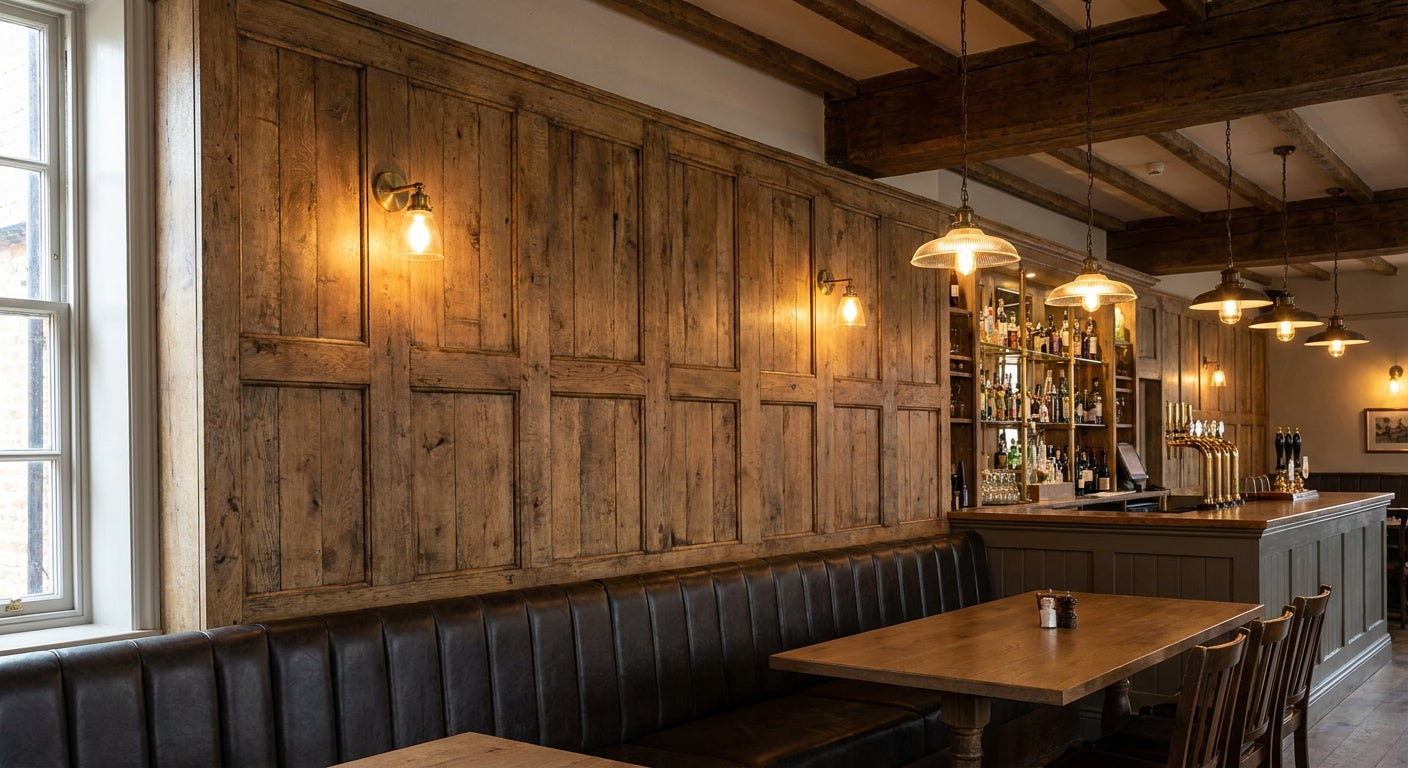
Refurbishing a pub or bar in 2026 means dealing with two problems at once: bare walls that used to hide behind decades of nicotine-stained wallpaper, and acoustics that were never designed for a packed Friday night. Wooden wall panels solve both, giving you a warm, premium finish while cutting the noise bouncing off hard surfaces.
TL;DR
For wooden wall panels for pub refurbishment, Akustiq UK's smoked oak panel is the safe buy for most trade and hospitality fit-outs in 2026 — it hides wear, reads dark and premium under low lighting, and comes in the standard 240cm and 300cm formats. Black oak wins for cocktail bars chasing a moody, boutique look, while walnut suits gastropubs going for a warmer, food-led aesthetic. Skip anything without a real wood veneer if the panel will sit near a bar top or high-traffic seating area — laminate wraps chip within a season of pub use.
Who this is for
This guide is for publicans, bar managers, and refurbishment contractors specifying wall finishes for a working venue — not a domestic living room. You're dealing with constant footfall, spilled drinks, raised voices competing with music, and a budget that has to justify itself against covers and bar takings. The criteria below assume the panels need to survive commercial use, not just look good on install day.
What to look for in wooden wall panels for pub refurbishment
Real wood veneer, not a printed laminate
A 3-sided real wood veneer finish holds up to knocks from bar stools and trays far better than a photographic laminate wrap, which shows scuffs as pale scratches within months. Pubs get touched, leaned on, and occasionally hit by a dropped glass — veneer takes that abuse and still looks like wood, because it is wood.
Acoustic backing that actually does something
A felt acoustic backing behind the panel is the difference between a bar that sounds lively and one where nobody can hear the person next to them by 9pm. Hard-surfaced pubs with tiled floors and high ceilings need every wall doing double duty — decoration and sound absorption in one product, not two separate line items on the refurb budget.
Panel size versus your wall geometry
Akustiq UK panels come in two size formats, 240cm and 300cm, and picking the wrong one against your ceiling height or bar-back dimensions means more cuts, more joins, and more waste. Measure your actual wall runs before ordering — a 300cm panel against a 2.4-metre ceiling wastes material and money on every single board.
Colour tone against your lighting rig
Most pubs run warm, dim lighting after 6pm, and pale finishes like natural oak can wash out under amber bulbs while darker tones like black oak or smoked oak hold their contrast. Walk the space with the lighting on before you commit to a finish — a swatch that looked right under office fluorescents can go flat under a dimmer.
Installation method for a live venue
A high-tack panel adhesive lets contractors fit panels without extensive mechanical fixing, which matters when you've got a tight refurbishment window between last orders and reopening. Speed of install directly affects how many trading days you lose, and that's a real cost most quotes ignore.
Top picks for pub and bar refurbishments
The safe pick: Smoked Oak wooden wall panel — this is the finish most pub refurbishments in 2026 default to, because a darker tone hides scuffs and pairs with brass fittings and leather booths without fighting either. Available in the standard 240cm and 300cm formats, it reads as premium under low lighting without looking like a nightclub. Verdict: Buy.
The moody choice: Black Oak wooden wall panel — this is the pick for cocktail bars and late-night venues chasing a boutique, intimate feel rather than a traditional pub look. The near-black tone with 3-sided veneer gives real depth against gold or copper hardware, but it shows dust and light scratches more visibly than mid-tones. Verdict: Consider if your concept is genuinely upmarket rather than a standard local.
The wildcard: Walnut wooden wall panel — walnut's warmer, reddish-brown grain suits gastropubs and food-led venues where the brief is closer to a restaurant than a boozer. It's a step away from the classic dark pub palette, which makes it a differentiator if every venue on your high street already runs oak or black finishes. Verdict: Buy for food-focused concepts, Skip if the venue is a traditional wet-led pub.
What to avoid
- Cheap MDF-core panels with a printed film face — they look fine in a showroom but delaminate at the edges once beer spills soak in, usually within a single trading quarter.
- Panels with no acoustic backing near the bar or DJ area — a purely decorative panel does nothing for the noise problem you're actually trying to solve, and you'll end up bolting on separate acoustic treatment later.
- Oversized panel formats on short wall runs — ordering 300cm boards for a 2.4-metre snug wall means paying for offcuts you can't reuse anywhere else in the venue.
Verdict comparison
| Panel | Best for | Tone under low light | Verdict |
|---|---|---|---|
| Smoked Oak | Traditional and general pub refits | Warm dark, hides scuffs | Buy |
| Black Oak | Cocktail bars, boutique venues | Near-black, high contrast | Consider |
| Walnut | Gastropubs, food-led venues | Warm reddish-brown | Buy for food concepts |
For fixing, a high-tack panel adhesive in a 290ml cartridge is the standard route contractors use to get panels up fast without extensive drilling into stud or masonry walls, which matters when a refurbishment schedule is measured in days, not weeks.
Why this matters
A 2026 refurb budget rarely has room for redoing wall finishes twice. Getting the veneer, backing, and size format right the first time avoids a second contractor visit six months in when the laminate has already started peeling near the bar top. Acoustic performance also isn't cosmetic here — venues that get louder and harder to hear in lose repeat custom faster than ones that manage their sound properly, and wall panelling is one of the few finishes that improves both the look and the noise floor of a room in one install.
FAQ
What's the best wooden wall panel for a pub refurbishment in 2026? Smoked oak is the most common choice because it hides wear, holds tone under dim lighting, and comes in both 240cm and 300cm formats to fit most standard pub wall runs.
Is black oak better than smoked oak for a bar? Black oak suits cocktail and late-night bars chasing a boutique feel, while smoked oak works better across general pub trade because it shows less dust and scuffing over time.
Do acoustic wall panels actually reduce noise in a pub? Panels with a felt acoustic backing absorb sound that would otherwise bounce off hard walls and floors, which is why pubs with tiled surfaces and high ceilings see the biggest improvement from adding them.
How much wall panel do I need for a bar refurbishment? Measure your wall runs against the 240cm and 300cm size formats before ordering — mismatching panel length to ceiling height creates unnecessary cuts and wasted material.
Can wooden wall panels handle spills and knocks in a working pub? A 3-sided real wood veneer finish handles commercial wear far better than printed laminate, which chips and shows pale scratches after repeated contact from stools, trays, and glasses.
What adhesive is used to fit pub wall panels? A high-tack panel adhesive in a 290ml cartridge lets contractors fix panels quickly without extensive mechanical fixing, which shortens the time a venue stays closed during refurbishment.
Should I use the same finish throughout the whole venue? Not necessarily — many 2026 refurbishments mix a darker finish like smoked oak in the main bar with walnut in a dining or snug area to separate zones without changing materials entirely.
Is walnut too light for a traditional pub look? Walnut reads warmer and more food-led than classic pub tones, so it suits gastropubs better than wet-led venues aiming for a darker, more traditional atmosphere.
One last thing
The detail most refurbishment briefs miss: pick your finish under the actual lighting rig you'll be running after reopening, not under site lighting or a laptop screen. A panel swatch that looks neutral under a builder's floodlight can shift noticeably warmer or flatter under the amber dimmers most 2026 pub refits install — and that's the tone your customers will actually see every night.
Share:
Oak Wall Panels for Kitchen Islands: 2026 Buying Guide
Hexagon Acoustic Panels for Office: 2026 Buy Guide