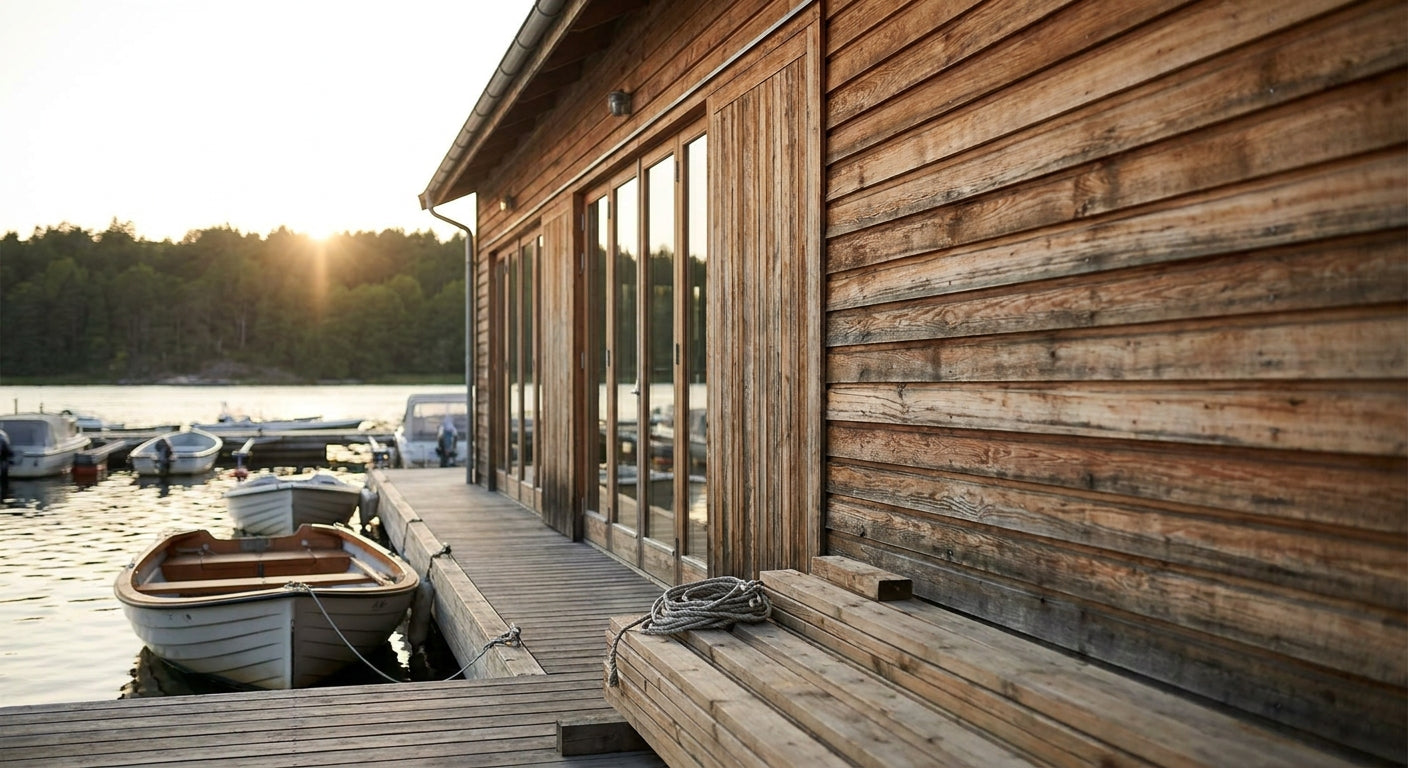
Boat houses and marina buildings sit inches from open water, so the cladding on them takes more salt spray, UV and freeze-thaw cycling in one year than a garden shed sees in a decade. This guide covers what actually holds up as timber cladding for boat houses in 2026, and which panels from Akuwood Panel are worth specifying.
- Stone Grey and Oak composite exterior cladding from Akuwood Panel hold colour best at the waterline in 2026 — buy either.
- Timber cladding for boat houses needs a 3D wood-grain composite panel, not raw softwood, once it's within a metre of spray.
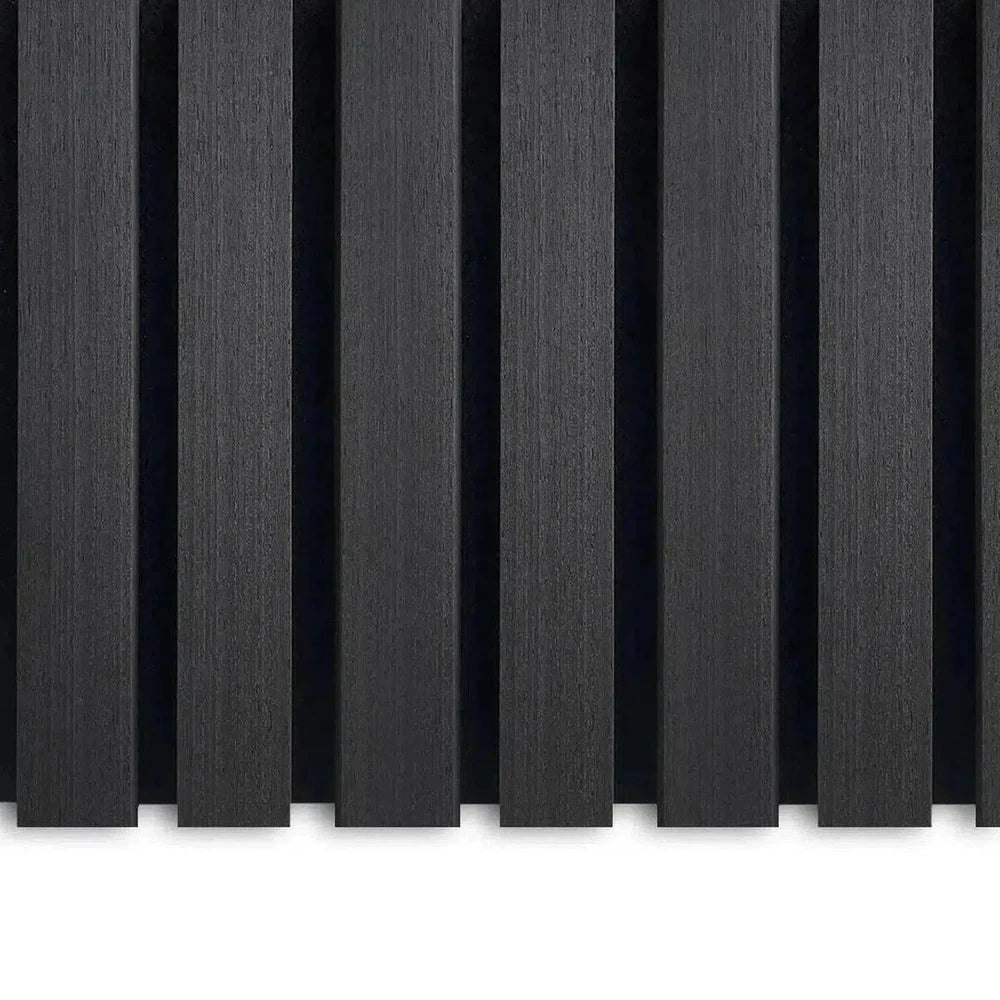
- Black cladding panels absorb more heat off reflected water and show salt film faster — reserve them for shaded elevations.
- Flat-fixed panels with no cavity behind them are the leading cause of early cladding failure on marina buildings.
Why this matters
Raw softwood battens look right on day one and grey out unevenly within two seasons once splash zones and shaded elevations weather at different rates. A boat house or marina clubhouse gets hit with reflected UV off the water on top of direct sun, which is why standard exterior timber cladding built for a normal UK garden wall underperforms at the waterline.
The composite 3D wood-grain panels stocked by Akuwood Panel are built around this problem rather than around a suburban fence line — see how the material behaves on an exposed coastal property in Akuwood Panel's guide to exterior wall cladding for a UK seaside property before you order.
Marinas and boat sheds also carry salt residue that regular masonry paint doesn't shed, so the panel finish has to resist chalking and colour drift, not just physical rot.
Who this is for
This guide is for boat house owners, marina operators, sailing club committees and waterfront property managers speccing cladding for a boathouse, clubhouse, chandlery or dockside store in 2026. It assumes you're choosing between raw timber, treated softwood and composite wood-grain cladding panels, and need a finish that survives salt spray without repainting every other summer.
What to look for in timber cladding for boat house and marina buildings
Salt and UV resistance together, not separately
A panel rated for UV alone can still chalk and streak under salt spray, because salt accelerates the same photodegradation that sunlight causes. Marina-grade composite cladding needs both ratings covered by the same coating layer, not a UV topcoat bolted onto a standard exterior board.
Panel format and fixing system
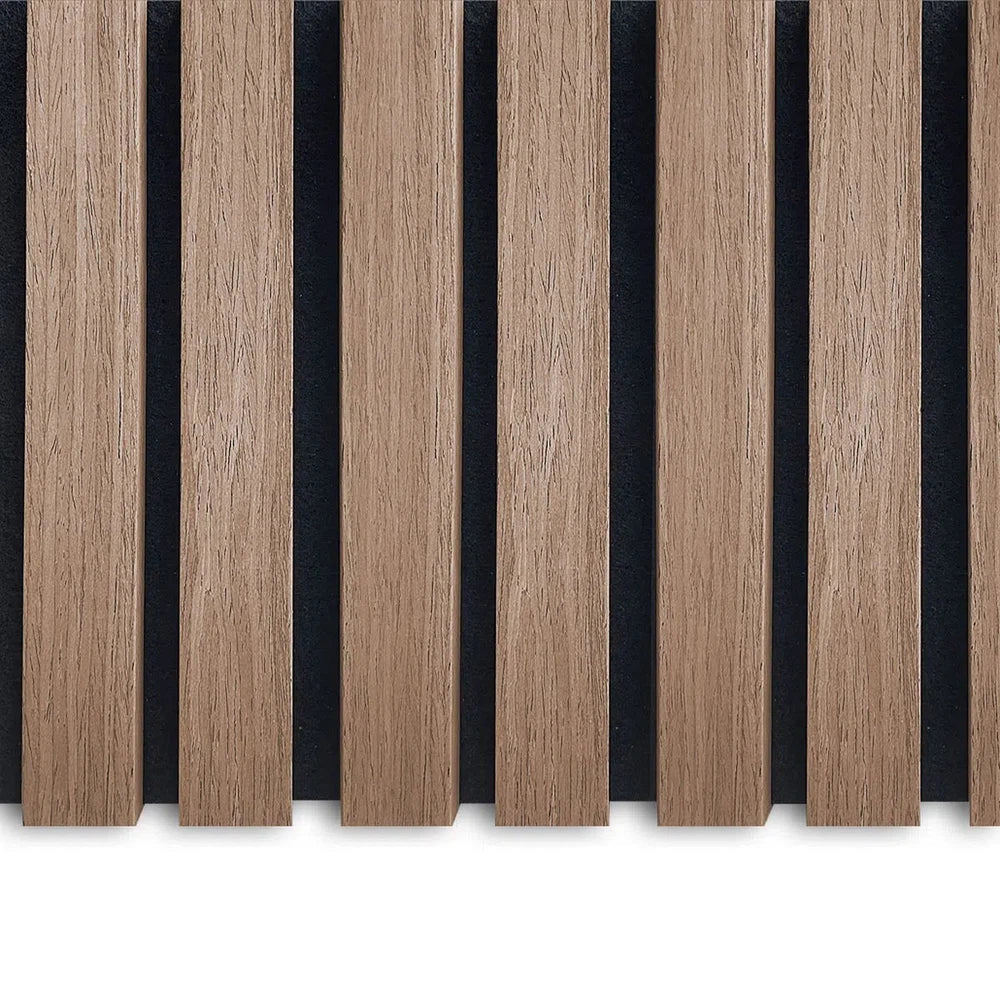
Akuwood Panel's exterior wall cladding ships in 290cm lengths with matching corner and finishing trims, which matters on a boat house because most elevations run long and unbroken — fewer joints mean fewer places for water to sit. Check the corner trim and finishing trim are sold for the same colourway before you order, or the seams will read as an obvious mismatch.
Colour retention under reflected light
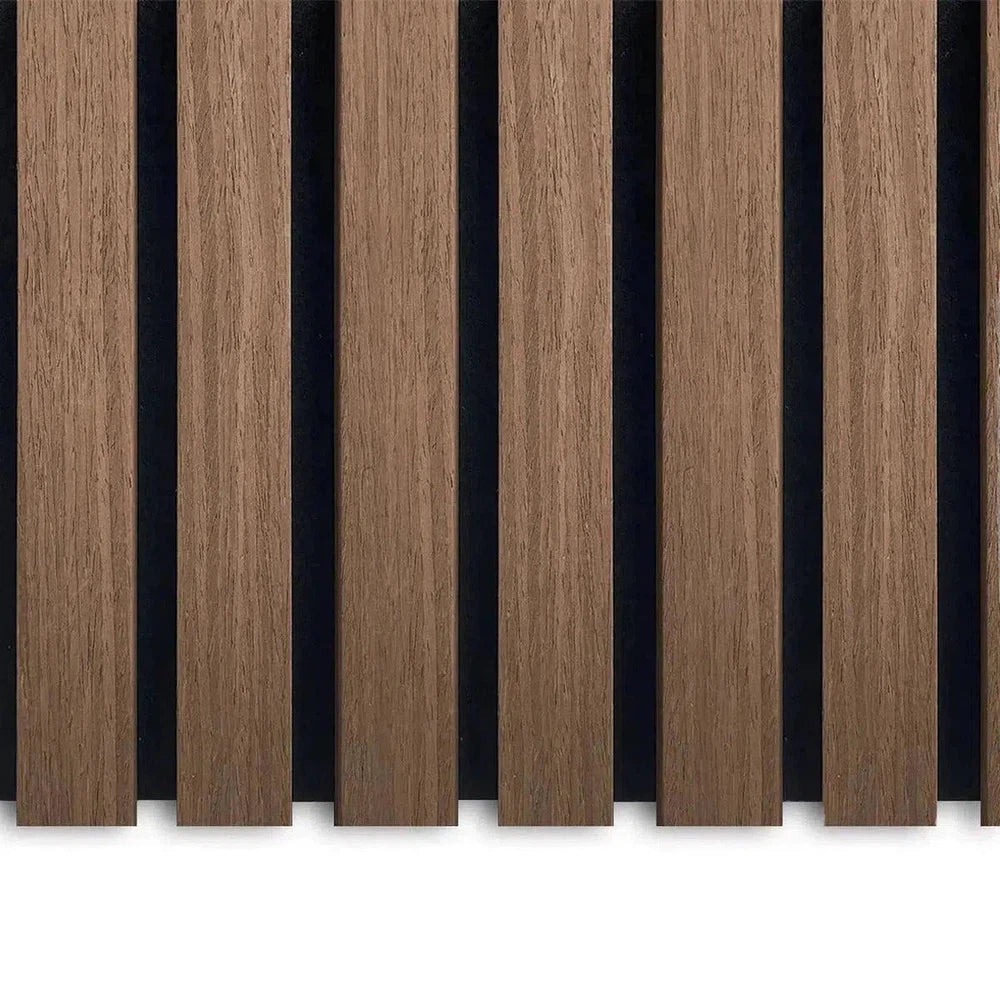
Water throws light back up onto the underside of eaves and lower cladding runs at an angle standard cladding specs don't account for. Mid-tone finishes such as oak and stone grey hide the early stages of fade and salt bloom far better than very light or very dark panels, which show any colour shift immediately.
Moisture behaviour at the waterline
Anything within a metre of the high-water mark needs a cavity or batten system behind it, not a panel fixed flat to masonry. Standing moisture behind flat-fixed cladding is the single biggest cause of early panel failure on boat houses, well ahead of UV.
Fixing hardware that won't corrode faster than the panel
Standard zinc-plated screws pit within a season near saltwater. Match the panel to a colour-coded, corrosion-resistant screw set and treat the fixings as part of the spec, not an afterthought.
A maintenance schedule you'll actually keep
Marina buildings get inspected rarely once they're up. A panel that needs annual oiling to hold its finish is the wrong choice for a boat house nobody visits between April and October — composite wood-grain panels built for 25 years of low-maintenance use are the more realistic spec for this kind of building in 2026.
Top picks for boat house and marina cladding
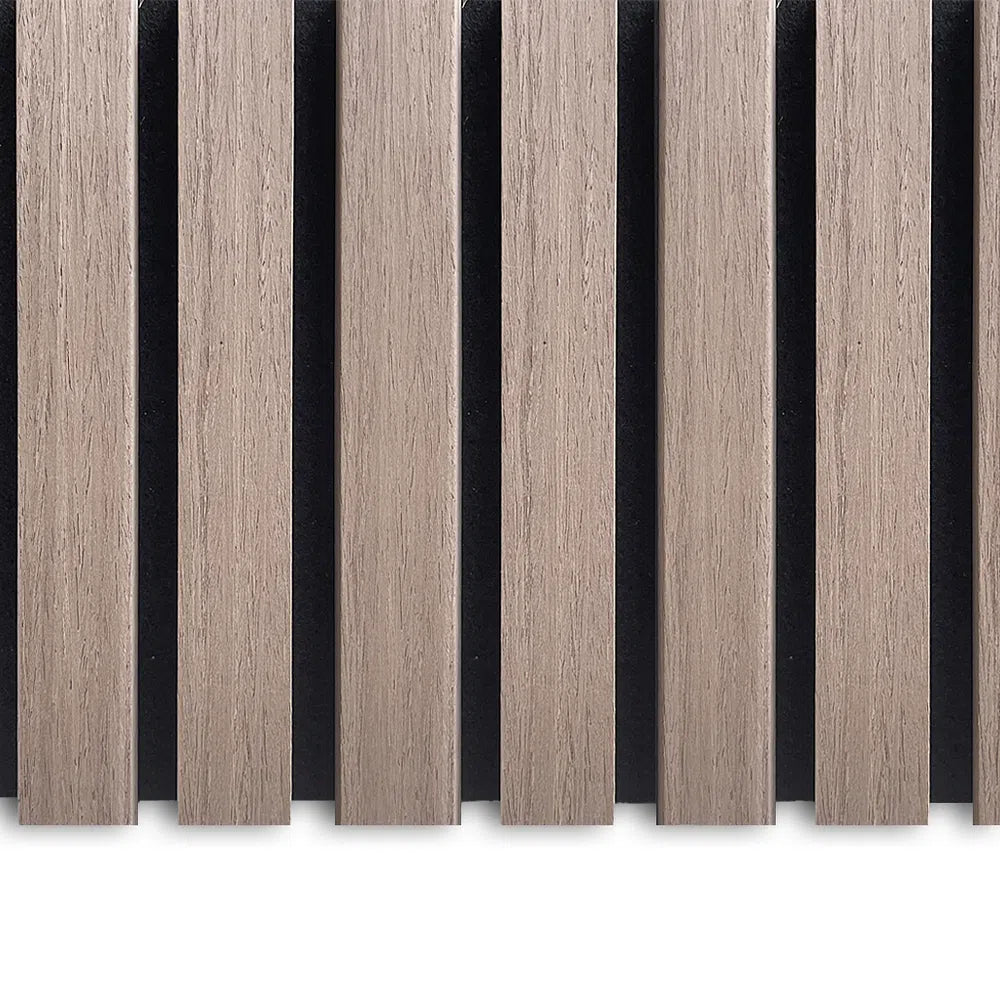
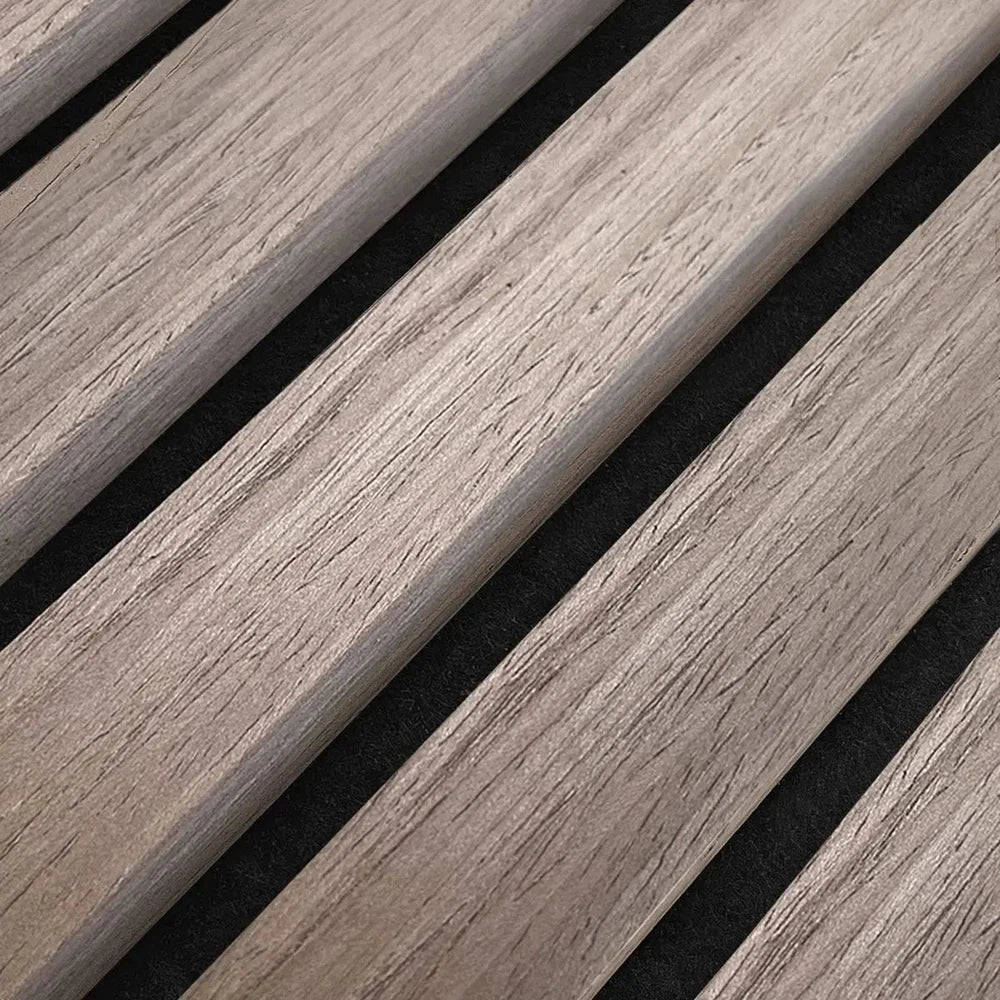
Exterior Wall Cladding Panel Stone Grey — the discreet pick. This 290cm composite panel carries a muted stone-grey 3D wood-grain finish at £41.95 per panel, and the tone is close enough to weathered concrete and salt bloom that early fading barely shows. It's the safest waterline choice for a boat shed or dockside store where you want the building to disappear into the marina rather than stand out. Buy.
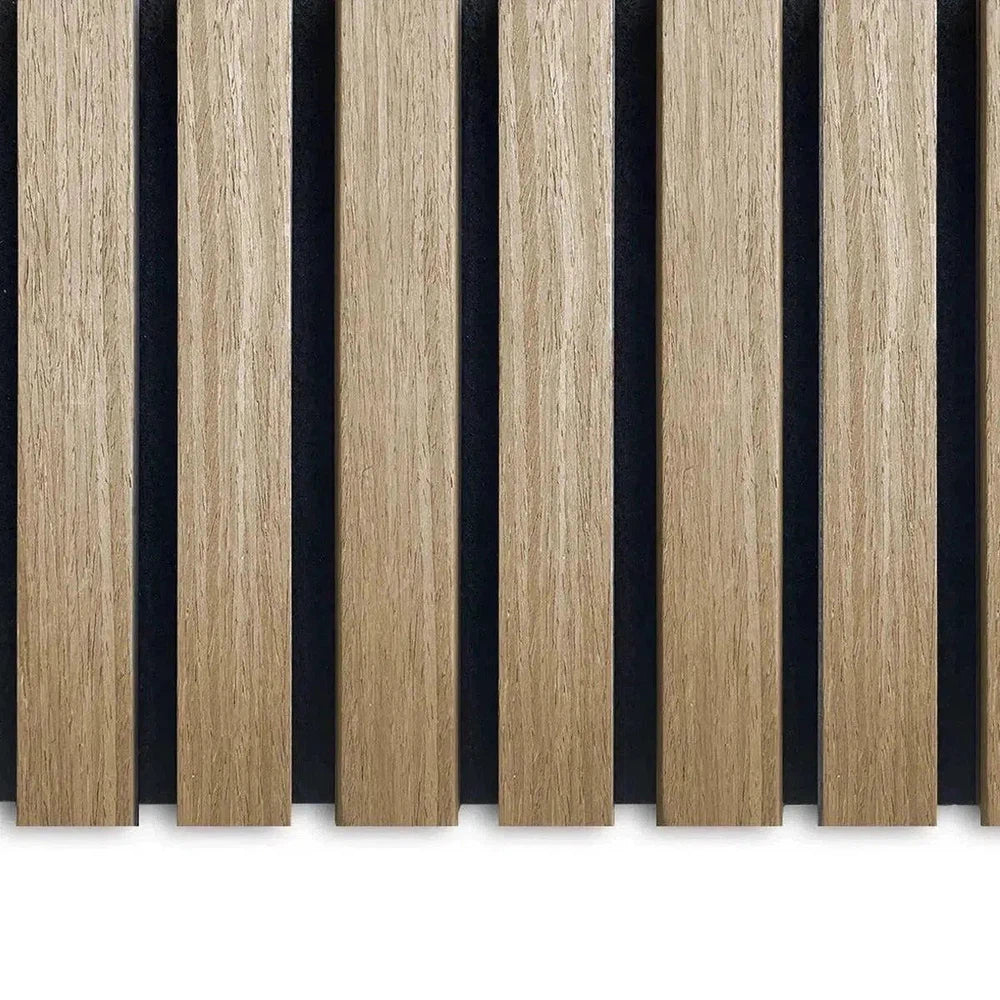
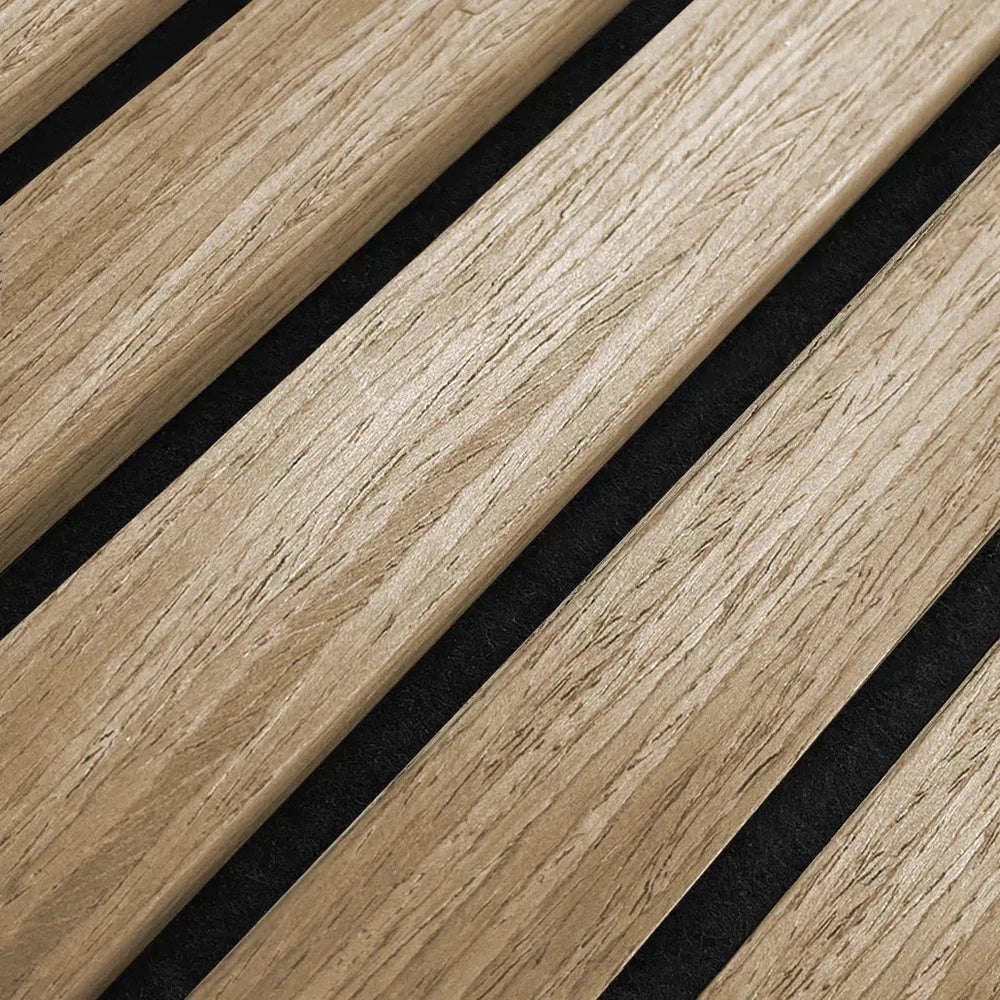
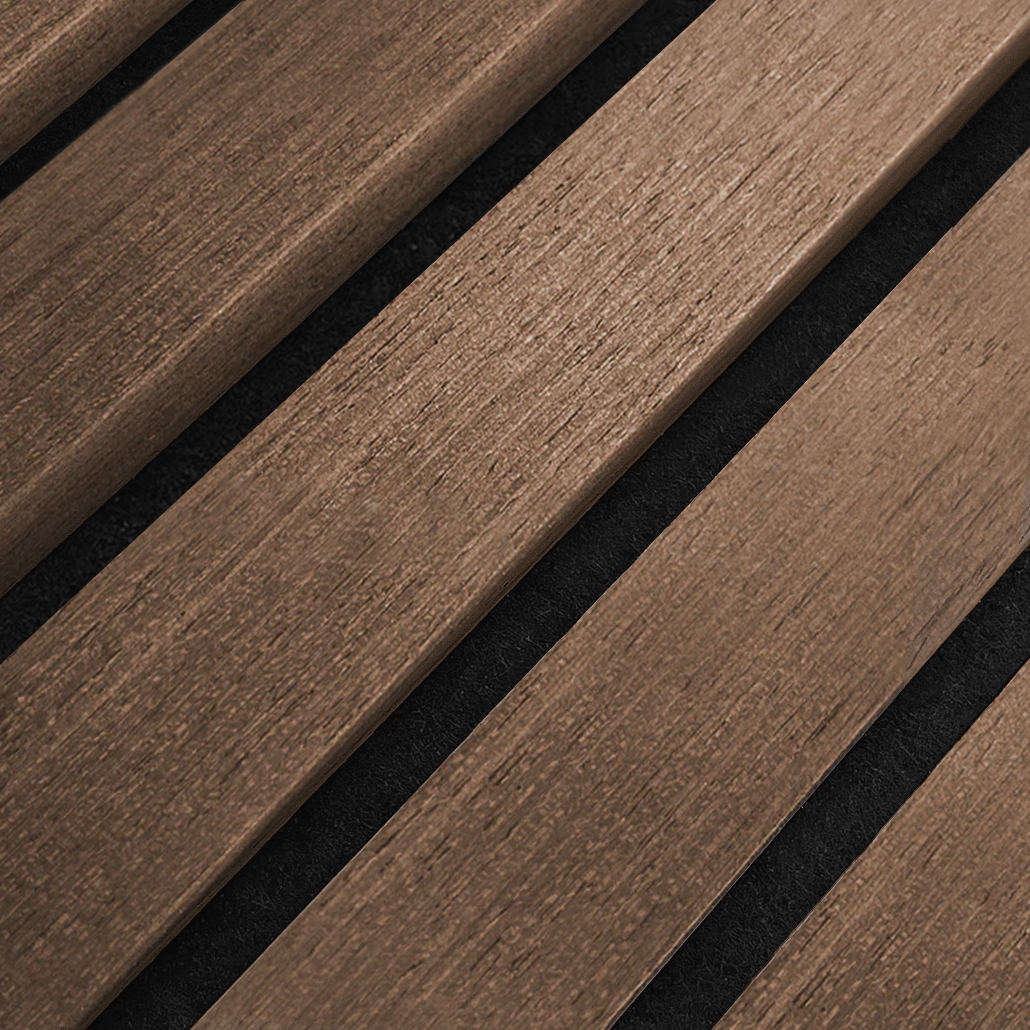
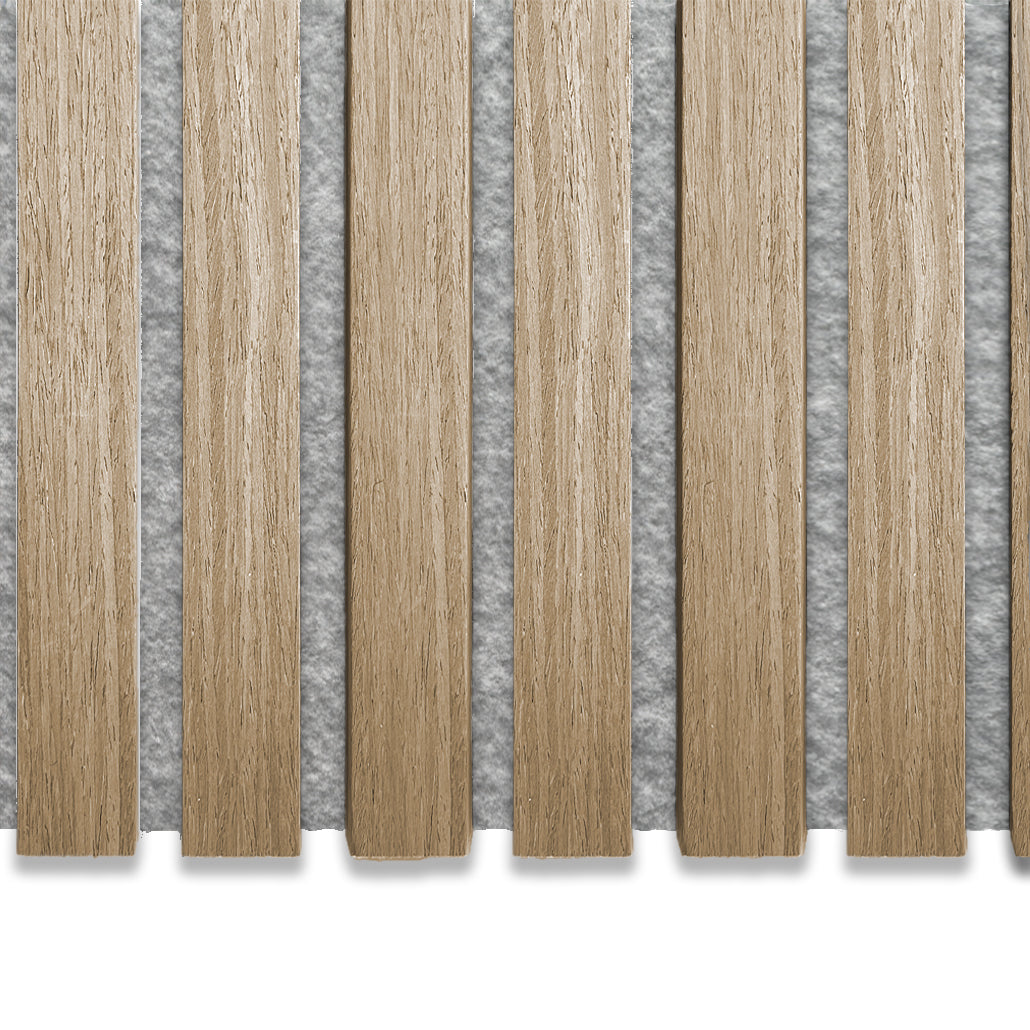
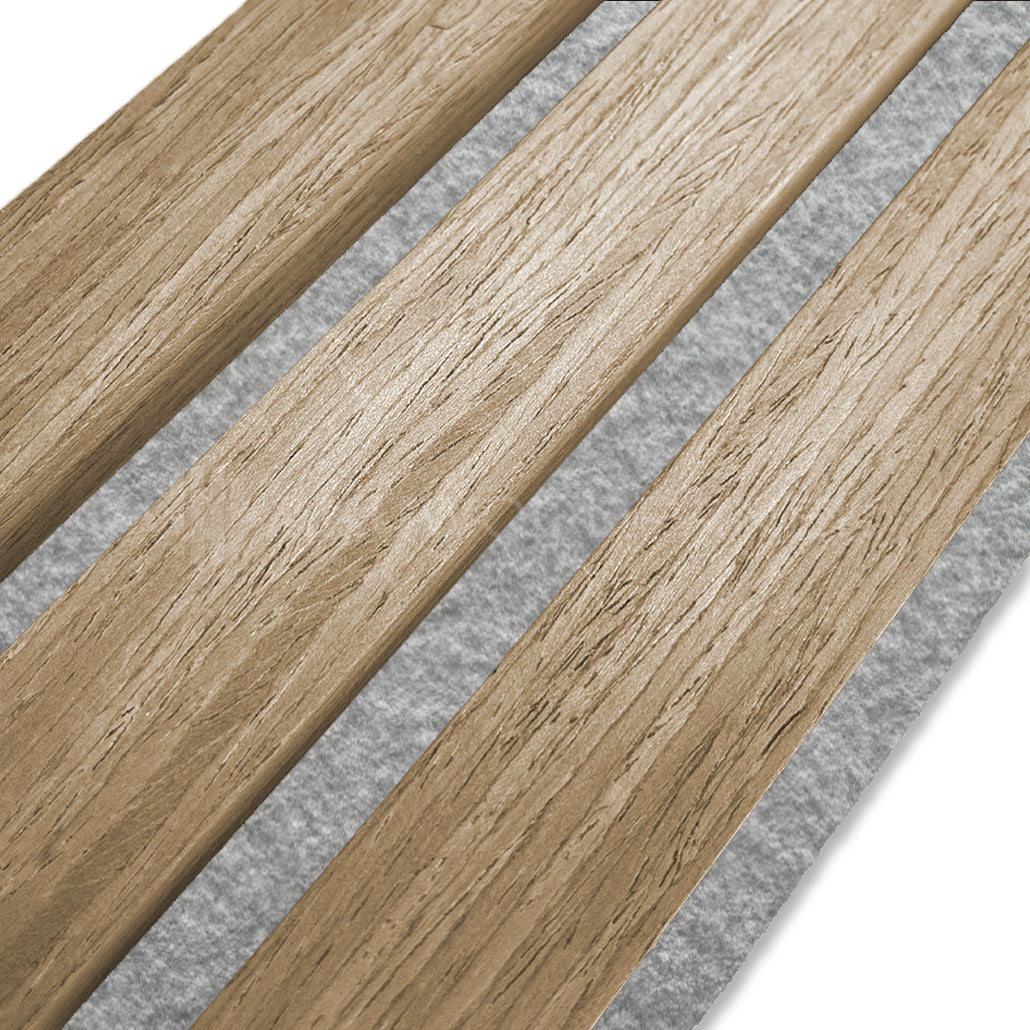
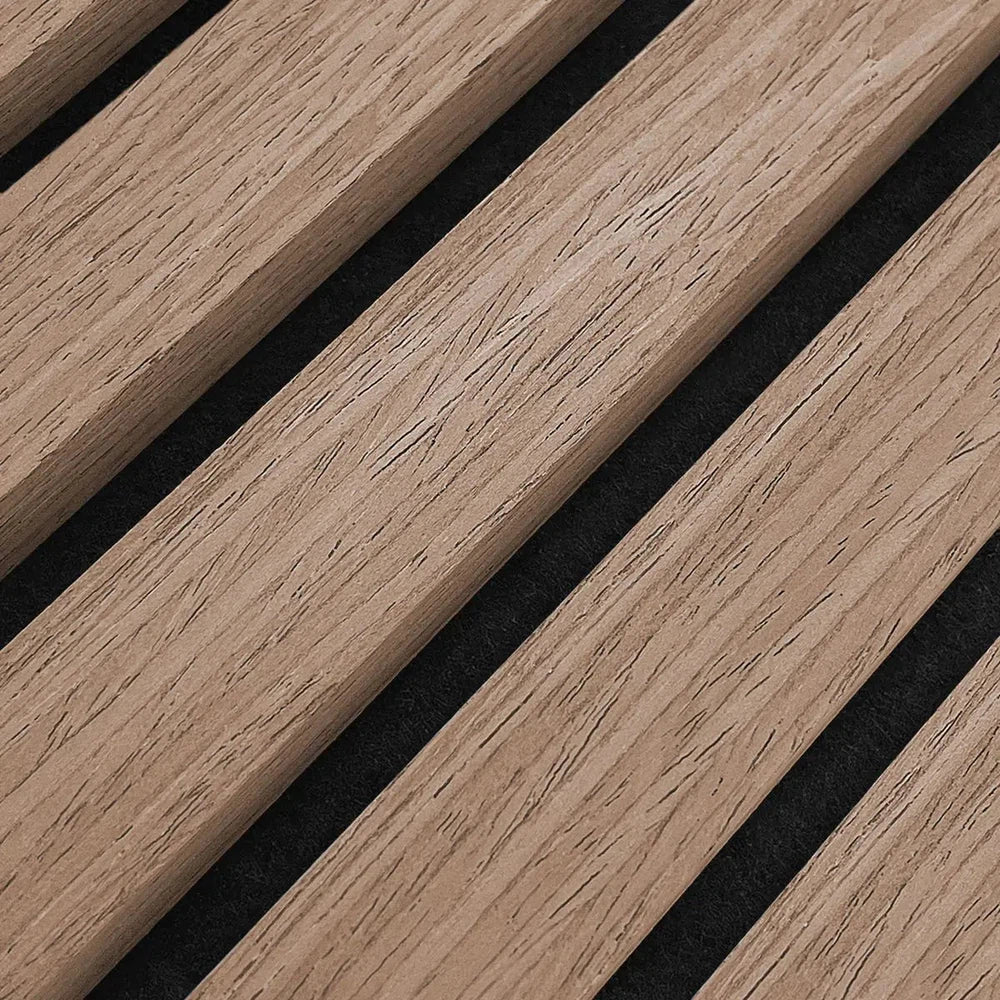
Exterior Wall Cladding Panel Oak — the warm-tone pick. Same 290cm format and £41.95 price point as the stone grey run, but with an oak wood-grain finish that suits a clubhouse frontage or reception building where you still want a timber look without repainting every season. Buy.
Exterior Wall Cladding Panel Birch — the light-reflective pick. At £41.95 for a 290cm panel, birch throws back more light than the darker finishes, which helps on a north-facing boat shed that never gets direct sun. It shows salt residue sooner than oak or stone grey though, so it's better suited to elevations that get rinsed by rain rather than constant spray. Consider.
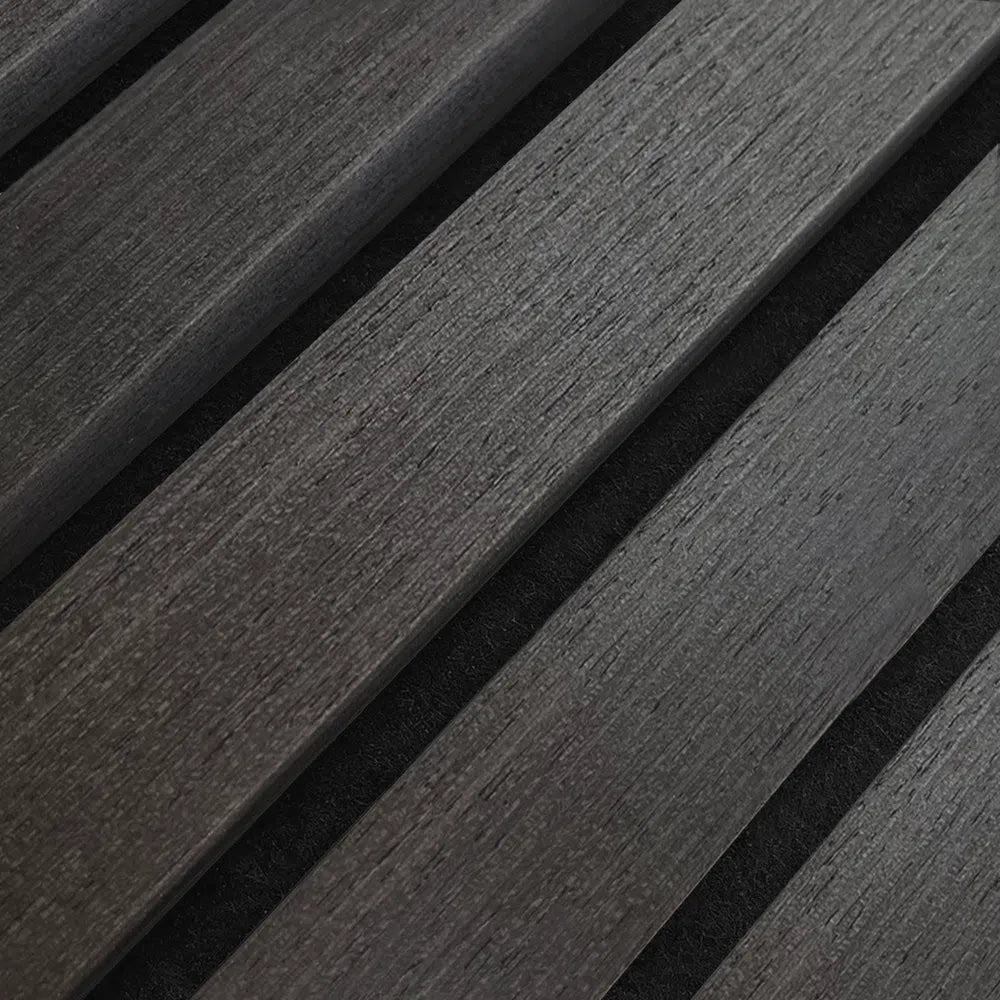
Exterior Wall Cladding Panel Black — the high-contrast pick. Black composite cladding at £41.95 per 290cm panel gives a marina building a modern, boathouse-chic look, but the dark finish absorbs more heat off reflected water and shows dust and salt film faster than the mid-tones. Reserve it for shaded elevations or covered walkways rather than a south-facing dock wall. Consider.
Skip raw uncoated timber entirely unless it sits well back from any spray zone and someone is committed to annual treatment — for a working marina building, that commitment rarely survives past year two.


What to avoid
- Flat-fixed cladding with no cavity behind it. Water pools behind the panel and the fixings corrode from the inside out long before the face shows any damage.
- Mismatched corner and finishing trims. Ordering panels in one colourway and trims in another looks fine in a photo and wrong on the building — trims should match the panel colourway exactly.
- Standard exterior screws near saltwater. Zinc coating pits within months at a dock. Marine environments need corrosion-resistant fixings sold for the same cladding run, not a generic hardware-store box.
“The colour that photographs best in a marina brochure is usually the one that weathers fastest on the actual wall.”
Verdict comparison
| Panel (290cm) | Best for | Salt & UV handling | Price | Verdict |
|---|---|---|---|---|
| Stone Grey | Waterline boat sheds, dockside stores | High — muted tone hides bloom | £41.95 | Buy |
| Oak | Clubhouse fronts, reception buildings | High — grain masks early fade | £41.95 | Buy |
| Birch | Shaded, north-facing elevations | Moderate — shows salt residue sooner | £41.95 | Consider |
| Black | Covered walkways, shaded modern builds | Moderate — absorbs heat, shows film | £41.95 | Consider |
FAQ
What is the best timber cladding for boat houses in 2026?
Composite wood-grain panels in a stone grey or oak finish are the best timber cladding for boat houses in 2026, because the mid-tone colour hides early salt bloom and UV fade better than very light or very dark panels. Akuwood Panel's 290cm exterior wall cladding panels in these finishes run £41.95 each and pair with matching corner and finishing trims.
Is composite cladding better than real timber for a boat house?
Yes, composite wood-grain cladding holds its finish longer than raw timber on a boat house, since it's built to resist UV and salt without annual oiling. Raw softwood needs yearly treatment to avoid greying and splitting at the waterline, which most marina maintenance schedules skip.
How much does exterior wall cladding cost per panel?
A 290cm exterior wall cladding panel from Akuwood Panel costs £41.95, with matching finishing trim at £24.95 and corner trim at £28.95. Budget for trims and fixings alongside the panels, not just the panel price alone.
Does black cladding fade faster near water?
Black cladding doesn't fade structurally faster than lighter finishes, but it shows dust, salt film and colour shift more visibly because there's no midtone to mask it. It's better suited to shaded or covered elevations on a marina building than a south-facing dock wall.
Can exterior cladding panels be fixed directly onto an existing marina building wall?
Exterior cladding panels should go over a cavity or batten system rather than fixed flat to masonry, especially within a metre of the waterline. Flat-fixed panels trap moisture behind the face, which corrodes fixings and causes early panel failure.
How long does composite wood-grain cladding last on a coastal building?
Composite wood-grain exterior cladding is rated for around 25 years of low-maintenance use on a coastal building, based on the manufacturer's durability rating. Actual lifespan depends on fixing quality and whether the panel sits in a direct splash zone.
What fixings should be used for cladding near saltwater?
Cladding near saltwater needs corrosion-resistant screws matched to the panel colourway, not standard zinc-plated screws, which pit within months at a dock. Treat the fixing set as part of the cladding spec, not a separate hardware-store purchase.
Do boat houses need a vapour gap behind timber cladding?
Yes, a vapour gap or batten cavity behind the cladding lets moisture escape instead of pooling against the wall, which matters more on a boat house than almost any other building type. Skipping the gap is the most common cause of early cladding failure at marinas.
One last thing
The panel that looks best on a marina brochure cover is rarely the one that ages best on the actual wall — very light and very dark finishes both show weathering fastest, just in opposite ways. Mid-tone finishes like oak and stone grey aren't the flashiest picks on Akuwood Panel's range, but they're the ones still looking presentable on a boat house wall well past 2026 without a repaint.