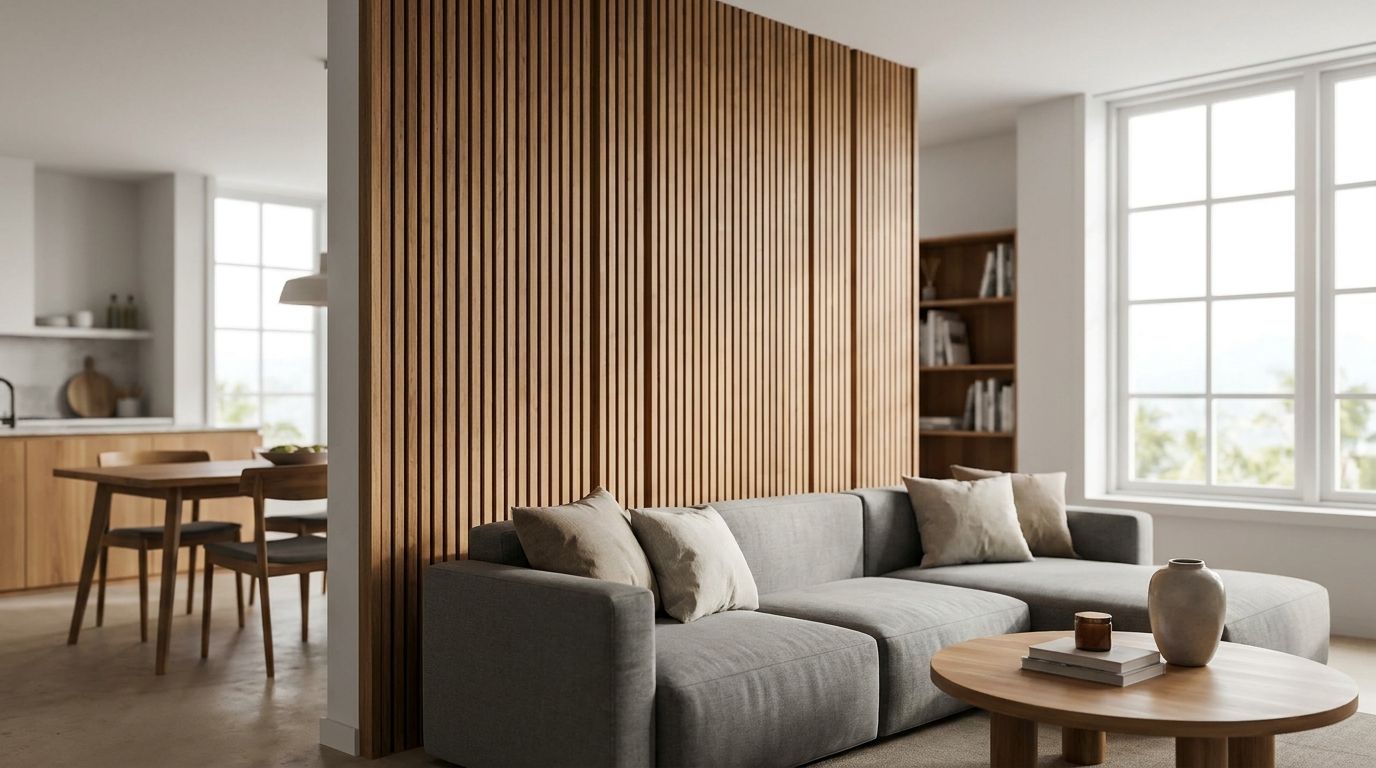
Open-plan living rooms sound great on the floor plan and terrible in real life once the TV, kitchen extractor and three conversations are bouncing off bare plaster at once. Slatted wall panels break up that hard surface and give you a zoning tool that doesn't need a stud wall.
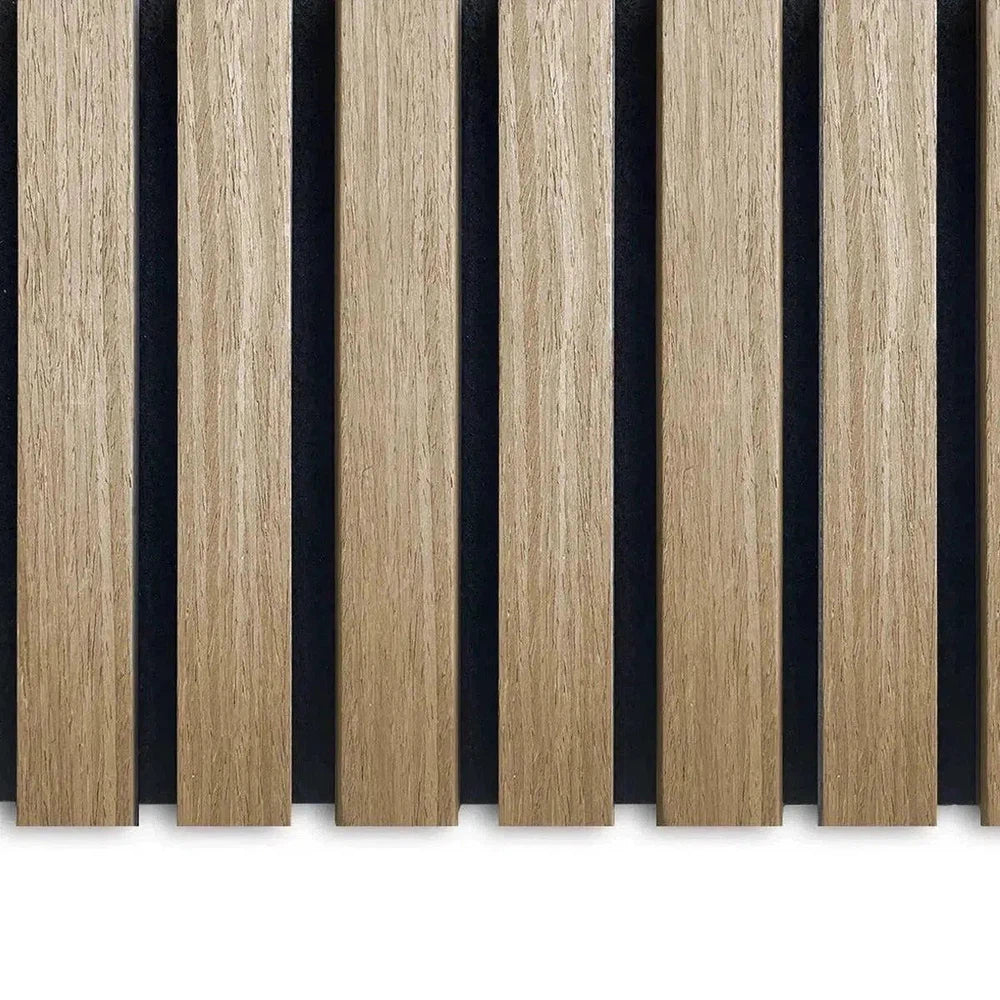
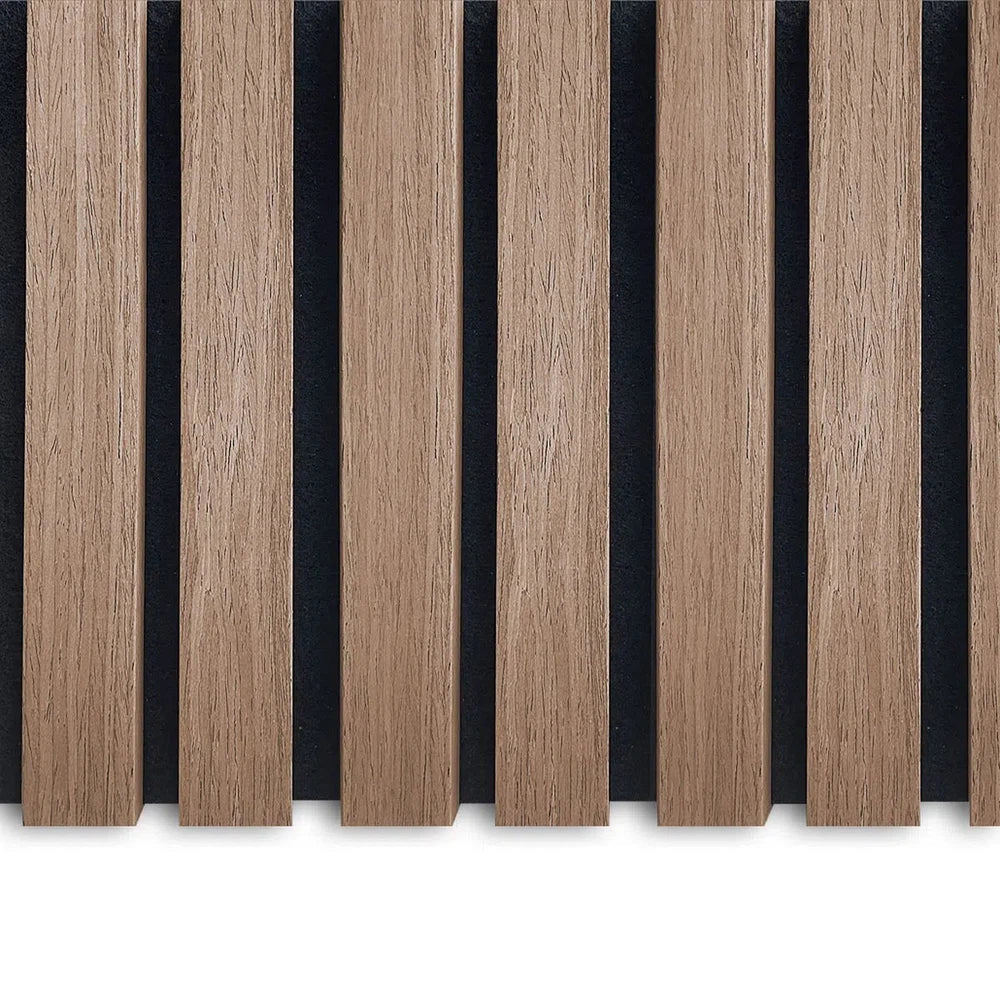
- Natural Oak slatted wall panels are the safe buy for open-plan living rooms in 2026 - real wood veneer, no felt-backing compromise.
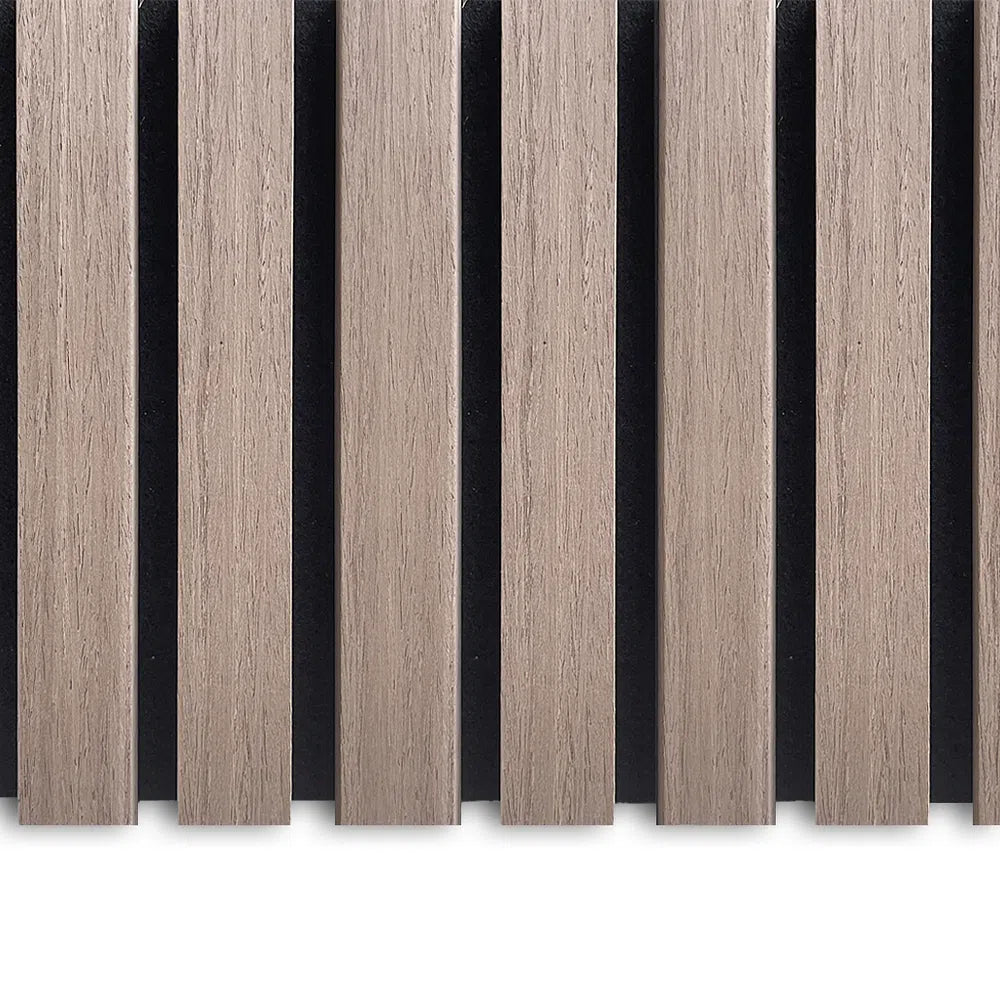
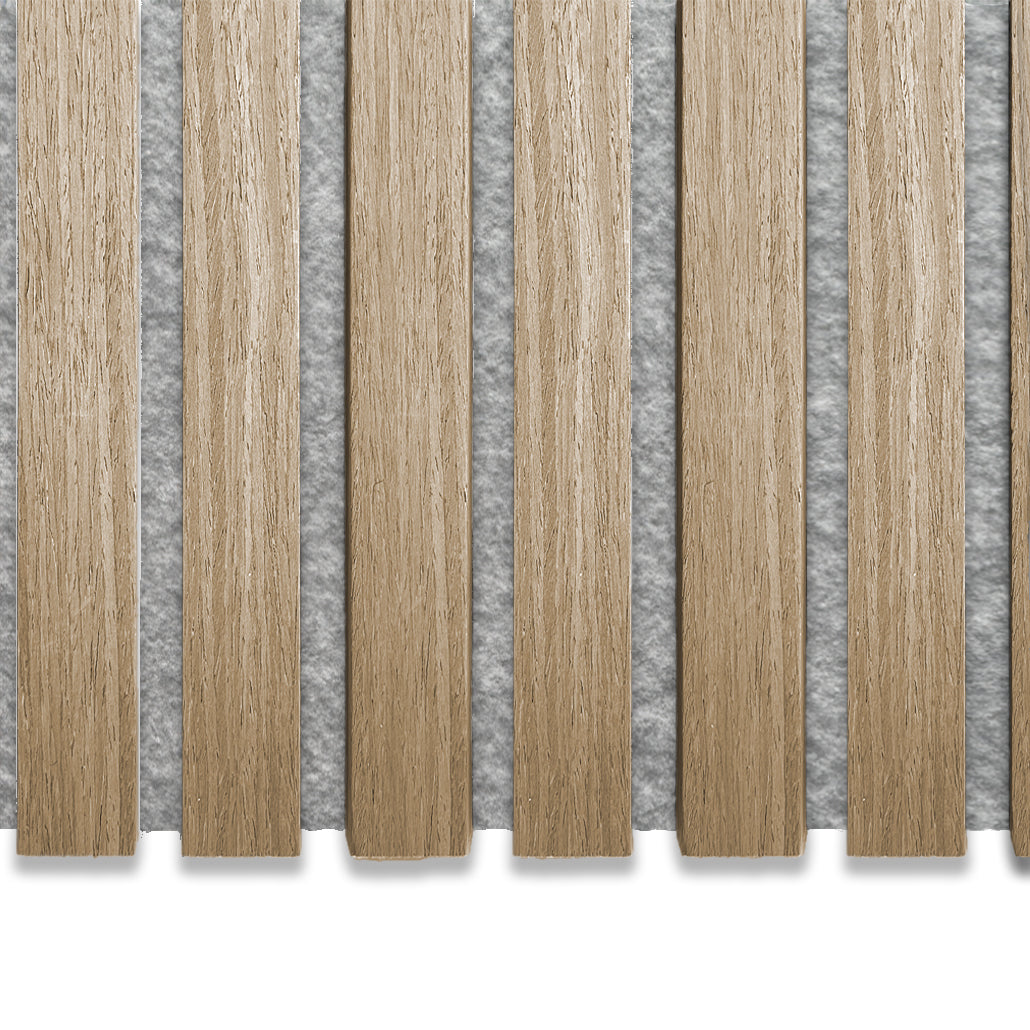
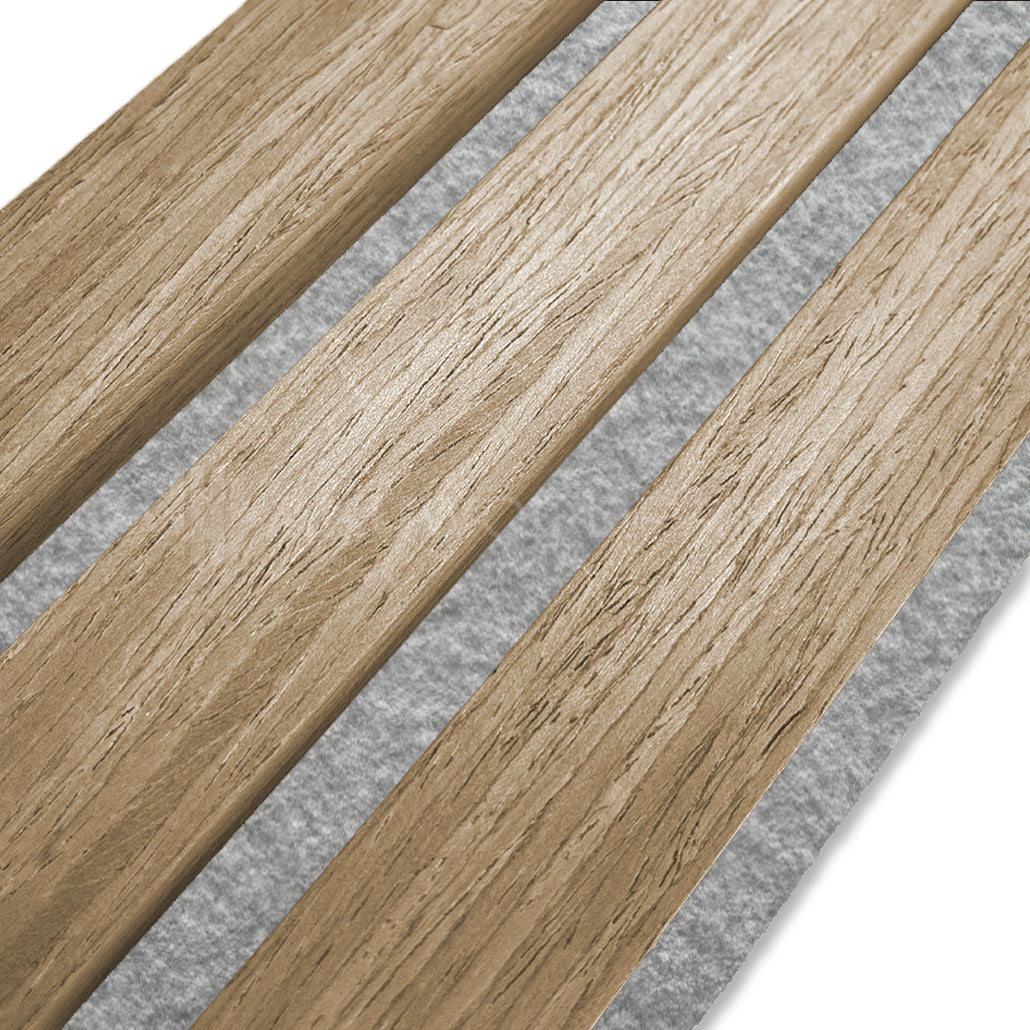
- Grey Felt-backed Natural Oak panels are the acoustic workhorse when the room doubles as a home office or dining zone.
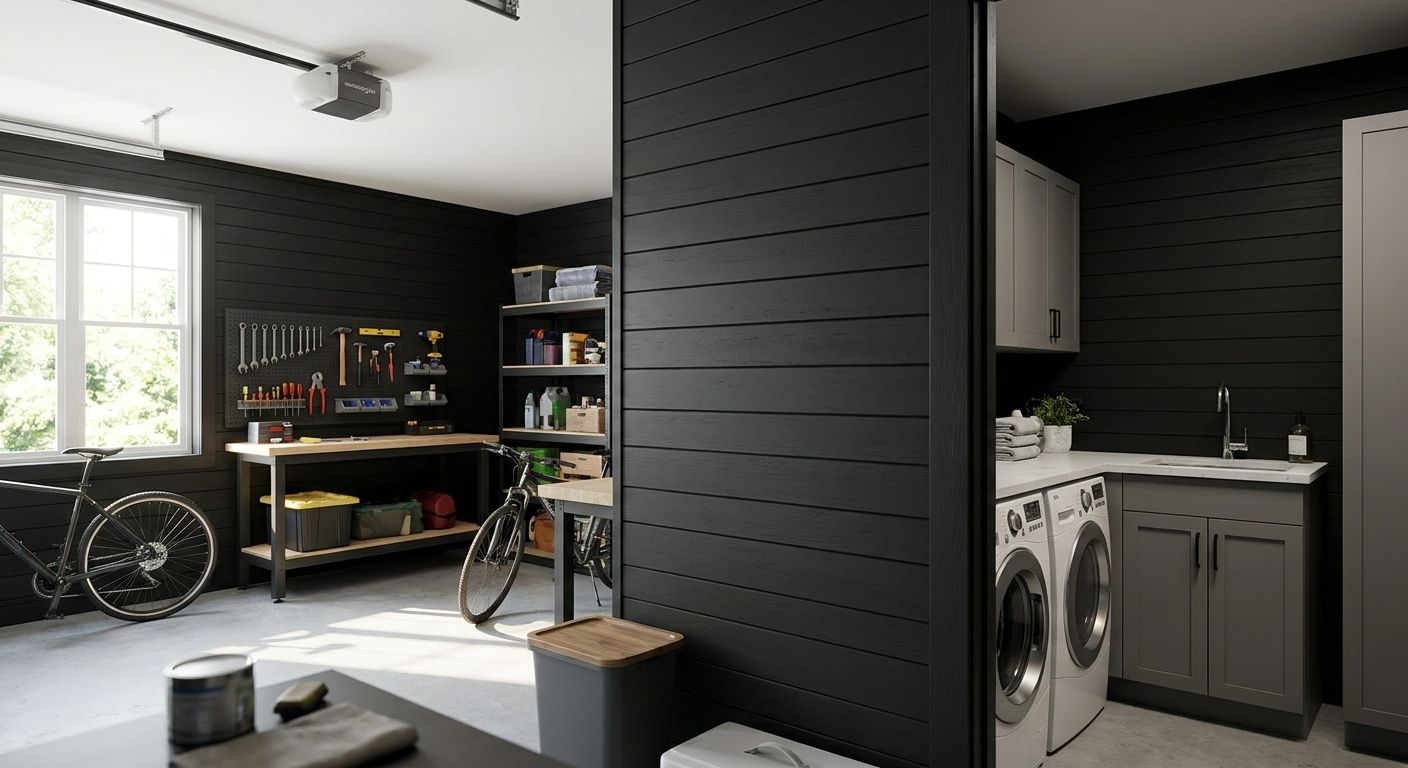
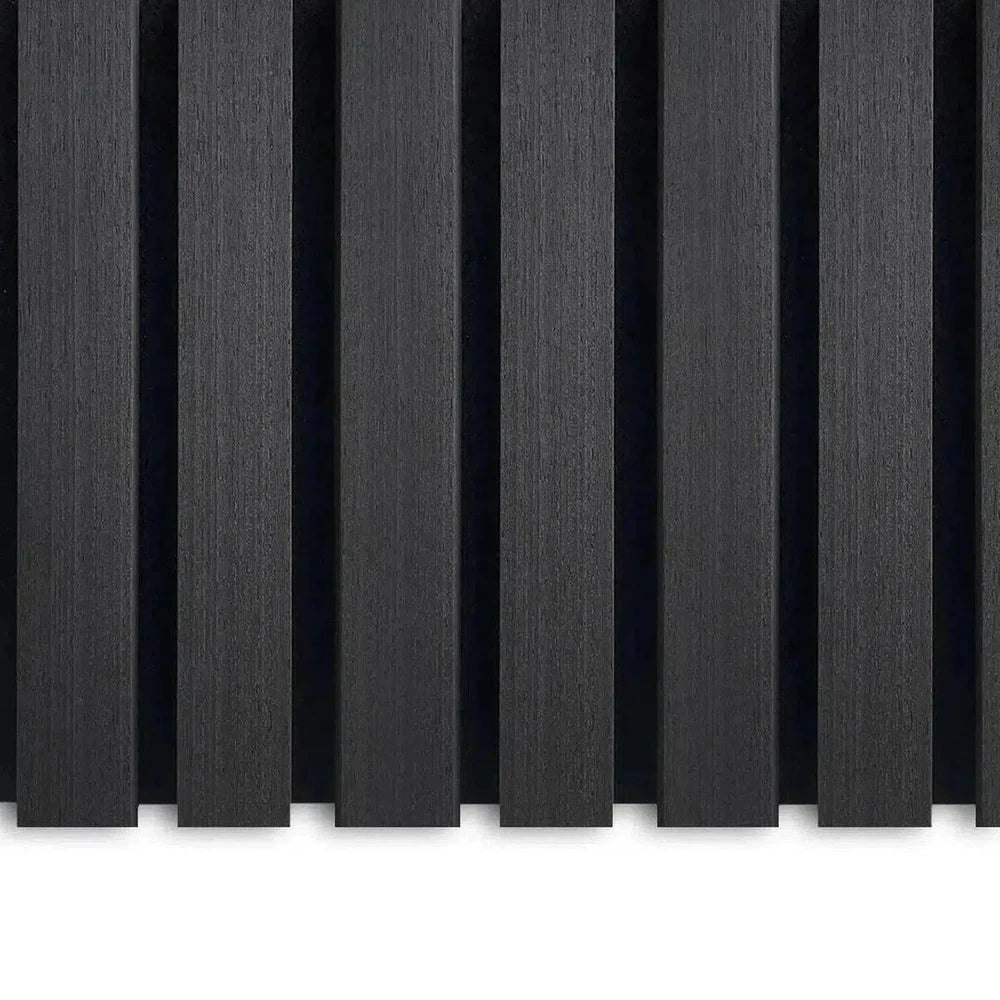
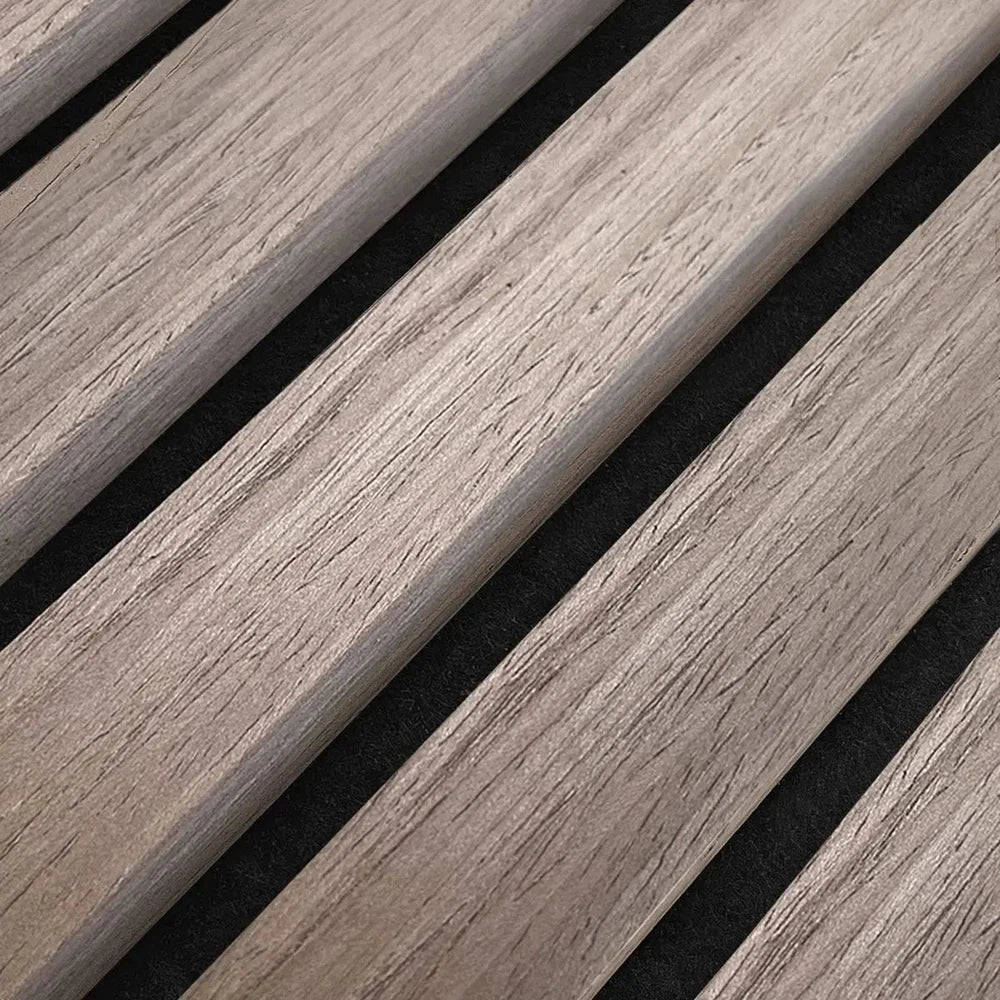
- Black Oak is the wildcard for zoning a TV or media wall without boxing in the space - buy for contrast, skip for small rooms.
- Skip printed-foil slat panels sold as budget alternatives - they don't carry the felt backing that actually cuts reverberation.
Why this matters
Open-plan rooms have more hard surface per square metre than a boxed-off living room - bigger windows, exposed floors, fewer soft furnishings to break up sound. That's the exact problem covered in best oak acoustic panels for open-plan living: reverberation climbs when a kitchen, dining and lounge zone share one uninterrupted volume of air.
Slatted wall panels solve two problems at once. The felt backing behind the slats absorbs sound instead of reflecting it, and the vertical or horizontal run gives your eye a visual break between zones without a single stud going up. That's the pitch for 2026 open-plan renovations: acoustic control and zoning in one material.
Who this is for
This guide is for homeowners with a kitchen-diner-lounge layout, a loft conversion knocked through, or a new-build open-plan space where echo shows up the moment furniture goes in. If you're hearing your own dishwasher over the TV from the sofa, or guests have to raise their voices across the room, that's a reverberation problem slatted wall panels are built to fix.
What to look for in slatted wall panels for open-plan living rooms
Real wood veneer, not a printed finish
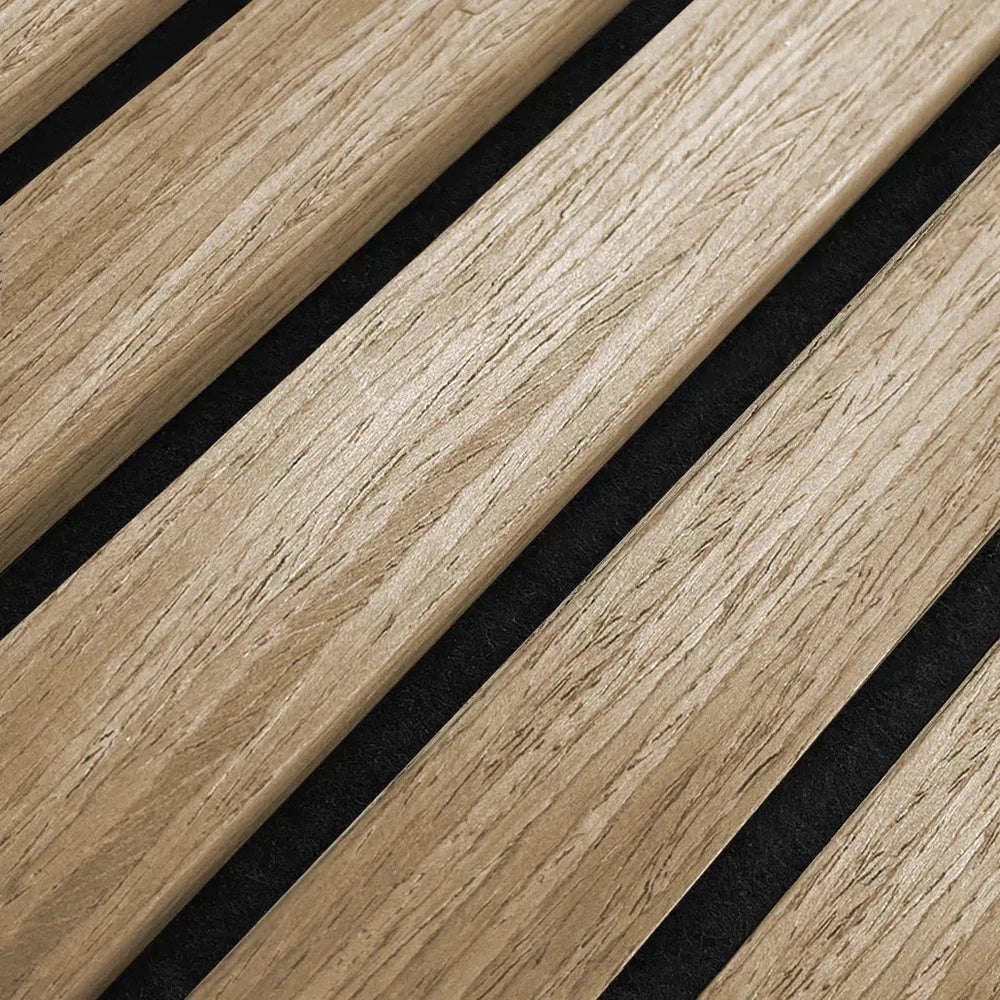
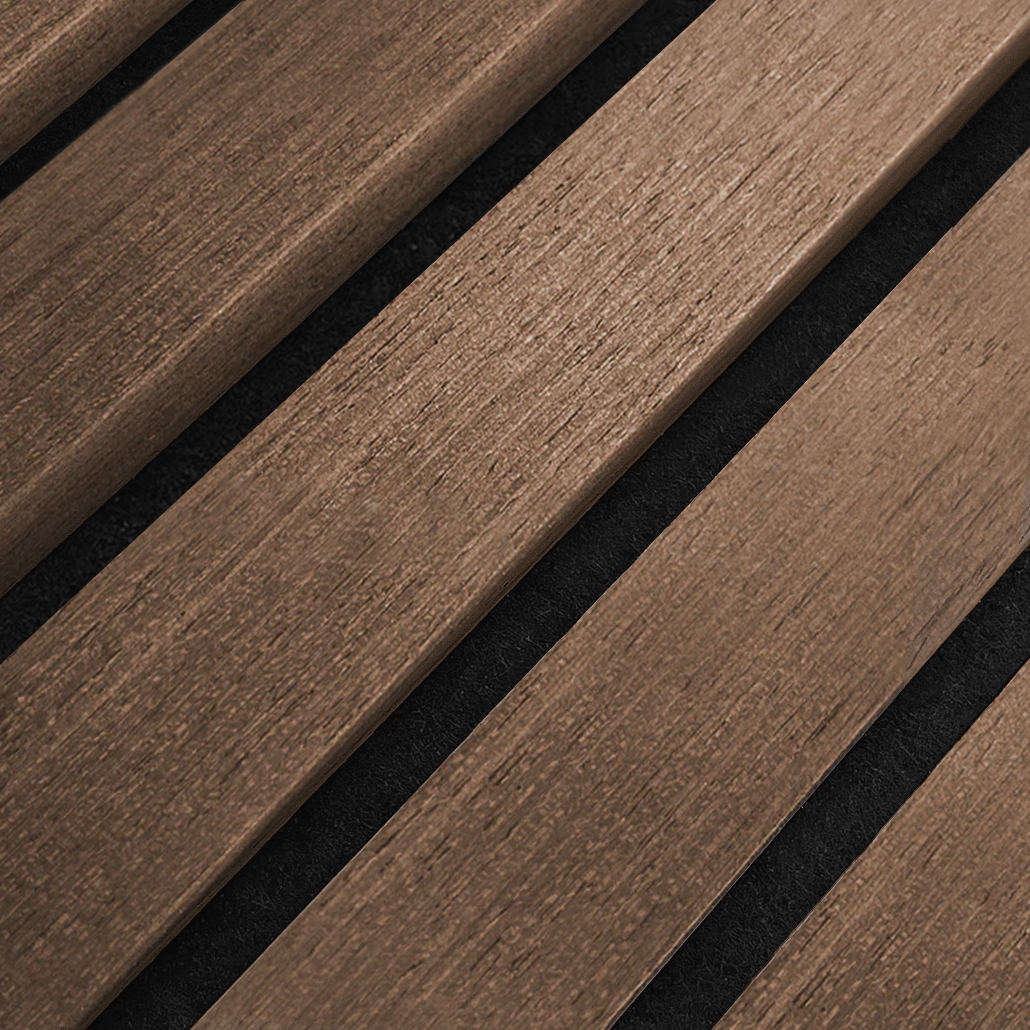
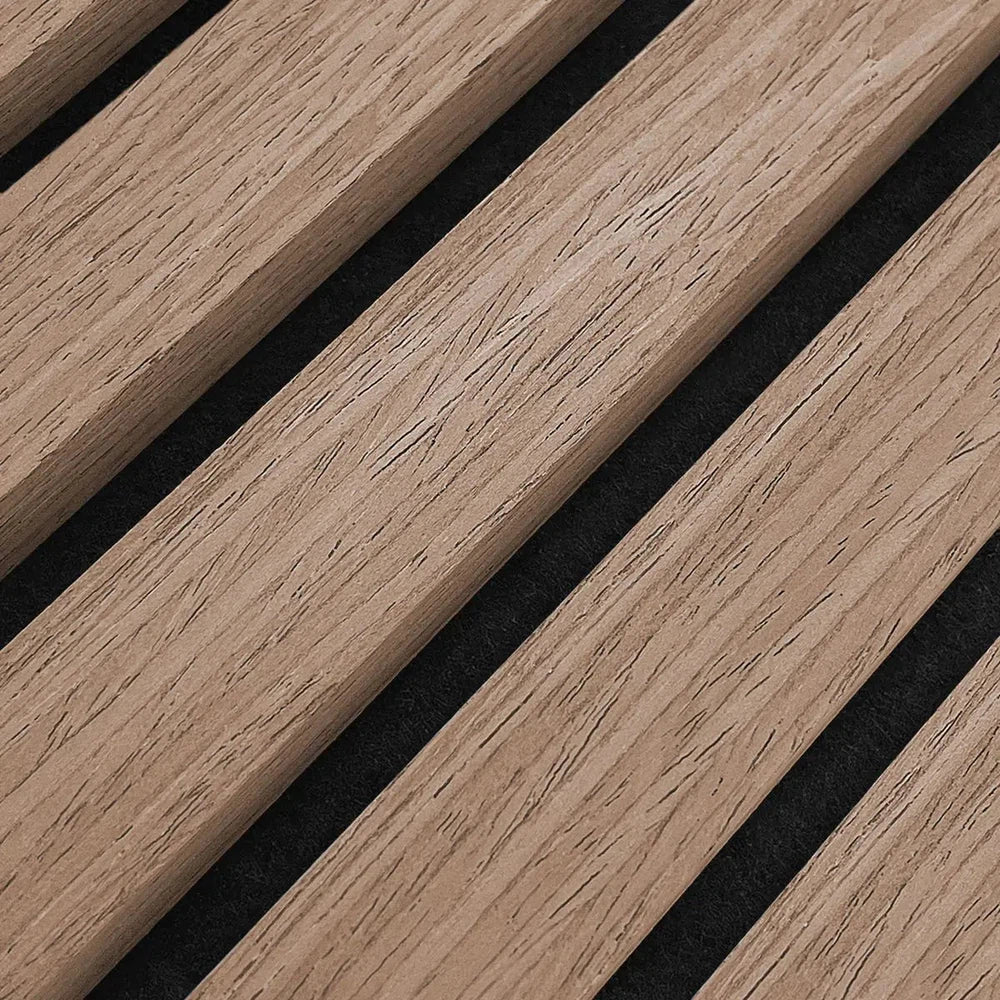
A 3-sided real wood veneer wrap holds its colour and grain for years; a printed foil finish scratches through to show plain MDF within months of daily contact from sofas, kids or pets. In an open-plan room where the panel wall gets seen from every angle, the difference is obvious within the first year.
Acoustic felt backing
A panel with felt backing carries a documented NRC rating - 0.75 on Akustiq UK's felt-backed range - while a decorative-only slat panel does nothing for reverberation. If echo is the reason you're reading this, skip anything without a felt layer, full stop.
Panel length matched to ceiling height
Panels come in 240cm and 300cm lengths. A standard UK ceiling height (roughly 2.4m) suits the 240cm format with minimal cutting; taller open-plan conversions and loft extensions with vaulted ceilings need the 300cm option to avoid a visible horizontal joint halfway up the wall.
Consistent grain across the run
Open-plan zoning walls are often 3-4 metres long. Panels cut from the same veneer batch keep the grain continuous; mixing batches or finishes mid-run is the fastest way to make a feature wall look like a patch job.
Fixing method for your wall type
Stud walls take screw fixings straight through; solid plasterboard or masonry needs panel glue and sometimes battens first. Get this wrong and panels bow or lift at the edges within a season - check how to use wood wall panels to zone an open-plan room before you order.
Colour depth that zones without boxing in
Dark finishes like Black Oak define a zone strongly but can shrink an open-plan room visually if used on every wall. Mid-tone finishes like Natural Oak or Grey Oak zone a space while keeping the room feeling open.


Top picks for open-plan living rooms
The safe pick: Natural Oak A 3-sided real wood veneer finish in a light, neutral tone that works whether your kitchen units are white or dark. Available in both the 240cm and 300cm formats, so it fits standard and vaulted open-plan ceilings without extra cutting. Verdict: Buy - the default choice when you're not sure which finish suits the room.
The acoustic workhorse: Natural Oak with Grey Felt Same veneer, same light finish, but the grey felt backing is what actually does the echo-cutting work in a room with hard flooring and no curtains. Pick this over the plain Natural Oak specifically when the open-plan space includes a dining table and a TV competing for the same air. Verdict: Buy - this is the panel to spec if reverberation is the complaint, not just the look.
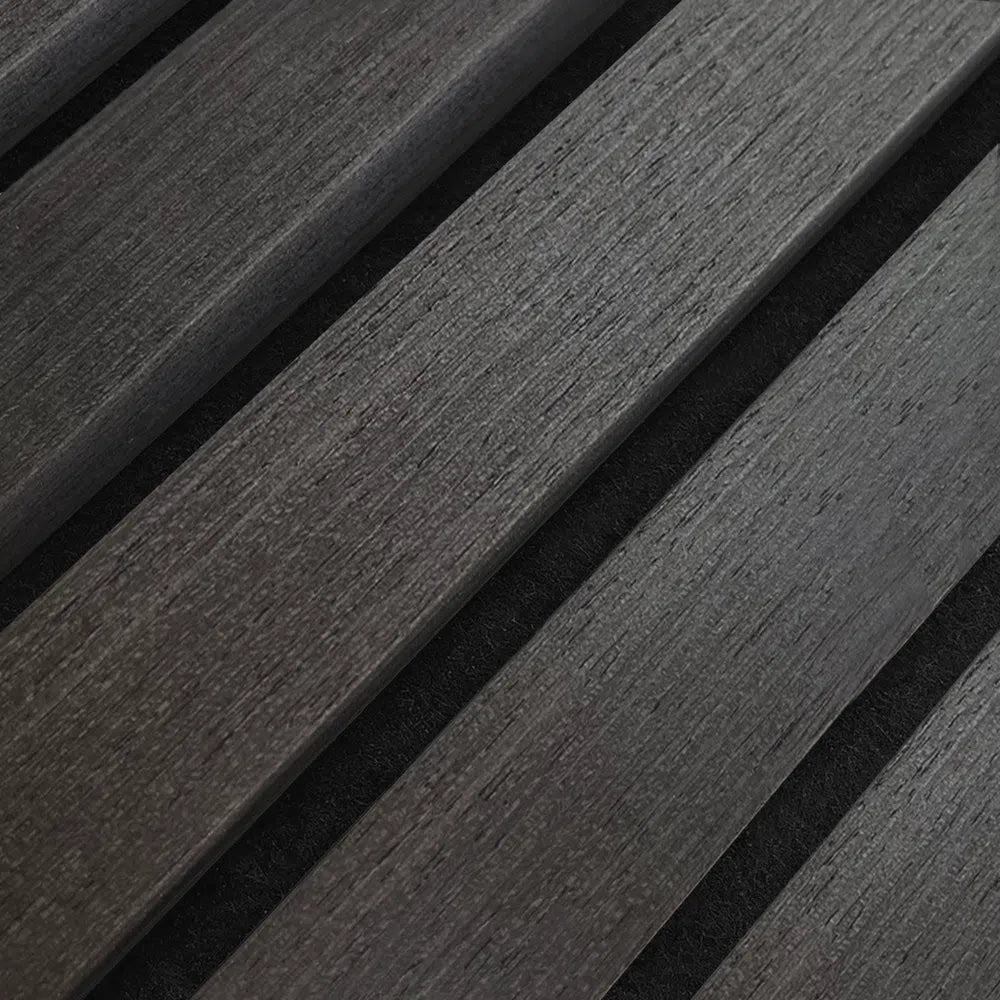
The wildcard: Black Oak Dark, high-contrast, and built to define a TV or media wall as its own zone inside an open-plan layout without a partition. Use it on one wall only - running Black Oak across the full perimeter of an open-plan room will make the space read smaller than it is. Verdict: Consider - strong when used as a single feature wall, risky as a full-room finish.
The statement pick: Rustic Oak Premium 3-Sided Wood Veneer Heavier grain character than the standard Natural Oak line, good for open-plan spaces with exposed brick, reclaimed timber floors or other rustic-leaning materials already in the room. Verdict: Consider - matches a specific interior style rather than a universal fit.
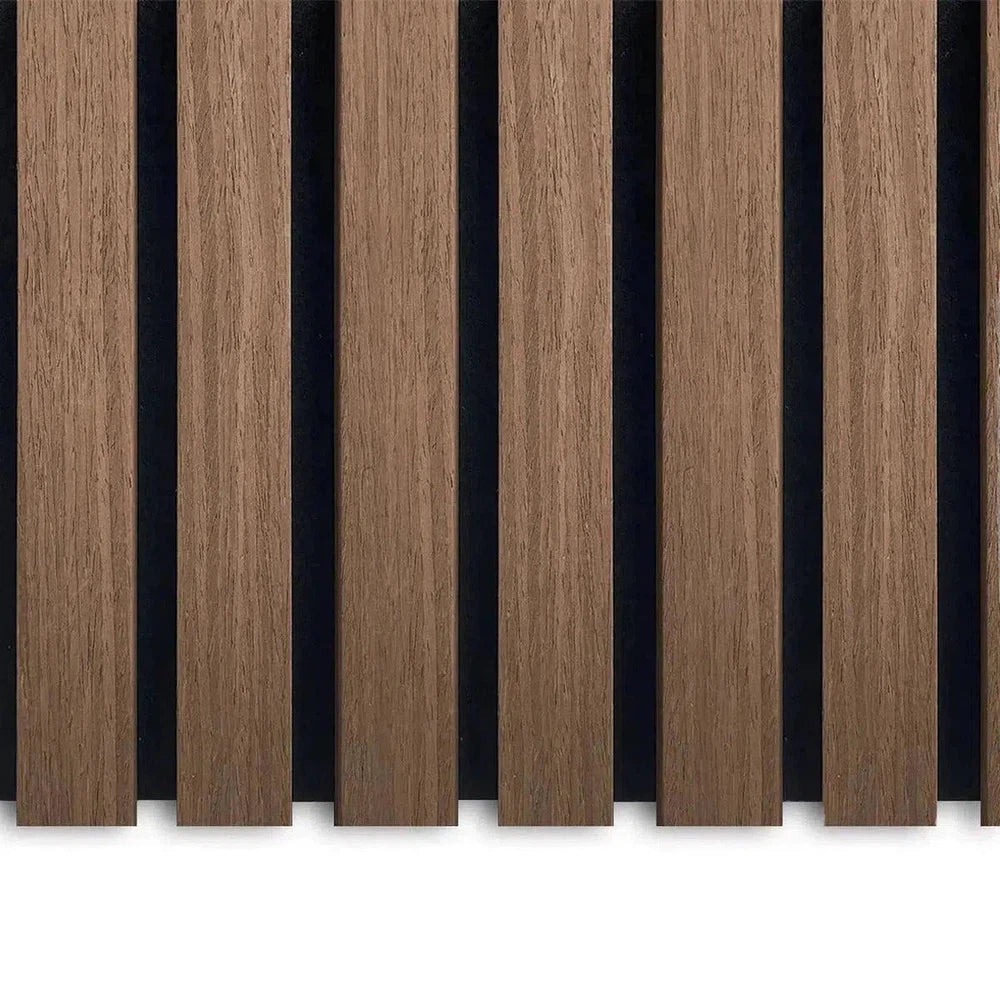
The one to skip for bright rooms: Smoked Oak A deep, smoked finish that works in low-light snugs but tends to swallow daylight in an open-plan room with big glazing, which is most open-plan extensions built since the 2010s. Verdict: Skip for daylight-heavy layouts, Consider for north-facing rooms with limited natural light.
What to avoid
- Printed-foil "wood effect" slat panels sold at a lower price point - they look right in a product photo but scratch through to plain board within a year of contact in a busy living space.
- Panels without felt backing marketed purely as decorative slats - fine for a hallway accent, useless for the echo problem an open-plan room actually has.
- Mixing two different manufacturers' finishes on the same zoning wall to save money - grain and colour rarely match closely enough to pass inspection from the sofa.
Verdict comparison
| Pick | Best for | Acoustic backing | Verdict |
|---|---|---|---|
| Natural Oak | General open-plan zoning | Available with felt option | Buy |
| Natural Oak Grey Felt | Rooms with real echo complaints | Yes, 0.75 NRC | Buy |
| Black Oak | Single feature/media wall | Available with felt option | Consider |
| Rustic Oak Premium | Rustic-style open-plan spaces | 3-sided veneer, no standard felt spec | Consider |
| Smoked Oak | Low-light snugs, not daylight-heavy rooms | Available with felt option | Skip (bright rooms) |
FAQ
What are the best slatted wall panels for open-plan living rooms in 2026?
Natural Oak with grey felt backing is the best all-round pick for 2026 because it combines a real wood veneer finish with an NRC 0.75 acoustic rating. Black Oak works better as a single accent wall rather than a full-room finish.
Do slatted wall panels actually reduce echo?
Yes, but only the felt-backed versions do meaningful acoustic work - the felt layer behind the slats is what absorbs sound rather than reflecting it. A decorative-only slat panel with no backing will look right but won't cut reverberation.
Is 240cm or 300cm better for an open-plan room?
240cm suits a standard UK ceiling height of around 2.4m with minimal cutting. 300cm is the better choice for loft conversions or vaulted open-plan ceilings where a horizontal joint would otherwise be visible.
Can slatted wall panels replace a stud wall for zoning an open-plan room?
They won't block sound the way a stud partition does, but they create a strong visual break between zones without reducing floor space or blocking light. Most open-plan homeowners use them for zoning definition, not sound isolation between rooms.
How do you fix slatted wall panels to a plasterboard wall?
Plasterboard generally needs panel glue rather than screw fixings straight through, sometimes with battens first depending on the wall's condition. Stud walls can usually take a direct screw fixing instead.
Are dark finishes like Black Oak a good idea in a small open-plan room?
Dark finishes work best as a single feature wall rather than a full-room treatment in a smaller space, since covering every wall in a dark tone can make the room feel smaller. Reserve Black Oak for one defined zone, such as behind a TV.
What's the difference between decorative and acoustic slat panels?
Decorative slat panels are built for looks only and carry no sound absorption rating. Acoustic slat panels add a felt backing layer, giving them a measurable NRC rating such as 0.75 on felt-backed ranges.
One last thing
The felt backing is the part most people skip past in the product description, but it's the only thing separating a slat panel that fixes your echo problem from one that just looks like it might. If reverberation is the actual complaint in your open-plan room, don't buy on finish alone - check for the felt layer first.