

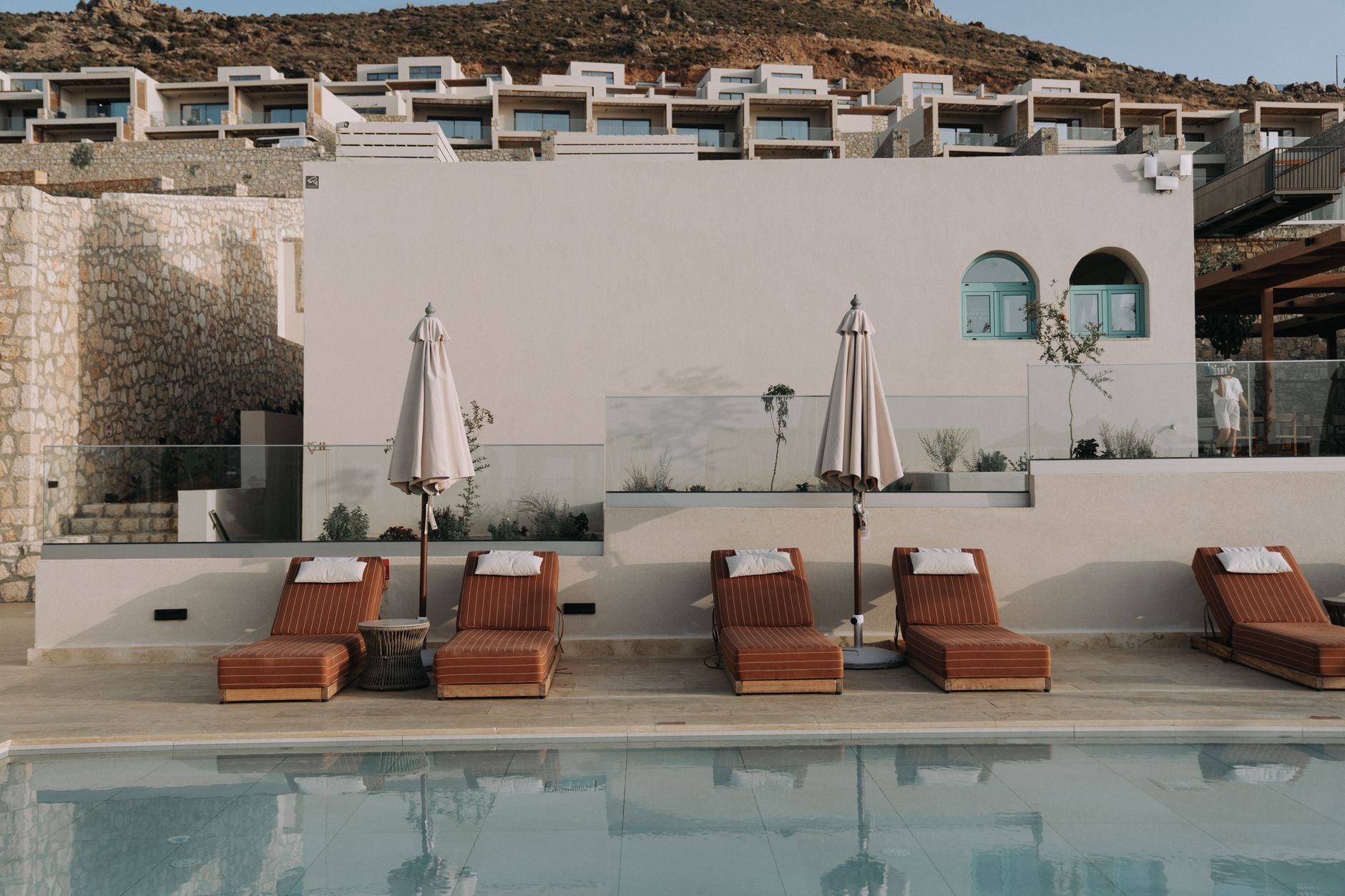
Choosing the right outdoor wall panels for a pool surround or hot tub area is harder than it looks — the combination of constant splash, chlorinated water, UV exposure, and UK weather eliminates most standard cladding options before you even open a catalogue.
TL;DR: For outdoor wall panels around a pool or hot tub surround in 2026, you need exterior-grade composite or treated cladding boards that resist moisture absorption, won't rot, and hold colour under UV. Aku Wood Panel's exterior cladding range — available in Birch, Oak, Black, and Stone Grey — is purpose-built for exposed outdoor applications and is the clearest match for this use case. Interior acoustic panels are the wrong product here; specify exterior cladding panels only.
Why the panel choice matters more at poolside
A pool surround is one of the most punishing environments a wall panel can face. Splash zones see water contact several times daily. Chlorine residue accelerates surface degradation in untreated timber. UV index in the UK averages between 3 and 7 in summer — enough to bleach and crack insufficiently treated finishes within a single season. And unlike interior walls, there is no drying-out period overnight in an outdoor setting. Get the material wrong and you are re-cladding within 18 months.
Who this guide is for
This guide is for homeowners and landscape contractors specifying wall cladding for an outdoor pool enclosure, open-air hot tub surround, swim spa housing, or garden pool building in the UK. You need panels that look architectural rather than utilitarian, install without specialist trades, and stand up to year-round British conditions — including frost cycles, driving rain, and humidity levels that regularly exceed 80% RH.
What to look for in outdoor wall panels for a pool surround
Moisture and rot resistance
This is the non-negotiable criterion. Panels used within 2 metres of a pool or hot tub will absorb splash water on a daily basis during the swim season. Any panel with an MDF or particleboard core will swell, delaminate, and fail. You need a substrate that is either solid composite, treated hardwood, or engineered specifically for exterior use. Check that the product is rated for direct weather exposure — not just damp-proof, but genuinely waterproof at the face and edges.
UV stability
UV breaks down surface coatings and causes colour shift in untreated timber veneers. For a pool surround where the panels face south or reflect light off water, UV stability is the difference between a finish that looks good at year 3 and one that looks weathered at year 1. Exterior-rated panels use stabilised pigments and UV-resistant surface treatments — confirm this in the product specification before ordering.
Slip and splash-zone safety
Wall panels near a pool are not a slip risk themselves, but the fixings and any protruding trim must not create snagging hazards at eye or shoulder height. Flush-fit systems with concealed fixings are safer and look cleaner. Panels installed at deck level should also withstand chemical splashes — check compatibility with chlorine and common pool-treatment chemicals if the panels will be within the splash zone.
Thermal movement tolerance
Outdoor panels expand and contract with temperature. In the UK, the swing between a January frost at -5°C and a July afternoon at 35°C is around 40°C. Panels fixed too rigidly will buckle or gap. A screw-fixed system with factory-specified expansion gaps handles this correctly. Avoid adhesive-only installation for exterior pool surround applications.
Finish and colour retention
A pool surround is a visual focal point. The finish needs to hold up to regular cleaning — including diluted chlorine wash-downs — without fading or staining. Stone Grey and Black tend to show calcium and limescale deposits less than lighter finishes; Oak and Birch bring warmth but require more visible maintenance in hard-water areas. Order samples before committing to a full run.
Ease of installation and trim compatibility
A full cladding system needs more than boards. Matching corner trims, finishing trims, and correctly specified fixings keep the installation looking intentional rather than improvised. A system where boards, trims, and screws are all colour-matched and available from a single supplier reduces site problems and return visits.
Top picks from the Aku Wood Panel exterior range
The architectural choice — Exterior Cladding Panel Oak
Oak finish exterior cladding reads as premium against tile, concrete, and glass pool surrounds. The warm grain tones contrast well with blue water and grey paving. Pair with the exterior wall cladding corner trim oak for clean external angles. If you want to verify the finish before ordering a full quantity, the sample outdoor wall panel oak ships first. Verdict: Buy for pool surrounds where the aesthetic is contemporary or Scandinavian.
The low-maintenance choice — Exterior Cladding Panel Stone Grey
Stone Grey is the most forgiving finish for a pool environment in 2026. It reads as neutral against almost any paving material, hides calcium deposits better than lighter finishes, and matches both modern and traditional garden schemes. The exterior wall cladding panel stone grey is the practical default for anyone who wants the result to look good with minimal upkeep. Verdict: Buy if maintenance time is a constraint.
The bold option — Exterior Cladding Panel Black
Black cladding against a pool surround creates high contrast and photographs well. It absorbs heat, which can be an advantage on a north-facing enclosure wall in a UK spring. The trade-off is that limescale shows more visibly on black — budget for periodic cleaning. Verdict: Consider if the design brief calls for a strong graphic statement.
The natural light choice — Exterior Cladding Panel Birch
Birch is the lightest finish in the exterior range and works well in enclosed pool buildings where natural light needs to be reflected rather than absorbed. It reads clean and contemporary. In an open outdoor setting it will show weathering faster than darker finishes, so specify a maintenance sealer annually. Verdict: Consider for indoor pool rooms or enclosed structures; Hold for fully exposed outdoor use.
What to avoid
- Interior acoustic panels near a pool. Aku Wood Panel's indoor wooden slat panels — the walnut, smoked oak, natural oak acoustic range — are not rated for exterior or wet environments. They will fail within one season if installed outdoors in a pool surround. They belong inside on a dry wall.
- Adhesive-only fixing in thermal swing environments. Panel glue is appropriate for interior installation on stable substrates. Outdoors, thermal movement and moisture cycling will break adhesive bonds at panel edges over time. Use the screw-fix system the exterior range is designed for.
- Mixing trim systems from different product lines. Corner trims, finishing trims, and screws are colour-matched to specific board finishes. Using a Birch board with Black trim, for example, produces a mismatched edge that degrades the installed look. Order trim in the same finish as the cladding board.
Comparison: exterior cladding options for pool surrounds in 2026
| Finish | UV Stability | Maintenance Level | Best Setting | Verdict |
|---|---|---|---|---|
| Oak | High | Medium | Contemporary outdoor | Buy |
| Stone Grey | High | Low | All settings | Buy |
| Black | High | Medium-High | Design-led outdoor | Consider |
| Birch | High | Medium-High | Enclosed pool room | Consider |
FAQ
What are the best outdoor wall panels for a pool surround in the UK? Exterior-grade composite cladding panels in a screw-fixed system are the correct specification. Aku Wood Panel's exterior cladding range — Oak, Stone Grey, Black, and Birch — is rated for exposed outdoor use and handles the moisture, UV, and thermal cycling a pool environment demands in 2026.
Can I use wood wall panels around a hot tub? Yes, provided you use panels rated for exterior and wet-zone installation. Interior acoustic or decorative wood panels are not suitable within the splash zone of a hot tub. Specify exterior cladding boards with a waterproof substrate and sealed edges.
How do I fix cladding panels around a pool wall? Use a screw-fix system with manufacturer-specified expansion gaps to allow for thermal movement. Adhesive-only installation is not recommended for outdoor pool surrounds because moisture and temperature cycles break adhesive bonds over time. See the guide to how to install exterior wall cladding panels for full installation steps.
Which colour cladding is easiest to maintain near a pool? Stone Grey hides calcium deposits and water marks better than lighter or darker finishes, making it the easiest to maintain in a hard-water splash environment.
Do exterior cladding panels need treating after installation? Exterior composite cladding is pre-treated and does not require annual re-sealing in the way raw timber does. For lighter finishes such as Birch used in exposed settings, a compatible outdoor sealer applied annually extends colour life.
How long do outdoor wall panels last around a pool? Exterior-grade composite cladding panels correctly installed in a screw-fixed system with appropriate expansion gaps are designed for long-term outdoor use. Maintenance frequency depends on finish colour and proximity to the splash zone — typically a clean-down 2–3 times per year is sufficient.
Are there matching corner trims available for pool enclosure cladding? Yes. Aku Wood Panel supplies colour-matched corner trims and finishing trims for each exterior cladding finish, ensuring clean edges at external angles and panel terminations without mixing product lines.
Can exterior cladding panels be used on a hot tub cabinet as well as the surround wall? Exterior cladding panels are suitable for vertical wall surfaces in wet outdoor environments. For the cabinet panels of a hot tub unit itself, confirm the fixing substrate and check that ventilation requirements for the equipment are not obstructed by the cladding installation.
One last thing
Chlorine gas and residue concentrate at water level, not just in the water itself. In an enclosed pool building, this accelerates surface degradation on anything within 500mm of the water line faster than UV does. Specify your lowest panel run in a chemical-resistant finish — Stone Grey or Black — even if you use a warmer finish on the upper wall. The contrast reads as a deliberate design decision, and it is the specification choice that avoids the most common early failure point in pool enclosure cladding.
Share:
Grey Oak Wall Panels for Minimalist Interiors 2026
Best Wall Panels for Loft Conversion Feature Walls 2026