

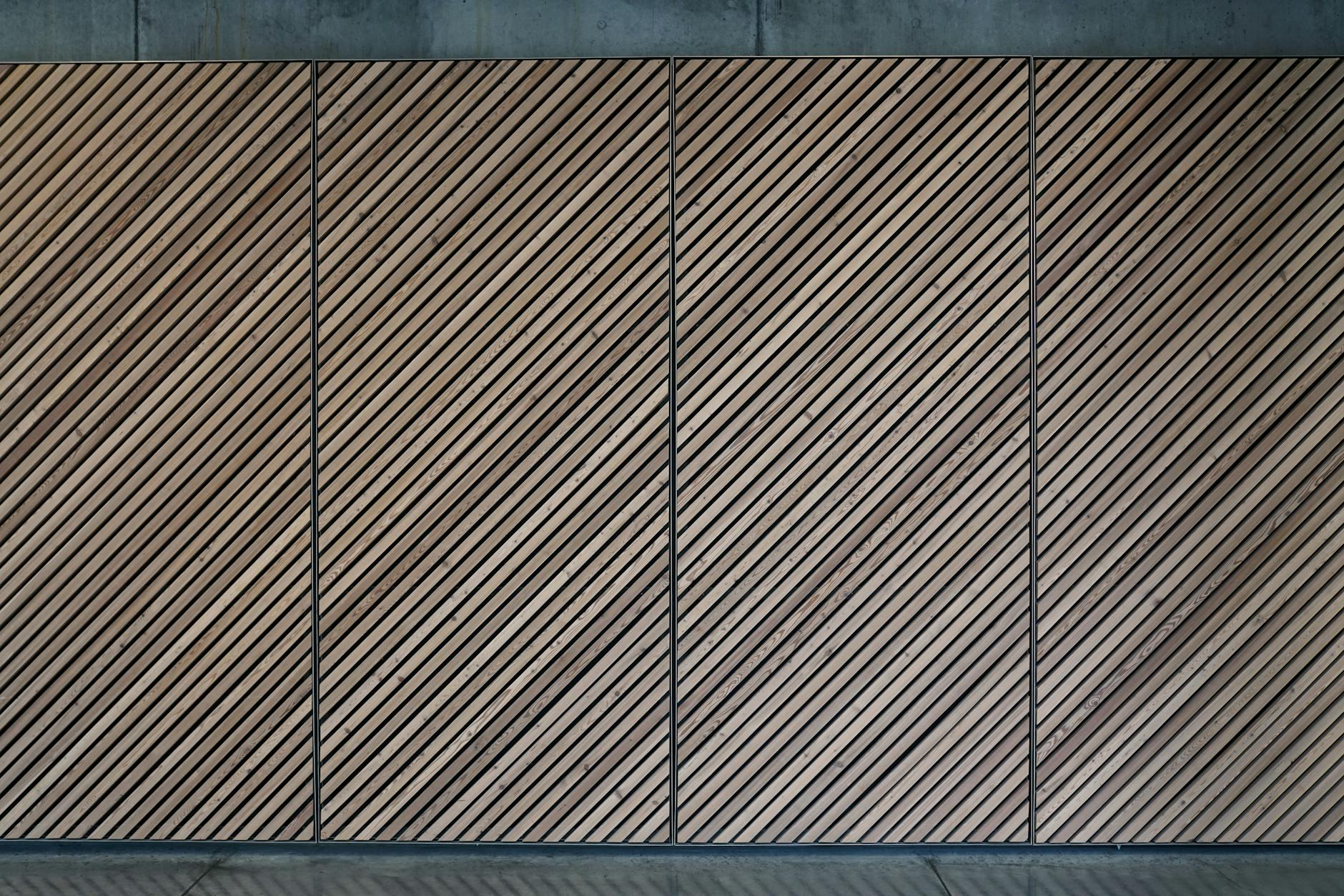
Outdoor wall panels built for garden fencing need to survive British weather — rain, frost, UV, and everything in between — while still looking sharp year after year. This guide covers what to look for, which panel types suit a fencing application, and where AKU Wood Panel's exterior range fits into that decision in 2026.
TL;DR: The right outdoor wall panels for garden fencing in 2026 combine weather-resistant board material, a secure mechanical fixing system, and a finish that holds colour through freeze-thaw cycles. AKU Wood Panel's exterior cladding range — available in Birch, Oak, Black, and Stone Grey — is purpose-built for external use and ships with matched screws, corner trims, and finishing trims so you can complete a fence panel run without sourcing hardware separately. If you want to check colour before committing, free samples are available for every finish.
Who this is for
This guide is written for homeowners, self-builders, and landscapers who want outdoor wall panels that work on a garden fence — not a house facade or commercial hoarding. You are either replacing tired timber lap panels, cladding a new timber-frame fence structure, or upgrading a rendered or concrete block garden wall with a wood-effect finish. You care about longevity, low maintenance, and a result that still looks intentional five years from now.
What to look for in outdoor wall panels for garden fencing
Weather resistance
A garden fence takes direct rain, standing moisture at ground level, and UV from all angles throughout the day. Panels rated for external use use a closed-cell or composite core that does not absorb water the way standard MDF-backed interior cladding does. In the UK, a panel that cannot handle freeze-thaw cycling will start delaminating within 2–3 winters. Check that the product listing explicitly states external or exterior use — not just "moisture resistant."
Fixing method
Garden fence panels move slightly with temperature changes. A face-screw fixing system lets each board expand and contract without buckling. Hidden clip systems look cleaner but add installation time and cost. For a DIY fence run, matched screws in the same finish as the panel face (Birch, Oak, Black, or Stone Grey) produce a tidy result without specialist tools. AKU Wood Panel supplies exterior wall cladding screws in Birch matched to the panel finish, which eliminates the visible colour mismatch that undermines the final look.
Board profile and coverage
Wider boards cover more fence area per fixing point and give a cleaner, more architectural look. Narrower boards allow tighter spacing adjustments around posts and gate frames. Confirm the coverage per board and calculate your panel count before ordering — gaps and short-cuts look worse on a fence than on an interior wall because there is nowhere to hide the edge.
Edge and corner detailing
Fence corners — at gate posts, fence ends, and returns — are where cheap installations fall apart. A purpose-made corner trim in the matching finish wraps the exposed board ends cleanly and protects the core from moisture ingress. AKU Wood Panel stocks corner trims in all four exterior finishes. Finishing trims seal the top and bottom run. These are not optional on an exposed garden fence in a UK climate.
Colour and finish longevity
Natural wood finishes grey off over time unless retreated. Composite and engineered finishes hold colour significantly longer with zero maintenance beyond an occasional wash. For 2026 garden projects, Stone Grey and Black are particularly popular choices because they read as contemporary against green planting and do not show the tonal shift that lighter naturals can develop after 18 months outdoors.
Sample availability
Colour matching on a fence is harder than inside. Fence panels sit next to boundary walls, gate hardware, and garden buildings — all with their own tones. Before ordering full panels, order a physical sample. AKU Wood Panel offers samples for each exterior finish: sample outdoor wall panel in Oak is a practical first step before committing to a full run.
Top picks from AKU Wood Panel's exterior range
The safe pick — Exterior Cladding Panel in Oak
Oak is the neutral that ages without looking tired. The Oak exterior panel sits between the warm-toned naturals and the cooler engineered finishes, which means it works against red-brick boundary walls, painted render, and timber gate frames without clashing. One spec that matters: the panel uses a composite construction rated for full exterior exposure, not just sheltered applications. Verdict: Buy for gardens where the fence sits against mixed materials.
The bold choice — Exterior Cladding Panel in Black
Black cladding on a garden fence is the 2026 move that interior designers have been specifying for the last two years on high-end residential projects. It photographs well, makes planting pop, and holds its finish without greying. Exterior wall cladding panel Black ships with matched black screws and black corner trims, so the entire installation reads as one considered finish rather than a panel job. Verdict: Buy if you want a fence that reads as a designed element rather than a boundary marker.
The understated pick — Exterior Cladding Panel in Stone Grey
Stone Grey sits between the warmth of Oak and the drama of Black. It reads neutral against almost any garden context — pale render, grey paving, stained timber posts — and does not demand a specific planting scheme to work. Verdict: Buy for low-maintenance gardens where the fence is meant to recede rather than feature.
The light-tone option — Exterior Cladding Panel in Birch
Birch delivers a light, Scandinavian aesthetic that suits contemporary garden designs with pale gravel, white render, or pale hardwood decking. It is the most distinctive of the four finishes and the one that rewards sample testing most — in strong direct light it reads almost white, in shade it shows more grain. Verdict: Consider — order a sample first.
What to avoid
- Interior acoustic panels on an external fence. AKU Wood Panel's interior wood wall panels — walnut, natural oak, smoked oak — use felt-backed or MDF-backed construction optimised for sound absorption inside buildings. They are not weatherproofed. Installing them on a garden fence will cause delamination within one winter. The exterior cladding range is the correct product for this application.
- Unmatched fixings. Using generic stainless screws on a Black or Stone Grey panel leaves visible silver heads across the full fence run. AKU Wood Panel's matched screw sets exist precisely to avoid this.
- Skipping corner trims on a return fence. Board ends exposed to rain at fence corners will absorb moisture even on a composite panel. A corner trim is a £20–£30 fix that prevents a £300 re-clad job two years later.
Verdict comparison table
| Finish | Best for | Maintenance | Bold/Neutral | Verdict |
|---|---|---|---|---|
| Oak | Mixed-material gardens | Low | Neutral | Buy |
| Black | Feature fences, contemporary gardens | Low | Bold | Buy |
| Stone Grey | Low-maintenance, recessive fencing | Very low | Neutral | Buy |
| Birch | Scandi/pale palette gardens | Low | Distinctive | Consider |
FAQ
What are outdoor wall panels made from for use on garden fencing? Panels purpose-built for external garden use use a composite or engineered board core with a UV-stable surface layer. This construction resists moisture absorption and freeze-thaw damage. Standard interior wall panels — including most MDF-backed acoustic products — are not rated for outdoor use and will fail within 1–2 UK winters.
Are AKU Wood Panel's exterior cladding panels suitable for a garden fence in 2026? Yes. The exterior cladding range is rated for full external exposure. It is available in four finishes (Birch, Oak, Black, Stone Grey) and ships with matched screws, corner trims, and finishing trims for a complete installation.
How do I fix outdoor wall panels to a garden fence frame? For most garden fence applications, face-screw fixing to a timber batten framework is the standard method. AKU Wood Panel's matched colour screws sit flush with the panel face and avoid visible rust streaking. Batten spacing of 400–600 mm is typical for a horizontal board run.
Can I use wood wall panels on a rendered garden wall? Yes, with the right substrate preparation. Rendered surfaces need to be sound, dry, and level before cladding. Timber battens fixed to the render give a ventilated cavity behind the panels, which extends panel life and prevents moisture trapping. See the guide on outdoor wall cladding for rendered house exteriors for installation detail.
What colour outdoor wall panel works best on a garden fence in 2026? Black and Stone Grey are the two finishes dominating new garden installations in 2026. Black creates a strong contrast against greenery. Stone Grey reads as architectural without being stark. Both finishes are available with matched fixings and trims from AKU Wood Panel.
Do I need special tools to install exterior cladding panels on a fence? No specialist tools. A drill-driver, spirit level, tape measure, and mitre saw (or a fine-tooth hand saw) cover the full installation. The matching screw sets remove the need for countersinking or plug-filling.
Is it worth ordering a sample before buying outdoor wall panels? Yes, every time. Fence panels are large, visible surfaces and colour perception changes significantly between a screen, a showroom, and direct outdoor light. AKU Wood Panel offers individual samples for each exterior finish at low cost — the sample cost is negligible against the cost of ordering the wrong finish for a 20-metre fence run.
How long do outdoor wall panels last on a garden fence? Engineered composite exterior panels installed with correct ventilation and matched trims on a sound timber framework last 15–25 years with zero surface treatment. Natural timber cladding without annual treatment typically shows visible weathering within 3–5 years in a UK climate.
One last thing
The single most common installation mistake on garden fencing in 2026 is treating the bottom run as an afterthought. Ground splash — rain hitting paving or soil and bouncing back — hits the lowest 150 mm of a fence harder than any other section. A finishing trim sealed at the base course, with a 10–15 mm clearance above ground level, prevents the one failure point that voids most material guarantees. Budget for the trim before you budget for the panels.
Share:
Best Acoustic Wall Panels for Noise Reduction 2026
Best Acoustic Wall Panels for Noise Reduction 2026