

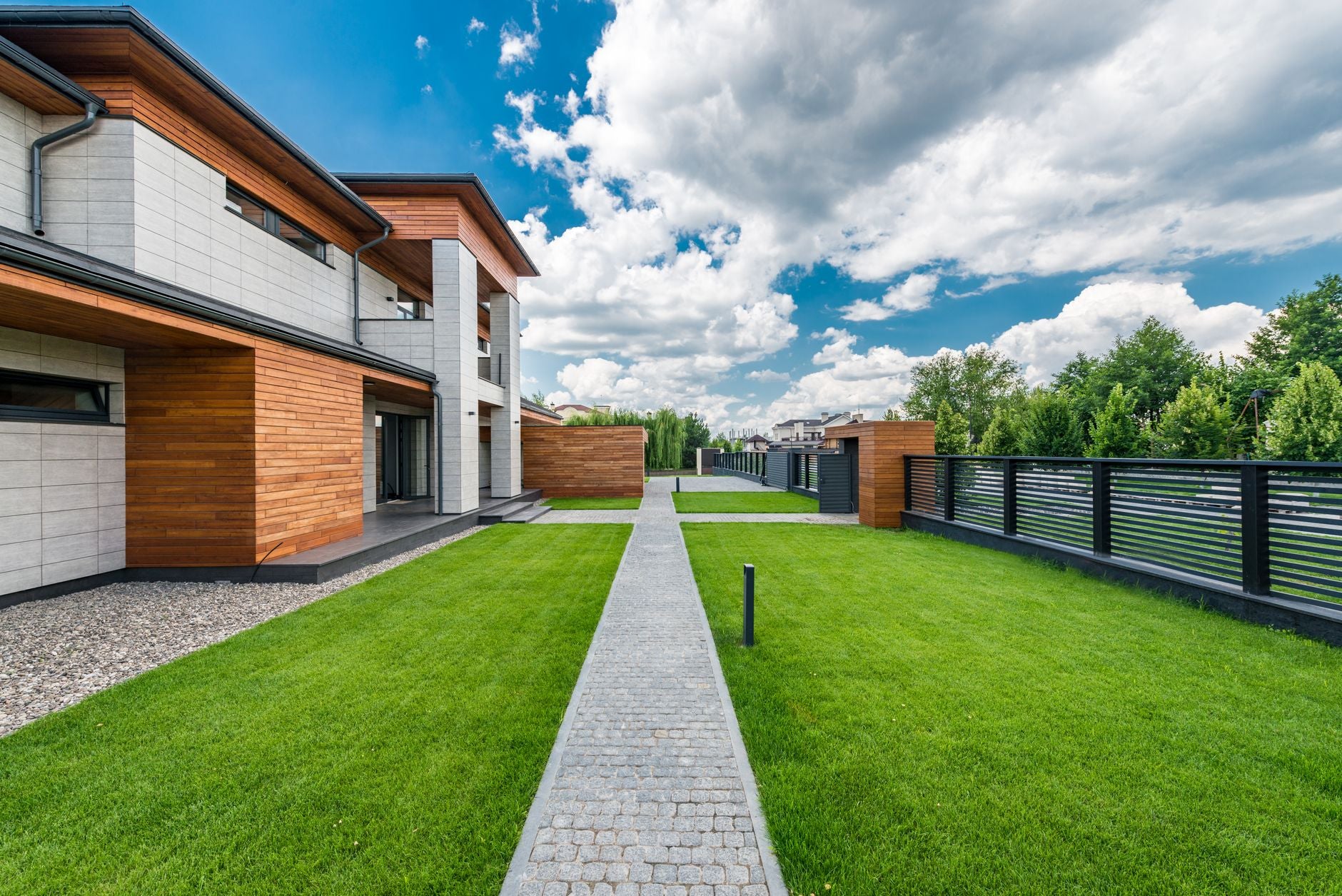
Choosing the right exterior cladding for a summer house comes down to three things: weather resistance, ease of installation, and how the finish holds up after two or three UK winters.
TL;DR: Aku Wood Panel's exterior wall cladding panels in Birch, Oak, Black, and Stone Grey are purpose-built for outdoor use on garden buildings, summer houses, and outbuildings in 2026. Each panel is engineered for moisture resistance and UV stability. Birch suits natural timber aesthetics; Black and Stone Grey suit contemporary builds. Order a sample outdoor wall panel in Oak before committing to a full order — the colour reads differently in direct sunlight than on a screen.
Why exterior cladding matters for a summer house
A summer house wall faces more exposure than a house wall. No cavity insulation behind it, often no overhang above it, and in the UK — rain from October through April at minimum. Poor cladding choices lead to warping within 18 months, surface delamination by year 3, and repainting costs that outstrip the original panel budget. The right panel protects the structure, reduces ongoing maintenance, and adds visible kerb appeal that increases perceived property value.
In 2026, composite and engineered wood cladding panels have largely replaced bare timber boards for summer house applications because they hold dimensional stability far better across the British freeze-thaw cycle.
Who this guide is for
You're fitting cladding to an existing or new-build summer house — a freestanding garden structure, not a main dwelling. You want a finish that looks deliberate, not like a shed, and you're prepared to spend a little more upfront to avoid re-doing the job in three years. You may be a confident DIYer or a small tradesperson fitting for a client. Either way, you need panels that install without specialist equipment, match in colour run to run, and come with compatible trims and fixings in the same range.
What to look for in exterior cladding for a summer house
Moisture and UV resistance
This is the non-negotiable criterion. Panels rated for exterior use must resist moisture ingress without swelling and withstand UV degradation without fading to a chalky, uneven tone. Look for panels with a factory-applied weather-resistant finish — not panels that require you to apply a sealer on-site before installation. In the UK's climate, surface treatments applied in variable outdoor conditions rarely bond as effectively as a factory finish.
Dimensional stability across seasons
A summer house wall heats to 40°C+ on a clear July day and drops to near freezing in January. Panels that expand and contract unevenly buckle at joints, open gaps, and let moisture behind the cladding layer. Engineered composite panels with controlled density hold tighter tolerances across a wider temperature range than solid softwood boards cut to length on-site.
Panel profile and shadow line
The visual character of your summer house comes almost entirely from the panel profile — how deep the shadow lines run between slats, whether the grain is pronounced or subtle, and whether horizontal or vertical installation suits the building's proportions. In 2026, horizontal shadow-line profiles remain the most popular choice for garden buildings because they echo traditional timber cladding while reading as contemporary. Vertical installation suits narrower structures and adds perceived height.
Colour range and batch consistency
If you order panels in two separate batches — common when adding a second face of a building later — colour variation between batches is a real risk with lower-quality ranges. A manufacturer supplying Birch, Oak, Black, and Stone Grey across a consistent formula gives you the option to order more panels years later without a visible mismatch on adjacent walls.
Fixing system compatibility
Panels that arrive without a dedicated fixing system force compromises: wrong screw length, no colour-matched heads, no corner solution. A complete system — panels, screws, finishing trim, and corner trim — all in matching finishes means every exposed edge and external corner looks intentional rather than improvised.
Coverage per panel and waste calculation
Summer houses are small structures — typically 3 m x 4 m to 4 m x 6 m — but wall area adds up fast when you include gable ends. Know the coverage per panel before ordering and add 10% for cuts and waste. Over-ordering and returning is almost always cheaper than a second delivery charge for a small shortfall.
Top picks for exterior cladding for a summer house
Birch — the natural timber look
The safe pick. Birch is the closest finish to untreated light-toned timber, which makes it the default for owners who want their summer house to read as a garden building rather than a contemporary structure. The pale, warm tone weathers gracefully and pairs well with planted borders. Verdict: Buy if you want a natural aesthetic that fits most garden settings.
Order a sample outdoor wall panel in Birch first — the tone varies between full sun and shade more than the other finishes.
Oak — the versatile mid-tone
The crowd-pleaser. Oak sits between Birch and the darker finishes — warm enough to feel natural, defined enough to look designed. It works on both traditional and contemporary summer house forms. If you're unsure which direction to go, Oak is the lowest-risk choice for resale appeal. Verdict: Buy for mixed-use gardens where the summer house sits alongside both planted areas and hard landscaping.
Black — the contemporary statement
The bold choice. Black cladding on a summer house makes an unambiguous design statement. It reads as intentional, contrasts sharply with planting, and photographs well. The risk is that it absorbs more solar heat, which in a small unventilated structure can raise interior temperatures noticeably on summer afternoons. Ensure adequate ventilation before specifying Black across all four walls. Verdict: Buy for modern gardens and owners who want the building to be a focal point. Consider adding ventilation above door level.
Stone Grey — the contemporary neutral
The wildcard. Stone Grey sits outside the wood-tone palette entirely. It reads as architectural — closer to render or fibre cement than timber — which suits contemporary self-build summer houses where the owner wants to reference the main house's material palette rather than a garden building aesthetic. It is also the most forgiving finish for surface dust and pollen accumulation. Verdict: Buy for contemporary builds; Skip if the brief is "natural garden building."
What to avoid
- Untreated softwood boards cut to width on-site. They look identical to engineered panels in photographs but split, warp, and require annual treatment. By year 2 they look 10 years old.
- Interior wood-effect panels marketed without exterior ratings. Interior acoustic slat panels are not weatherproof. Applying them outdoors voids any warranty and leads to rapid delamination. The product range distinction matters: Aku Wood Panel's exterior cladding range is separate from its interior acoustic panel range.
- Mismatched fixing systems. Using non-colour-matched screws on a Black or Stone Grey panel creates visible rust-streaked dots within 18 months. Use the manufacturer's own colour-matched exterior cladding screws and finishing trims for the chosen finish.
Comparison table
| Finish | Best for | Shadow line | Heat absorption | Order samples |
|---|---|---|---|---|
| Birch | Natural / traditional gardens | Medium | Low | Yes — varies in sunlight |
| Oak | Versatile — traditional or modern | Medium | Low–medium | Yes — warm mid-tone |
| Black | Contemporary / statement build | Pronounced | High | Yes — ventilation check needed |
| Stone Grey | Architectural / render-match | Minimal | Medium | Yes — reads as non-timber |
FAQ
What is the best exterior cladding for a summer house in the UK? Engineered composite panels in a purpose-built exterior range outperform bare timber boards for UK conditions. In 2026, Oak and Birch finishes are the most popular choices for summer houses because they suit most garden contexts and hold colour well across the British temperature range.
Can I use interior wood panels for the outside of a summer house? No. Interior acoustic slat panels are not rated for moisture or UV exposure. Using them outdoors will cause delamination within one to two seasons. Only panels explicitly rated for exterior use should go on summer house walls.
How much exterior cladding do I need for a summer house? Calculate the total wall area in square metres — include gable ends — then add 10% for cuts and waste. A typical 4 m x 3 m summer house with 2.4 m eaves height has roughly 40 m² of claddable wall area before deducting doors and windows.
Is black exterior cladding practical for a summer house? Yes, with one caveat: Black panels absorb significantly more solar heat than lighter finishes. In a small enclosed structure this raises interior temperatures on sunny days. Build in ventilation above door or window level before specifying Black across all walls.
Do I need special screws for exterior cladding panels? Yes. Standard wood screws corrode and leave rust staining on the panel face within two seasons. Colour-matched exterior-rated screws designed for the specific panel finish keep the installation looking clean and prevent surface staining.
Can exterior cladding panels be installed horizontally and vertically? Both orientations work. Horizontal installation is the more common choice for summer houses because it echoes traditional feather-edge boarding. Vertical installation suits narrow gable ends and adds perceived height to lower structures.
How long do exterior cladding panels last on a summer house? Factory-finished engineered panels with proper installation and matching trims typically last 15–20 years before requiring any surface attention. Bare softwood boards in the same conditions typically need repainting or re-treating every 2–3 years.
Do I need planning permission to clad a summer house? Most summer houses fall under permitted development in England and Wales, so re-cladding does not require planning permission. Check with your local planning authority if the building is in a conservation area or if the finish change is substantial — rules updated in 2026 still vary by borough.
One last thing
Order samples before placing a panel order — not as a formality, but because the Stone Grey and Black finishes both read differently against planted garden backdrops than they do on a white studio background. Spend £5 on a sample, hold it against the building at midday and again at dusk, and make the colour decision with your eyes rather than a screen. That 10-minute test prevents the most expensive mistake in any cladding project.
Share:
Acoustic Panels for Open-Plan Kitchen Walls 2026
Best Wall Panels for Scandinavian Interiors 2026