

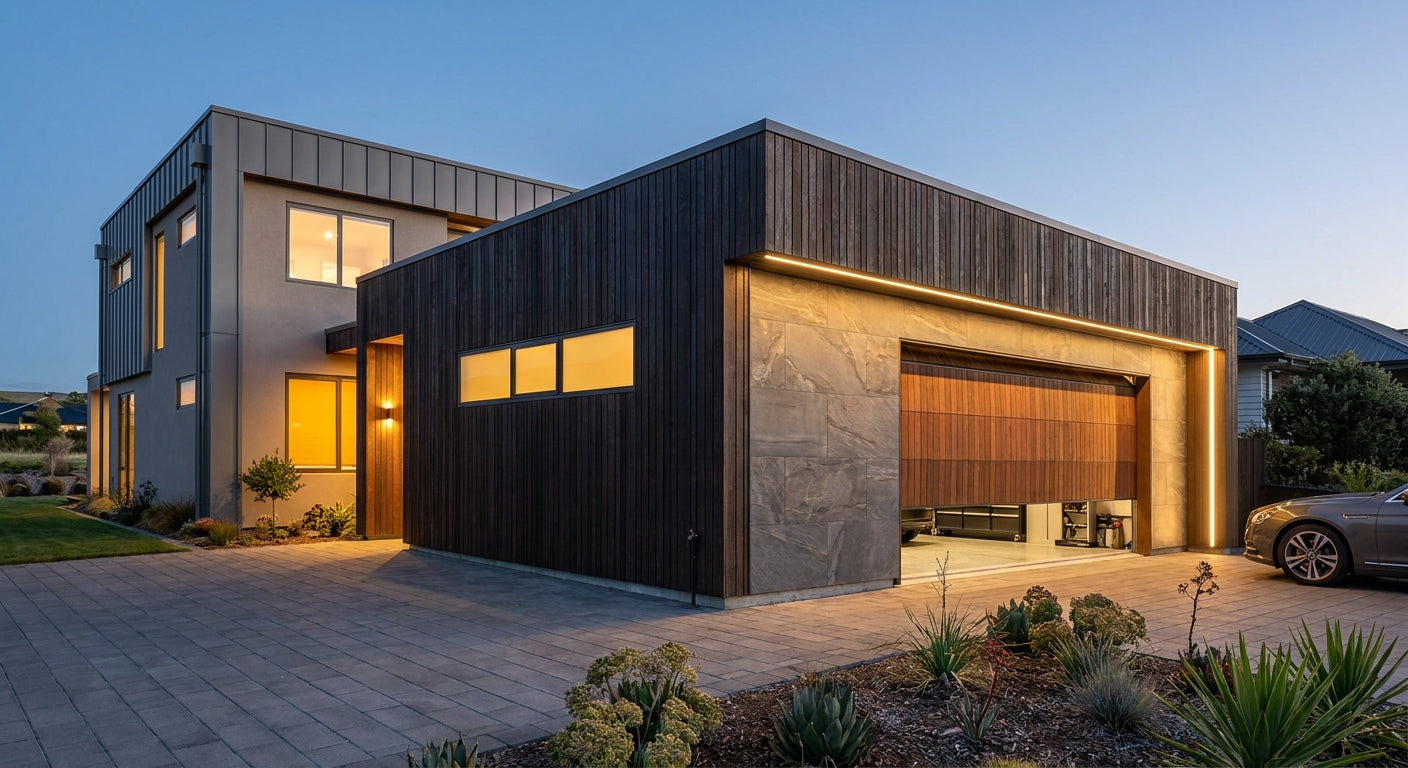
Choosing the right exterior cladding for garage walls is more than an aesthetic decision — it determines how well your garage holds up against British weather, how much maintenance you sign up for, and whether the finish still looks sharp a decade from now.
TL;DR: For garage walls in 2026, composite wood-effect exterior cladding panels outperform traditional timber on durability and maintenance. Birch, Oak, Black, and Stone Grey finishes from Aku Wood Panel are purpose-built for outdoor exposure, resist moisture without annual treatment, and install with a concealed screw system that keeps the face clean. Order samples before committing to a full run — colour reads differently on a rendered garage wall than on a screen.
Why exterior cladding for garage walls matters in 2026
Garages take more weather punishment than the main house. A north-facing garage wall can stay damp for days after rain. Frost cycles in the UK — common from November through to March — cause untreated timber to crack and warp faster than most homeowners expect. In 2026, the move toward composite and engineered cladding panels has accelerated precisely because they eliminate those failure points without sacrificing the warm, wood-grain look that bare brick or render can't deliver.
The other driver is planning. Most detached garage cladding projects in the UK fall under permitted development, but the material choice still needs to complement the main dwelling. Getting the finish right matters both aesthetically and for property value.
Who this guide is for
This guide is for homeowners and self-builders cladding a detached or integral garage — whether that's a single-skin block-built structure, a timber-frame outbuilding, or a rendered concrete garage. It also applies to anyone upgrading an existing garage that looks tired or is starting to show moisture damage. If you're a trade contractor sourcing panels for a residential project, the product specs and fixing systems covered here translate directly to site.
What to look for in exterior cladding for garage walls
Weather resistance rated for UK conditions
The UK sees persistent low-level moisture rather than dramatic rainfall alone. Cladding needs to handle freeze-thaw cycles, driving rain, and sustained damp without delaminating or swelling. Look for panels with a sealed or composite core — open-grain natural timber without factory treatment fails within 3 to 5 years in exposed UK climates. Composite panels with a UV-stable surface coating maintain colour consistency across multiple British winters without annual re-oiling.
Concealed fixing system
Face-fixed cladding on a garage wall shows every screw head. Over time, exposed fixings allow water ingress at the penetration point, which is the most common cause of panel failure in outdoor applications. A hidden or semi-concealed screw system — where fixings sit in the groove between boards — keeps the face watertight and the finish clean. Always check that colour-matched screws are available so any visible fixing blends rather than contrasts.
Panel profile and reveal width
Narrower reveals (the exposed face of each board) create a more refined, contemporary look. Wider boards read as more traditional or barn-style. For a modern garage in a suburban setting, a consistent 20–40 mm reveal suits most planning contexts. The panel profile also affects how water sheds — a slight angle on the top edge of each board directs rainwater away from the wall rather than letting it sit.
Colour stability outdoors
Pigments in painted or stained timber fade. UV exposure is relentless even in the UK — south- and west-facing walls receive enough solar radiation to bleach an undertreated finish within 18 months. Factory-finished composite panels with a through-colour or UV-resistant topcoat hold their appearance significantly longer. Neutral tones — stone grey, natural oak, black — also age more gracefully than heavily saturated colours if surface patina develops unevenly.
Weight and substrate compatibility
Garage walls are typically single-skin blockwork, brick, or timber frame. Each carries different load and fixing constraints. Lightweight composite panels — typically under 10 kg/m² — fix directly to a batten system without overloading the substrate. Heavier stone or fibre-cement alternatives may require structural assessment on older single-skin walls. For most domestic garages, a panel system in the 6–9 kg/m² range is the practical ceiling.
Trim and corner detailing
A garage has external corners, door reveals, and eaves junctions. Cladding that arrives without a matched trim system forces site-fabricated solutions — mitred cuts, sealant fills — that look amateur and fail faster. Specify panels and matching corner trims, finishing trims, and screws from the same system so every junction is factory-designed rather than improvised.
Top picks for garage wall exterior cladding in 2026
The practical all-rounder — Exterior Cladding Panel Oak
The warm mid-tone oak finish reads as natural timber from distance but carries none of timber's maintenance obligations. Buy. The oak profile suits both rendered and brick-surround garages and coordinates with most existing house exteriors. Pair it with the exterior wall cladding corner trim oak to keep every junction as clean as the field panels.
The sharp modern statement — Exterior Cladding Panel Black
Black cladding on a garage is the single fastest way to update a tired rendered box into something that looks intentional. The contrast against light render or pale brick is striking, and black absorbs solar heat which helps keep the interior drier in winter. Buy if the house has any contemporary detailing — dark windows, anthracite guttering, or a flat or low-pitch roof. Order a sample outdoor wall panel black before committing — black reads differently under overcast UK light than in product photography.
The safe neutral — Exterior Cladding Panel Stone Grey
Stone grey sits between the warmth of oak and the boldness of black. It coordinates with virtually any brick or render colour and is the lowest-risk choice when planning guidelines require the garage to "match or complement" the main dwelling. Buy for period streets, conservation-adjacent plots, or where you want the garage to recede visually rather than make a statement.
The light Scandinavian option — Exterior Cladding Panel Birch
Birch is the palest finish in the exterior range — almost white-blonde in direct light. It suits timber-frame houses, new-build plots with light-coloured render, and anyone who wants a Scandinavian or rural aesthetic. Consider rather than Buy outright: birch shows dirt and algae accumulation more visibly than darker finishes, particularly on north-facing walls that stay damp. Factor in an annual wash-down.
What to avoid
- Untreated softwood timber on a garage exterior without a full paint or oil system. It looks fine on day one. By year 3 in a UK climate, you're looking at split boards, lifting paint, and black mould in the grain. The maintenance cycle is relentless.
- Mixing panel systems from different manufacturers. Groove profiles, reveal widths, and panel thicknesses vary enough between brands that joints never align cleanly. The visible result looks bodged and the weatherproofing at junctions is compromised.
- Skipping the batten system to save time. Cladding fixed directly to blockwork or render without a ventilated cavity traps moisture behind the panels. That moisture migrates into the wall structure. A 25–50 mm timber or aluminium batten framework takes a few extra hours but is not optional on a masonry substrate.
Verdict comparison — 2026 garage exterior cladding picks
| Panel | Best for | Maintenance | Modern fit | Period fit | Verdict |
|---|---|---|---|---|---|
| Oak | Most garage types | Low | Good | Good | Buy |
| Black | Contemporary homes | Low | Excellent | Poor | Buy |
| Stone Grey | Any context | Low | Good | Excellent | Buy |
| Birch | Timber frame, light render | Medium | Good | Good | Consider |
FAQ
What is the best exterior cladding for garage walls in the UK? Composite wood-effect panels in oak, black, or stone grey are the best exterior cladding for garage walls in the UK in 2026. They resist freeze-thaw cycles, require no annual treatment, and come with matched trim systems that keep every junction weathertight.
Does exterior cladding on a garage need planning permission? Most detached garage cladding projects fall under permitted development in England and Wales, provided the materials are similar in appearance to the existing house. Always check with your local planning authority if the property is listed or within a conservation area — rules vary significantly.
How long does exterior cladding last on a garage wall? Factory-finished composite cladding panels typically carry 10–15 year performance warranties. Untreated or poorly maintained natural timber can start to fail within 3–5 years in wet UK climates.
Is black exterior cladding a good choice for a garage? Yes, on a modern or contemporary garage. Black panels create strong visual contrast, shed solar heat into the wall cavity, and the dark finish is more forgiving of surface weathering than pale tones. It is a poor fit on traditional or period properties where planning guidance typically requires natural stone or brick-effect finishes.
Do I need a batten system for exterior cladding on a garage? Yes. Fixing cladding directly to masonry without a ventilated cavity traps moisture behind the panels, which damages both the cladding and the wall structure. A 25–50 mm batten framework creates the drainage and ventilation gap the system needs.
Can I install exterior cladding on a garage myself? Yes, with basic carpentry tools. The concealed screw fixing system used in most modern cladding panels is DIY-accessible. The most common mistake is not getting the batten framework level — check with a spirit level every 600 mm before fixing panels.
How do I maintain exterior cladding on a garage wall? Composite panels need an annual wash-down with a soft brush and mild detergent. Check trim junctions and screw points for sealant integrity every 2 years. See the guide on how to maintain exterior wall cladding panels for a full maintenance schedule.
What colour exterior cladding adds the most kerb appeal to a garage? Black and stone grey consistently perform strongest for kerb appeal in 2026. Black suits modern builds; stone grey works across property styles. Oak is the safest choice where the existing house has warm-toned brickwork.
One last thing
Order samples before you order panels — always. Colour temperature on a garage wall shifts dramatically between morning and afternoon light, and between cloudy and sunny days. A finish that looks like warm honey in the product image can read as yellow-green on a north-facing rendered wall in January. Aku Wood Panel offers samples across the exterior range, so there is no reason to guess on a material that will be on your wall for the next 15 years.
Share:
Soundproof Wall Panels for Apartments 2026 | Aku Wood
Stone Grey Cladding Panels for Rendered Facades 2026