

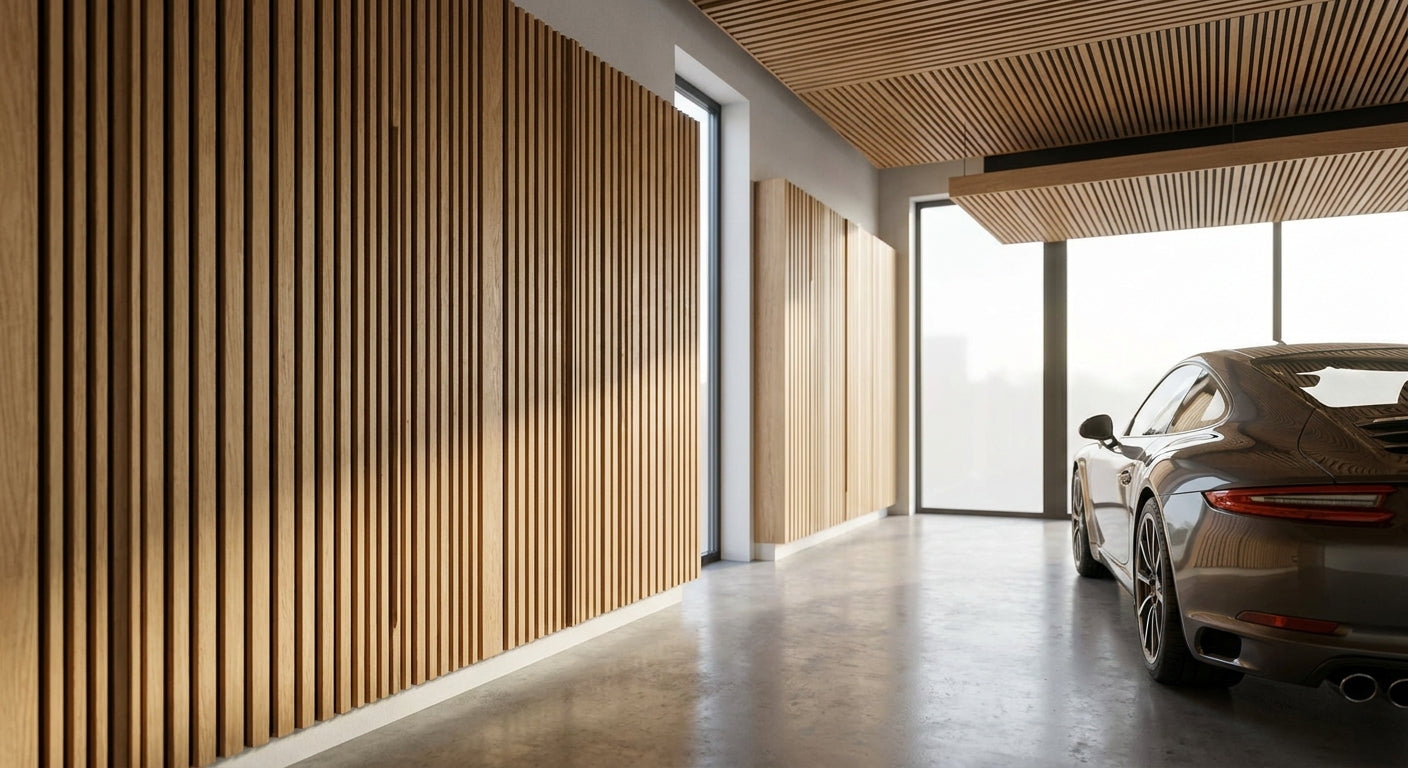
A car showroom is glass, tile and steel on every side, and every one of those surfaces bounces sound instead of absorbing it. Acoustic wood panels solve the echo without hiding a single vehicle, and the finish you pick decides whether the room reads premium or cheap.
- Acoustic panels for car showrooms cut echo from glass and tile without blocking sightlines to the cars.
- Black Oak and Smoked Oak wooden wall panels from Akustiq UK suit dark, premium showroom floors; Grey Oak suits multi-brand halls.
- The felt-backed panel range carries an NRC rating of 0.75, enough to tame reverberation on a 300 cm showroom wall.
- Skip foam acoustic tiles and thin veneer stickers in 2026 showrooms — they don't survive forklift traffic or daily cleaning.
- 240 cm and 300 cm formats cover most showroom bay heights without custom cutting.
Why this matters
A showroom with a polished concrete floor and a full glass frontage has almost nothing in the room to absorb sound. Every phone call at the sales desk, every closing door, every test-drive conversation gets thrown back at full volume within seconds. Customers register that as noise fatigue even when they can't name why the visit felt draining, and in 2026 that's a conversion problem, not just a comfort one.
Wooden acoustic panels fix this without touching the aesthetic a dealership is paying for. A real wood veneer face reads as a design choice, not a retrofit — unlike foam tiles or fabric-wrapped boards, which look like an office overflow room bolted onto a car showroom.
Who this is for
This guide is for dealership managers, franchise fit-out contractors, and interior designers specifying finishes for a new or refurbished car showroom — anywhere with a hard floor, a glazed frontage, and vehicles that need to stay the visual focus while the acoustics get fixed.
What to look for in acoustic panels for car showrooms
Sound absorption that survives a hard floor and glass front
A showroom floor is usually polished concrete or tile, and the frontage is glass — neither absorbs anything. The felt-backed panel range carries an NRC rating of 0.75, which is doing real work when the rest of the room reflects sound. Anything lower and you're paying for décor, not acoustics.
Fire rating for public retail floors
A car showroom is a public retail space, and finishes need to meet the fire standards that apply to commercial floors open to customers. Check the fire rating on the product page before specifying a finish across an entire wall — this matters more on a showroom than in a private home.
A finish that reads premium under showroom lighting
Showroom lighting is bright, directional, and designed to make paintwork shine — the same light exposes a cheap laminate finish instantly. A 3-sided real wood veneer holds its grain and colour under that lighting; a printed foil finish looks flat and plastic within a few months.
Panel format that fits your bay height
Showroom bays run tall — often well above standard residential ceiling heights. The 300 cm format covers a floor-to-ceiling wall in one run with fewer horizontal joins than a 240 cm panel stacked twice, which matters when the join line sits at eye level next to a £40,000 car.
Durability against footfall, cleaning and daily handling
Showrooms get mopped, vacuumed, and knocked by trolleys moving parts and signage. A panel with a proper wood veneer and felt backing holds up to that traffic far better than a peel-and-stick decorative sheet, which lifts at the edges within a year of commercial use.
Installation that doesn't shut the floor for a week
A showroom can't close for a fortnight while a wall gets fitted. Panels that click or glue into place on battens or direct to a stud wall let a contractor work a section at a time, out of hours, without stopping sales on the floor.
Top picks for car showroom walls
Black Oak wooden wall panel — the safe pick for a dark, modern showroom floor. Its deep tone contrasts against light-coloured paintwork and glass without competing with the cars for attention. On feature walls behind the reception desk or a flagship vehicle, it reads as premium rather than heavy. Verdict: Buy.
Smoked Oak wooden wall panel — the wildcard for a dramatic backdrop. It carries more visible grain contrast than Black Oak, which works well lit from above but can look busy in a small bay. Best used on a single feature wall, not wrapped around a whole showroom. Verdict: Consider.
Grey Oak wooden wall panel — the neutral pick for multi-brand halls or showrooms that rotate different car colours through the same space. It sits quietly behind red, blue, white or black paintwork without clashing, which matters when the same wall has to work for a dozen different models a year. Verdict: Buy.
Rustic Oak Premium 3-sided wood veneer wall panel — the pick for a heritage or luxury brand positioning. The visible knots and texture push a warmer, crafted feel than the flatter oak finishes, which suits classic car dealers and boutique showrooms more than volume-brand floors. Verdict: Consider.
Hexagon-format panels in walnut with grey felt work well as an accent zone around a service desk or a customer lounge corner rather than a full wall — the geometric pattern draws the eye, so use it sparingly against a plain oak or black backdrop elsewhere in the room.


What to avoid
- Foam acoustic tiles. They absorb sound well but look like a call-centre fit-out next to a showroom floor of new cars — the wrong visual language entirely.
- Peel-and-stick veneer sheets. No felt backing means no meaningful acoustic gain, and the adhesive edges lift under showroom foot traffic and cleaning cycles within months.
- Glossy laminate panels marketed as "wood look". They photograph fine but show every fingerprint and reflection under showroom spotlights, and they don't absorb reverberation at all.
Verdict comparison
| Panel | Tone | Best showroom use | Verdict |
|---|---|---|---|
| Black Oak | Dark, contemporary | Feature wall against light paintwork | Buy |
| Smoked Oak | Deep, high-contrast grain | Single dramatic backdrop wall | Consider |
| Grey Oak | Neutral mid-grey | Multi-brand, rotating vehicle colours | Buy |
| Rustic Oak Premium | Warm, textured | Heritage or luxury dealer positioning | Consider |
| Hexagon walnut/grey felt | Geometric accent | Service desk or lounge corner only | Consider |
Where to buy
- Order a sample of the finish before committing to a full showroom wall — lighting rigs vary between dealerships and colour reads differently under LED spotlights versus daylight from a glass frontage.
- Buy the 300 cm format for any wall running floor-to-ceiling to minimise horizontal joins at eye level.
- Confirm fire rating documentation with the supplier before a commercial fit-out sign-off, not after installation.
FAQ
What's the best acoustic panel finish for a car showroom?
Black Oak and Grey Oak wooden wall panels work best for most car showrooms in 2026 because they stay neutral against different paint colours and glass reflections. Smoked Oak and Rustic Oak suit a single dramatic feature wall rather than a full room.
Do acoustic wood panels actually reduce echo in a showroom?
Yes — felt-backed wooden panels with an NRC rating of 0.75 absorb a meaningful share of the sound that would otherwise bounce off glass and tile. A bare showroom with hard floors and a glazed frontage has almost no natural absorption without them.
Is 240 cm or 300 cm better for showroom walls?
300 cm suits taller showroom bays because it covers a floor-to-ceiling wall in one run with fewer joins. 240 cm works for standard ceiling heights and is easier to handle during installation on a live retail floor.
How much does it cost to panel a car showroom wall?
Cost depends on wall size, finish, and format, so check current pricing on individual product pages before budgeting a full fit-out. Larger 300 cm panels typically cover more wall per unit than 240 cm sizes, which affects total panel count.
Can acoustic wood panels handle high footfall areas?
Yes, when they use a real wood veneer face rather than a printed laminate or peel-and-stick sheet. Veneer-faced panels with felt backing hold up to daily cleaning and foot traffic far better than decorative-only alternatives.
Are acoustic panels for car showrooms fire rated?
Fire ratings vary by product, so confirm the specific rating on the product page before specifying a finish for a public retail floor. This is a required check for any commercial car showroom fit-out, not an optional one.
Do dark panel finishes make a showroom feel smaller?
Used on a single feature wall, dark finishes like Black Oak or Smoked Oak add contrast without shrinking the perceived space, especially under bright showroom lighting. Wrapping an entire small bay in a dark finish is where the room can start to feel tighter.
What's the difference between hexagon panels and standard wall panels for showrooms?
Hexagon panels create a geometric accent pattern best used on a smaller zone like a service desk or lounge corner, while standard rectangular panels cover full walls more efficiently. Both use the same wood veneer and felt-backed construction.
One last thing
The detail most fit-out contractors miss: panel joins catch the eye far more on a showroom wall than in a living room, because showroom lighting is angled and bright specifically to flatter paintwork. Run panels vertically where possible and keep the 300 cm format for any wall over 2.4 metres — it removes a horizontal join that would otherwise sit right at customer eye level, next to the car you're trying to sell.
Share:
Composite Cladding for Schools: What to Buy in 2026
Best Acoustic Wall Panels for Shopping Centres 2026