

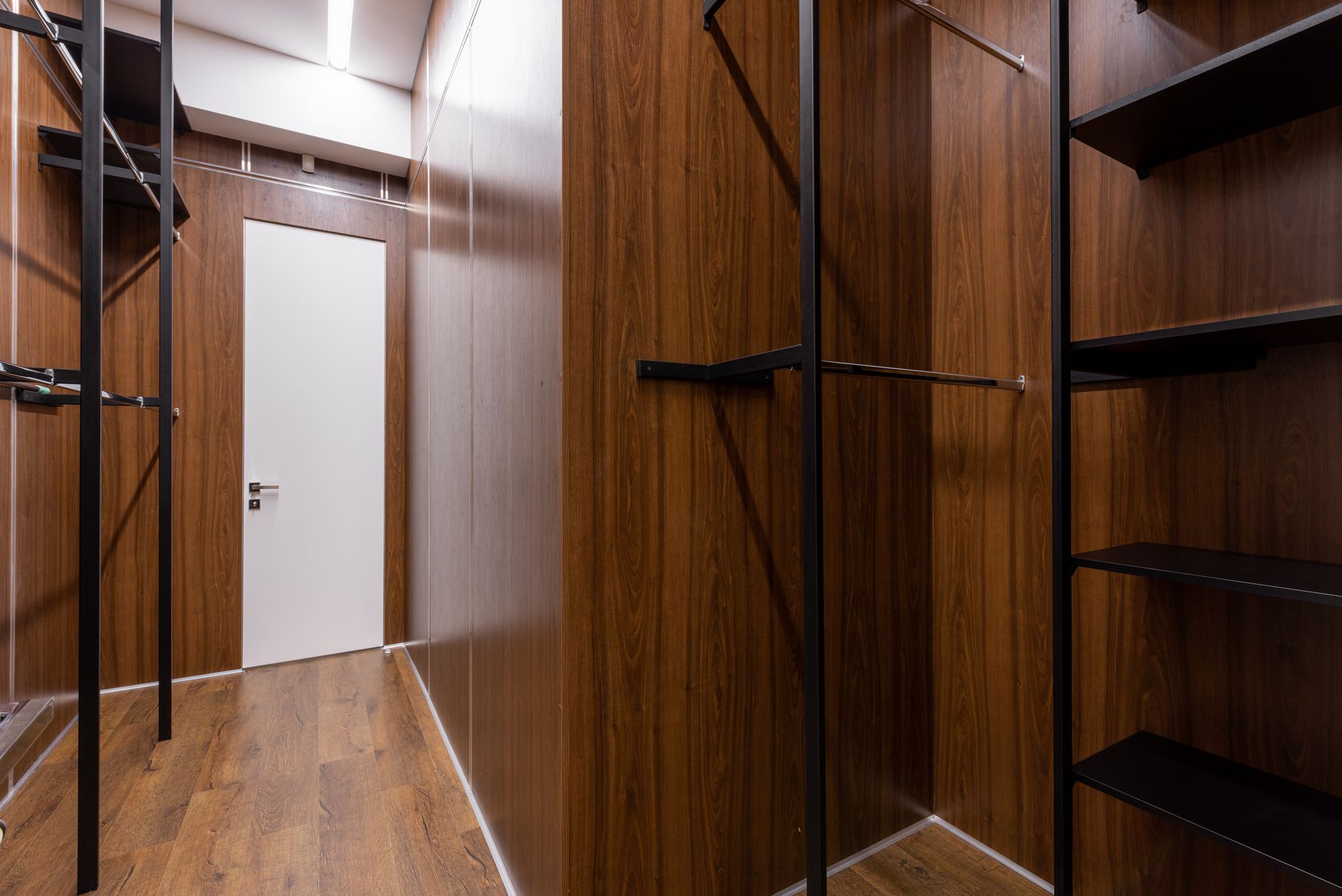
Libraries and home studies have one acoustic problem most rooms don't: hard shelving on every wall amplifies echo while the room demands quiet, focused concentration. Wooden wall panels for library and study room walls solve both issues — absorbing mid-frequency reverb and adding a visual warmth that makes long reading sessions feel intentional rather than clinical.
TL;DR: The best wooden wall panels for library and study room walls in 2026 combine acoustic felt backing with a wood veneer finish. Natural Oak with grey felt is the top pick for lighter schemes; Walnut suits darker, more traditional libraries. Smoked Oak sits in the middle — warm but contemporary. All three are available from Aku Wood Panel, a UK manufacturer supplying acoustic wood panels direct. Order a sample before committing to a full wall.
Why this matters
A standard library or study generates reverberation times of 0.4–0.8 seconds even with carpet and soft furnishings. Add hard bookshelves and plaster walls and that climbs further. Acoustic wood panels with a felt backing absorb sound energy rather than reflecting it — the felt layer does the acoustic work; the slatted wood face does the visual. The result is a room that sounds quieter and looks deliberate. In 2026, panels that combine both functions in a single 12 mm board are the practical choice over separate acoustic tiles hidden behind a decorative layer.
Who this is for
This guide is written for homeowners fitting out a dedicated home library or study, interior designers specifying a reading room in a residential or boutique commercial project, and architects working on school or university library refurbishments. You want panels that reduce ambient noise without making the room feel like a recording studio, and you need a finish that ages well alongside leather-bound books, oak furniture, and warm lighting. You are not stripping walls back to stud — you are fitting panels directly over plaster or plasterboard with adhesive or a batten system.
What to look for in wooden wall panels for library and study rooms
Acoustic performance with felt backing
A slatted wood panel without acoustic backing reflects sound almost as well as bare plaster. The grey felt layer bonded behind the slats is what gives the panel its absorption rating. For a study or library, look for panels with a minimum 9 mm felt depth — this is the threshold at which mid-frequency absorption (500 Hz–2 kHz, the range that makes speech and page-turning noisy) becomes meaningful. Aku Wood Panel's felt-backed range carries that backing as standard on selected finishes.
Veneer quality and slat spacing
The visual character of a library wall comes from slat rhythm. Tight spacing (under 15 mm gaps) reads as textured and contemporary. Wider spacing (20–25 mm gaps) exposes more felt and reads as warmer, more traditional — a better match for a classic library aesthetic. Three-sided wood veneer, as found on the rustic oak premium 3-sided wood veneer panel, wraps the visible edges so cut ends don't expose raw MDF. That detail matters when you're fitting panels around built-in shelving reveals.
Finish tone relative to book and furniture colour
Light oak reads clean and Scandinavian — it suits a modern home study with white shelving and pale wood desks. Walnut and smoked oak read richer and more traditional — the right backdrop for dark wood furniture and warm filament bulbs. Grey oak sits between the two and works in rooms where you want the walls to recede. Mocca is the deepest finish, essentially a dark espresso — only appropriate if the room has sufficient natural light or the brief explicitly calls for a dramatic, cocooning feel.
Board dimensions and coverage maths
Miscalculating coverage is the most common mistake on panel projects. Each standard Aku Wood Panel board covers a defined area; total your wall square meterage, subtract window and door openings, then add 10% for waste from trimming around sockets and cornices. For a typical 3 m × 4 m study with one window and one door, net coverage requirement is roughly 18–20 m². Order a sample tile first — the manufacturer supplies sample pieces for every finish so you can check the veneer tone under your specific lighting conditions before ordering full boards.
Ease of installation on plaster walls
Most home library installs go straight over plaster using a high-tack panel adhesive — no battens, no specialist trades. The adhesive needs to be formulated for MDF-backed panels; standard grab adhesive can fail over time as the substrate expands and contracts with temperature. Confirm the adhesive is rated for the panel weight per square metre. For wall areas over 6 m², a combined adhesive-and-mechanical fixing (panel adhesive plus a hidden nail gun or screw through the top channel) gives a more permanent result.
End pieces and trim for clean perimeter detailing
A panel wall that terminates at a bookcase or door reveal needs a finished edge. End pieces — thin hardwood cappings that match the veneer — are the difference between a professional installation and one that looks unfinished. Every finish in the Aku Wood Panel range has a corresponding end piece; specify these at the same time as the main boards to avoid a separate order delay.
Top picks for library and study walls in 2026
Natural Oak with Grey Felt — the safe pick
The safe pick. Natural oak veneer over a grey felt backing gives you acoustic absorption and a finish that works with almost every study colour scheme from off-white to deep green. The grey felt visible between the slats adds a tonal layer — it reads as deliberately designed rather than a functional add-on. This is the panel to specify when the brief says "timeless" or when you are fitting a room that needs to photograph well.
Verdict: Buy. Available as a full panel at wooden wall panel natural oak grey felt and as a sample tile to check the finish under your room's lighting before ordering in bulk.
Walnut — the traditional library choice
The heritage pick. Walnut veneer reads as the most "library" of all the finishes — dark, grain-rich, and warm. It sits correctly behind dark wood shelving, antique furniture, and the kind of reading lamp that has a fabric shade. The contrast between the deep walnut slats and the backing creates depth at a distance. It does not suit rooms with very low natural light — in north-facing rooms, sample it first.
Verdict: Buy for south- or east-facing rooms with dark furniture. Consider for north-facing studies — order the sample wooden wall panel walnut before committing.
Smoked Oak — the contemporary middle ground
The versatile pick. Smoked oak sits between natural oak and walnut in tone — greyer and cooler than walnut, with more character than natural oak. It suits home studies designed in 2026's dominant interior palette of warm greys, sage greens, and aged brass hardware. Acoustic performance is equivalent to the other felt-backed options.
Verdict: Buy for contemporary schemes. Consider if the room is already visually busy — smoked oak's grain can add complexity where a cleaner finish would serve better.
Rustic Oak Premium (3-Sided Veneer) — the detail pick
The craftsman pick. Three-sided veneer wraps the slat edges, which matters wherever a panel meets a reveal, a return wall, or a freestanding bookcase gap. The rustic character — more visible grain, slightly irregular texture — suits reading rooms that lean into a natural, organic aesthetic rather than a polished one. Specification cost is higher than the standard range.
Verdict: Consider when panel edges will be visible. Skip if all edges terminate against walls or ceiling — the premium is unnecessary.
What to avoid
- Panels without acoustic backing in a hard-surfaced room. A plain slatted wood panel over plaster adds visual warmth but contributes almost nothing to noise reduction. If the brief includes "quieter room", the felt-backed range is not optional.
- Matching the panel finish to the shelf colour exactly. When the wall panel and the bookshelves are the same tone, the room reads as flat. A half-step of contrast — natural oak panels behind walnut shelves, for example — gives the wall its own presence.
- Skipping the sample order. Veneer colour varies between monitor calibrations and real-world light. All finishes are available as sample tiles; use them. A sample order takes a day or two to arrive and costs a fraction of a mis-specified full order.
Comparison table
| Finish | Acoustic backing | Best room type | Light requirement | Edge finish option |
|---|---|---|---|---|
| Natural Oak Grey Felt | Grey felt | Modern / Scandi study | Any | End piece available |
| Walnut | Standard | Traditional library | Good natural light | End piece available |
| Smoked Oak | Standard / Grey felt | Contemporary study | Any | End piece available |
| Rustic Oak Premium | Standard | Natural / organic library | Any | 3-sided veneer |
| Grey Oak | Standard | Minimalist study | Good natural light | End piece available |
FAQ
What are the best wooden wall panels for a library in 2026? Natural oak with grey felt backing is the strongest all-round choice for wooden wall panels for library use in 2026. It absorbs mid-frequency sound, suits most lighting conditions, and pairs with both light and dark wood furniture.
Do wooden wall panels actually reduce noise in a study room? Felt-backed acoustic wood panels reduce reverberation meaningfully in small, hard-surfaced rooms. They are not a substitute for structural soundproofing but will cut the echo that makes a room feel loud during calls or when multiple people are present.
How many panels do I need for a library wall? Measure the wall in square metres, subtract openings, and add 10% for cuts and waste. A 3 m × 4 m study wall with one window typically needs panels covering 18–20 m² net.
Is walnut or oak better for a home library? Walnut suits darker, traditional libraries with good natural light and dark wood furniture. Oak — particularly natural oak or smoked oak — is more versatile and works in both modern and period rooms.
Can I fit wooden wall panels myself without a contractor? Yes for most plaster and plasterboard walls. Use a high-tack panel adhesive rated for MDF-backed boards. For walls over 6 m², add mechanical fixings through the top channel for long-term security.
Do the panels need any special maintenance in a library environment? No. Wipe down with a dry or slightly damp cloth. Avoid steam cleaners and prolonged water contact. The veneer is sealed at manufacture; no annual oiling is required.
What finish suits a dark, north-facing study? Natural oak grey felt or grey oak — both are light enough to not further darken the room. Walnut and mocca should be sampled carefully before specifying in low-light rooms.
Are end pieces necessary? Yes, wherever a panel edge is visible — at door reveals, bookcase gaps, or wall returns. End pieces match the veneer finish and give the installation a clean, intentional look.
One last thing
The acoustic benefit of felt-backed panels is greatest on the wall behind the desk — the surface your voice bounces off during calls and that faces the room's primary noise source. Fitting panels on that single wall first, before committing to a full room, is a practical way to test the acoustic result in your specific space before ordering the remaining boards.
Share:
Best Wall Panels for Loft Conversion Feature Walls 2026
Acoustic Panels for Open-Plan Kitchen Walls 2026