

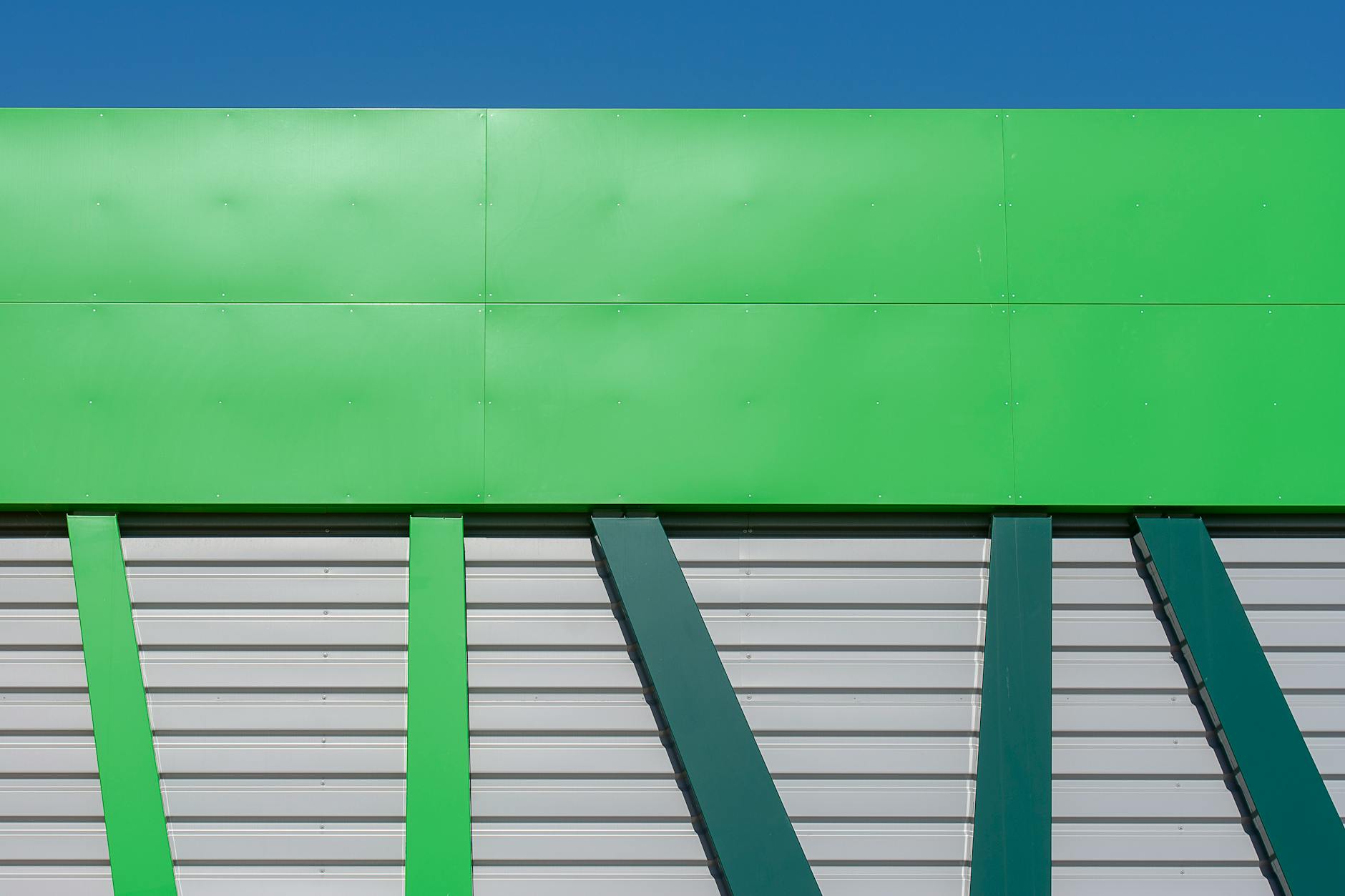
Choosing the right outdoor cladding panels for a flat-roof extension is one of the more consequential decisions in the build — the wrong product degrades within 3 years; the right one still looks sharp after 15.
TL;DR: For flat-roof extensions in 2026, you need outdoor cladding panels rated for continuous moisture exposure, temperature cycling, and UV load. Aku Wood Panel's exterior wall cladding range — available in birch, oak, black, and stone grey — is purpose-built for exposed UK conditions and installs with a concealed screw system. Order samples before committing to any full panel run. Avoid interior-grade wood panels on any elevation that catches direct rain or condensation runoff from a flat roof edge.
Why flat-roof extensions demand specific cladding
A flat-roof extension sits in a different exposure category to a pitched-roof house. The parapet detail, the drip edge, and the low roof-to-wall junction all funnel water directly onto the upper metre of any cladding you fix below. In the UK, that means panels face standing moisture for days at a time between November and March, then hard UV exposure through summer — a cycle that splits, delaminate, or stains anything not designed for exterior duty.
In 2026, the most common mistake on self-build flat-roof extensions is specifying acoustic or decorative interior panels on the external skin because they look identical to exterior panels in product photography. They are not the same product. Core composition, surface treatment, and edge sealing differ fundamentally.
Who this guide is for
This guide is for homeowners and contractors specifying cladding for a new or refurbished flat-roof extension — a rear kitchen extension, a garden-room addition, or a single-storey side return. You already have your structural frame sorted. Now you need panels that match the architectural finish you want, survive the UK climate, and fix cleanly to a timber or steel substrate.
What to look for in outdoor cladding panels for flat-roof extensions
Moisture resistance at the core
Surface treatments buy time; core resistance determines longevity. Panels for flat-roof elevations must resist moisture ingress through cut edges and fixings, not just through the face. In 2026, WPC (wood-plastic composite) and cement-fibre cores outperform solid timber on this metric. If you choose a timber-based panel, confirm the species and treatment class match BS 8417 requirements for Use Class 3 (above-ground exterior, not in contact with the ground).
UV stability and colour retention
The south and west elevations of a flat-roof extension receive the highest cumulative UV load. Panels that fade unevenly — particularly those with a wood-grain foil overlay on a composite substrate — produce a patchy look within 2–3 seasons. Look for through-colour material or a UV-stable topcoat rated for at least 10 years' exterior exposure. Stone-grey and black finishes tend to hold colour more consistently than lighter wood-effect tones in direct sun.
Fix method compatibility with the frame
Flat-roof extensions are predominantly timber-framed with 400mm or 600mm stud centres, though steel-frame variants are increasingly common in 2026. Your cladding system needs a fix method — secret screw, face screw, or clip — that works with your specific frame geometry. Secret-screw systems are worth the marginal extra cost: they prevent water tracking down the face through screw holes and deliver a cleaner finish.
Panel weight and cantilever load
Heavy stone or fibre-cement panels (above 25 kg/m²) impose meaningful load on a lightweight timber-frame extension. Check with your structural engineer before specifying. Timber composite panels in the 8–14 kg/m² range install without additional framing in most standard extension builds.
Compatibility with the flat-roof edge detail
The junction between the roof membrane and the top of the cladding run is the single most leak-prone point on a flat-roof extension. Your chosen panel needs enough dimensional stability to allow a clean, sealed top trim without gapping under thermal expansion. Panels with a published linear expansion coefficient give you the data to design the correct gap at fixings.
Colour coordination with glazing and trim
Flat-roof extensions read as a single architectural object. The cladding colour, the roof fascia colour, and the window frame colour need to resolve together. In 2026, the most specified combinations are black cladding with anthracite glazing, stone grey with aluminium-finish frames, and natural oak effect with dark bronze. Order physical samples — on-screen colour matching for exterior panels is unreliable.
Top picks for 2026
The clean, modern choice — Exterior Wall Cladding Panel Black
Black cladding on a flat-roof extension is the dominant aesthetic in 2026 UK residential extensions, and the exterior wall cladding panel black from Aku Wood Panel is the direct answer for that look. It pairs with the matching exterior wall cladding corner trim black for a fully resolved corner detail — no exposed raw edges. The concealed screw system means no face fixings breaking the elevation.
Verdict: Buy — if you want a sharp, contemporary finish that photographs well and holds colour under UV.
The neutral, versatile choice — Exterior Wall Cladding Panel Stone Grey
Stone grey is the safer specification when glazing and roof trim colours are not yet locked in. It reads as warm off-white in low light and true grey in direct sun, which means it bridges more material palettes than black or oak. The stone-grey finish has been a consistent top-seller in the Aku Wood Panel exterior range throughout 2025 and into 2026.
Verdict: Buy — for projects where the extension must read as a calm background to landscaping or glazing.
The warmth option — Exterior Wall Cladding Panel Oak
Oak-effect cladding on a flat-roof extension reads warmer than black or grey and bridges the gap between a traditional brick house and a contemporary extension. The oak exterior panel from Aku Wood Panel uses a UV-stable surface treatment — not a foil overlay — which matters on exposed south-facing elevations.
Verdict: Consider — strong choice for extensions on brick-built houses where full contrast reads too stark.
The character choice — Exterior Wall Cladding Panel Birch
Birch is the lightest finish in the range. It suits north-facing extensions where you want the elevation to read as light as possible, and it works well with white or light aluminium window frames. Less commonly specified than black or stone grey, which means your extension reads as more individual.
Verdict: Consider — right for north-facing or light-framed extension designs; less obvious than black.
What to avoid
- Interior acoustic panels on exterior elevations. Aku Wood Panel's wooden wall panel range — natural oak, walnut, smoked oak — is engineered for interior walls and delivers exceptional acoustic performance and aesthetics inside. Fix them to an exterior flat-roof elevation and the core will absorb moisture at the cut edges within one winter, causing swelling and delamination. They are not rated for exterior Use Class 3 exposure.
- Unmatched trim systems. Buying panels from one supplier and trim from another creates a colour-match problem that only appears once everything is up. Aku Wood Panel supplies matching finishing trims and corner trims in all four exterior finishes — use them.
- Skipping samples on large runs. A flat-roof extension cladding run can cover 20–40 m². The colour on a 600mm panel sample reads differently to the colour across a full elevation. Order physical samples in your shortlisted finishes before committing to quantity.
Comparison table
| Panel | Finish | Best for | UV stability | Fix system | Corner trim available |
|---|---|---|---|---|---|
| Black | Through-colour black | Contemporary / dark aesthetic | High | Concealed screw | Yes |
| Stone Grey | Neutral grey | Versatile / transitional palette | High | Concealed screw | Yes |
| Oak | Oak-effect | Warm / traditional brick context | UV-stable coating | Concealed screw | Yes |
| Birch | Light birch | North-facing / light frames | UV-stable coating | Concealed screw | Yes |
FAQ
What are the best outdoor cladding panels for a flat-roof extension in the UK? For UK flat-roof extensions in 2026, purpose-built exterior composite panels are the correct specification — not interior wood or acoustic panels. Aku Wood Panel's exterior cladding range in black, stone grey, oak, and birch are designed for continuous outdoor exposure with a concealed screw fix system.
Can I use acoustic wood panels on the outside of a flat-roof extension? No. Acoustic wood panels — including slat-style interior panels — are not rated for exterior exposure. They will absorb moisture through cut edges and delaminate. Use only panels with an exterior Use Class 3 rating on any external elevation.
How do I fix cladding panels to a flat-roof extension frame? Most modern exterior cladding panels, including those from Aku Wood Panel, use a concealed screw system that fixes through a side groove. Stud centres of 400mm or 600mm are both compatible. A step-by-step fixing guide is available in the how to install exterior wall cladding panels article.
How much cladding do I need for a flat-roof extension? Measure the total wall area in m² and add 10% for cuts and waste. A standard single-storey rear extension with 3 clad elevations typically requires 25–45 m² of panels depending on wall height and window openings.
Do flat-roof extension cladding panels need maintenance? Exterior composite panels require less maintenance than untreated timber — an annual clean with soapy water is typically sufficient. Avoid pressure washers on the surface coating during the first year of installation.
What colour cladding is most popular for flat-roof extensions in 2026? Black and stone grey are the most specified exterior cladding colours for contemporary flat-roof extensions in 2026, followed by oak effect on extensions adjacent to traditional brick builds.
Is a building regulations approval needed to clad a flat-roof extension? Re-cladding an existing extension is usually classed as a material alteration and may require building control notification, particularly if it affects fire spread to boundaries. Check with your local authority building control before starting work — this applies across England, Wales, and Scotland in 2026.
Do I need matching screws and trims? Yes. Using non-matched screws or trims from a different system creates colour inconsistency at fixings and corners. Aku Wood Panel supplies colour-matched screws and finishing trims for each exterior panel finish.
One last thing
The top-of-cladding trim on a flat-roof extension is the most important single component in the whole system — more than the panels themselves. A poorly detailed top trim allows water to sit behind the panel face at the highest point of the wall, which is exactly where capillary action pulls it into the substrate. Specify a purpose-made finishing trim in the same colour as your panels, fix it with a waterproof sealant bead on the top face, and check the junction annually. That single detail determines whether your cladding lasts 5 years or 20.
Share:
Acoustic Wall Panels Light Oak Dining Room — 2026 Guide
Best Outdoor Cladding Panels for Wet Climates 2026