

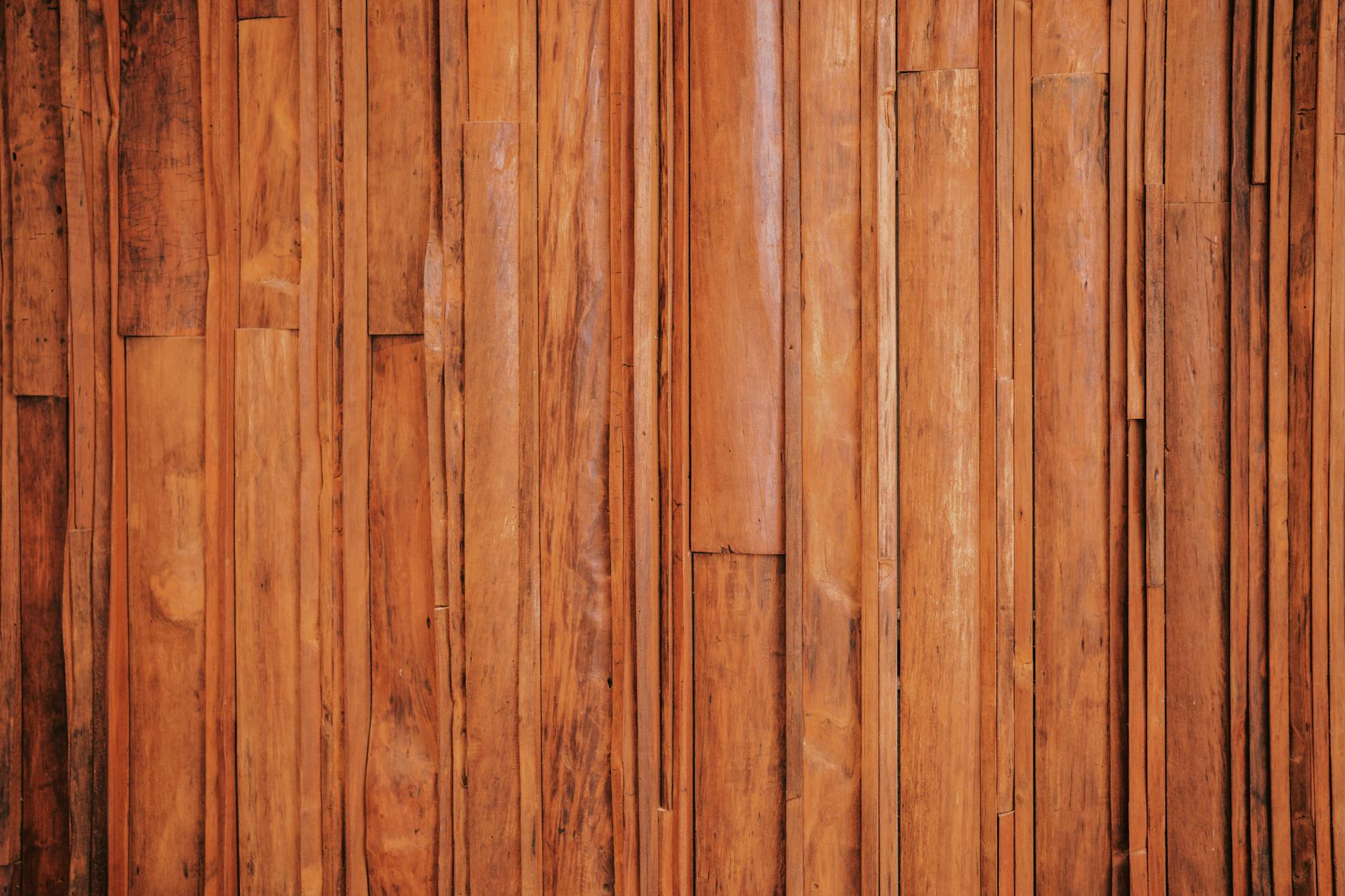
Fixing acoustic wood panels to a plasterboard wall is a straightforward job — but the method you choose determines whether those panels stay flat and flush for years or start pulling away within months.
TL;DR: To fix wall panels to plasterboard in 2026, the most reliable method is a high-tack construction adhesive applied in vertical beads, combined with temporary support pins while the adhesive cures. For panels with a felt backing — such as Aku Wood Panel's acoustic range — adhesive alone is sufficient. Heavier or larger panels benefit from a batten framework screwed into the studs behind the plasterboard first. Skip double-sided tape; it fails under panel weight within 6–12 months.
Why this matters
Plasterboard is a poor mechanical substrate. It has no structural grip, and standard screws without wall plugs strip clean through the paper face. Most panel failures on plasterboard walls come down to three things: wrong adhesive, no temporary support during cure, or panels fixed directly to a damp or unprimed surface. Get these right and a properly bonded panel will outlast the plasterboard itself.
What you'll need
- Acoustic wood panels (order samples first to confirm colour — see natural oak sample before committing to full panels)
- High-tack panel adhesive — 290 ml cartridge, white
- Caulking gun
- Spirit level (1 m minimum)
- Pencil and tape measure
- Stud finder
- Drill and 6 mm masonry or wood bits
- Wall plugs and 40 mm screws (if using a batten framework)
- 38 mm or 50 mm finishing nails or masonry pins (temporary support only)
- Fine-tooth hand saw or mitre saw
- Clean cloth and white spirit (for adhesive clean-up)
- Dry time: allow 24–48 hours before removing temporary supports
The steps
Step 1: Locate the studs and assess the wall
Run a stud finder across the plasterboard horizontally at three heights — 300 mm, 900 mm, and 1,500 mm from the floor. Mark every stud with a pencil line from floor to ceiling. Standard UK timber-frame stud spacing is 400 mm or 600 mm centres. Knowing where the studs sit tells you whether to use adhesive alone, battens, or a combination. If the studs fall behind your planned panel layout, you can screw battens directly through the plasterboard into the studs — this is the strongest substrate for any panel over 4 kg per square metre.
Check for moisture with a damp meter. Any reading above 18% means you must resolve the damp source before fixing panels — adhesive will not bond to a wet paper face and acoustic felt will trap moisture behind the panel.
Step 2: Prepare the plasterboard surface
The wall must be clean, dust-free, and fully set. New plasterboard should be primed with a PVA solution (1 part PVA to 4 parts water) and allowed to dry for at least 2 hours. Painted plasterboard should be lightly sanded to break any gloss — high-tack adhesive bonds poorly to gloss paint because the paint layer itself can shear away from the plaster. Wipe the surface with a dry cloth after sanding. Do not use water — you are trying to keep the surface dry.
Step 3: Mark your layout lines
Use a spirit level and pencil to draw a true horizontal baseline at the height of your first panel's bottom edge. Then draw vertical lines for each panel's left and right edges across the full installation area. This grid takes 15–20 minutes to set up and saves hours of realignment later. Acoustic wood panels are typically 240 cm × 60 cm — their length runs vertically, so your vertical grid lines should repeat every 60 cm. If you are centring the installation on a feature wall, measure the wall width, subtract the total panel width, and divide by 2 to get your start offset from each side.
Step 4: Cut panels to size
Measure twice. Cut once with a fine-tooth saw — a mitre saw set at 90° gives the cleanest edge. Acoustic panels with felt backing cut cleanly from the wood face side down. If you need an end finish, Aku Wood Panel's end piece for natural oak clips onto cut edges and gives a factory finish without filler or paint.
Common mistake: cutting panels on the floor without support causes the off-cut to drop and split the slat at the cut line. Support both sides of the cut at the same height.
Step 5: Apply adhesive and fix each panel
Load the high-tack adhesive cartridge into the caulking gun. Apply two vertical beads of adhesive to the back of the panel — one bead 50 mm from the left edge, one bead 50 mm from the right edge. For panels wider than 300 mm, add a third central bead. Each bead should be continuous, approximately 8–10 mm in diameter. Do not apply adhesive in a zigzag — vertical beads give even pressure distribution and prevent the panel face from bowing between contact points.
Press the panel firmly against the wall, aligning it with your pencil grid. Apply firm hand pressure across the full surface for 30 seconds. Then pull the panel away 5–10 mm and wait 60 seconds — this "flash-off" step allows solvents to begin evaporating, which dramatically increases initial grab when you press the panel back against the wall. Re-press and hold for a further 30 seconds.
Drive two temporary finishing nails through the panel's bottom edge into the plasterboard at 45° to act as a ledge support while the adhesive cures. These are removed after 24 hours and the small holes filled.
Expected outcome: The panel sits flush, does not move when released, and shows no gaps at the edges.
Step 6: Work across the wall in sequence
Fix panels left-to-right (or from your centre mark outward) so each panel abuts the previous one. Acoustic slatted panels with a tongue-and-groove or butt-joint profile align automatically — do not force the joints. Check plumb with the spirit level every third panel. In 2026, most UK installers report that cumulative drift across a 3 m wall reaches 5–8 mm if level checks are skipped; that gap is visible at the room corners.
Common mistake: applying too much adhesive near panel edges causes squeeze-out onto the wall face. Keep beads at least 50 mm from all four edges.
Step 7: Cure, clean up, and finish
Leave all temporary supports in place for a minimum of 24 hours at 18°C or above. In rooms below 15°C, extend the cure time to 48 hours — high-tack adhesives lose roughly 30% of their initial grab speed at low temperatures. Remove temporary nails after curing, fill holes with a fine surface filler, and sand flush when dry.
Clean any adhesive residue from the panel face immediately with a cloth dampened with white spirit. Do not allow adhesive to cure on the wood face — it cannot be sanded away cleanly.
Troubleshooting
Panel pulls away from the wall within 24 hours. The plasterboard surface was not primed or had residual dust. Strip the panel, clean both surfaces, re-prime the wall, and re-fix with fresh adhesive. Do not attempt to re-bond over failed adhesive without removing the old bead first.
Adhesive grabs before the panel is aligned. High-tack adhesives have a working time of approximately 3–5 minutes at 20°C. If your panels are large, work with a helper so one person holds the panel while the other checks alignment. Once the adhesive skins over, repositioning tears the paper face of the plasterboard.
Panels are not sitting flush — face is bowing. Too few adhesive beads or beads placed too close to the centre. Remove the panel within 10 minutes of fixing (before full grab), add additional edge beads, and re-fix. After full cure, bowing cannot be corrected without removing the panel.
Visible gap between panels. Your vertical grid lines were not plumb, or the wall itself is out of true by more than 3 mm. For walls that are significantly out of plumb, fit a batten framework first and shim the battens level — fixing panels directly to an uneven surface will always produce gaps.
Adhesive not dispensing evenly from cartridge. Cold adhesive flows poorly. Store cartridges at room temperature (18–22°C) for at least 2 hours before use. In winter, 30 minutes in a warm room is sufficient.
Temporary nails pulling the panel face. You have driven the nail too steeply or used too large a gauge. Use 1.6 mm diameter finishing nails and keep the angle to 45°. The nail should grip the plasterboard, not try to pass through it.
Tools and resources
- High-tack panel adhesive, 290 ml white — the adhesive specified for Aku Wood Panel installations
- Caulking gun (standard 310 ml barrel fits the 290 ml cartridge)
- Spirit level, 1 m
- Stud finder
- Fine-tooth saw or mitre saw
- PVA primer (available from any builders' merchant)
- White spirit for clean-up
- 6 mm wall plugs and 40 mm screws (for batten framework on stud walls)
What to do next
Once the panels are fixed, the most common follow-up question is how to achieve a clean finish on exposed edges and corners. Read how to hang wooden wall panels without nails for adhesive-only approaches on delicate surfaces, and see the installation guide for how to install natural oak wall panels for finishing trim details specific to the oak range.
FAQ
Can you fix wood panels directly to plasterboard without screws? Yes. A high-tack construction adhesive with a minimum grab strength of 250 N/cm² bonds acoustic wood panels permanently to plasterboard without screws. Temporary pins support the panel during the 24-hour cure window, then are removed.
How long does panel adhesive take to cure on plasterboard? Initial grab is achieved within 3–5 minutes. Full structural cure takes 24 hours at 18°C or above. Below 15°C, allow 48 hours before removing temporary supports.
Do you need to prime plasterboard before fixing panels? Yes. Bare or dusty plasterboard must be primed with a diluted PVA solution (1:4 ratio) before applying adhesive. Skipping this step is the single most common cause of panel failure within the first week.
What adhesive is best for wood panels on plasterboard? Use a high-tack panel adhesive rated for wood-to-plasterboard bonding — Aku Wood Panel's 290 ml white cartridge is formulated specifically for acoustic wood panel installations and works with both felt-backed and standard panels.
Can you fix acoustic panels to a stud wall with no battens? For panels under 4 kg per square metre on a primed, flat plasterboard surface, adhesive alone is sufficient. Heavier panels or installations over 3 m² benefit from a 38 mm × 19 mm batten framework screwed into the studs at 400 mm vertical centres.
How do you avoid gaps between wood panels on plasterboard? Set precise vertical pencil lines before fixing any panel, check plumb with a spirit level every third panel, and shim the wall with battens if the plasterboard surface is out of true by more than 3 mm.
Is it safe to fit acoustic panels to plasterboard in a rented property? Adhesive bonds to the plasterboard paper face; removal inevitably damages the surface. Use a batten framework fixed into studs if you need a reversible installation — the battens can be unscrewed and the plasterboard skim-patched at the end of a tenancy.
How many 290 ml cartridges do you need per square metre of panels? One 290 ml cartridge covers approximately 3–4 square metres of acoustic wood panel installation using two vertical beads per panel. For a typical 6 m² feature wall, allow 2 cartridges and keep a third in reserve.
One last thing
The temperature of the adhesive matters as much as the temperature of the room. A cartridge stored in an unheated van overnight at 5°C will flow like cold treacle even in a warm room — it needs 2 hours to return to working viscosity. In 2026, this is still the most frequently overlooked cause of poor bead consistency on UK winter installations. Bring your cartridges inside the night before the job.
Share:
How to Cut Acoustic Wood Panels to Size (2026)
How to Improve Acoustics in an Open-Plan Office 2026