

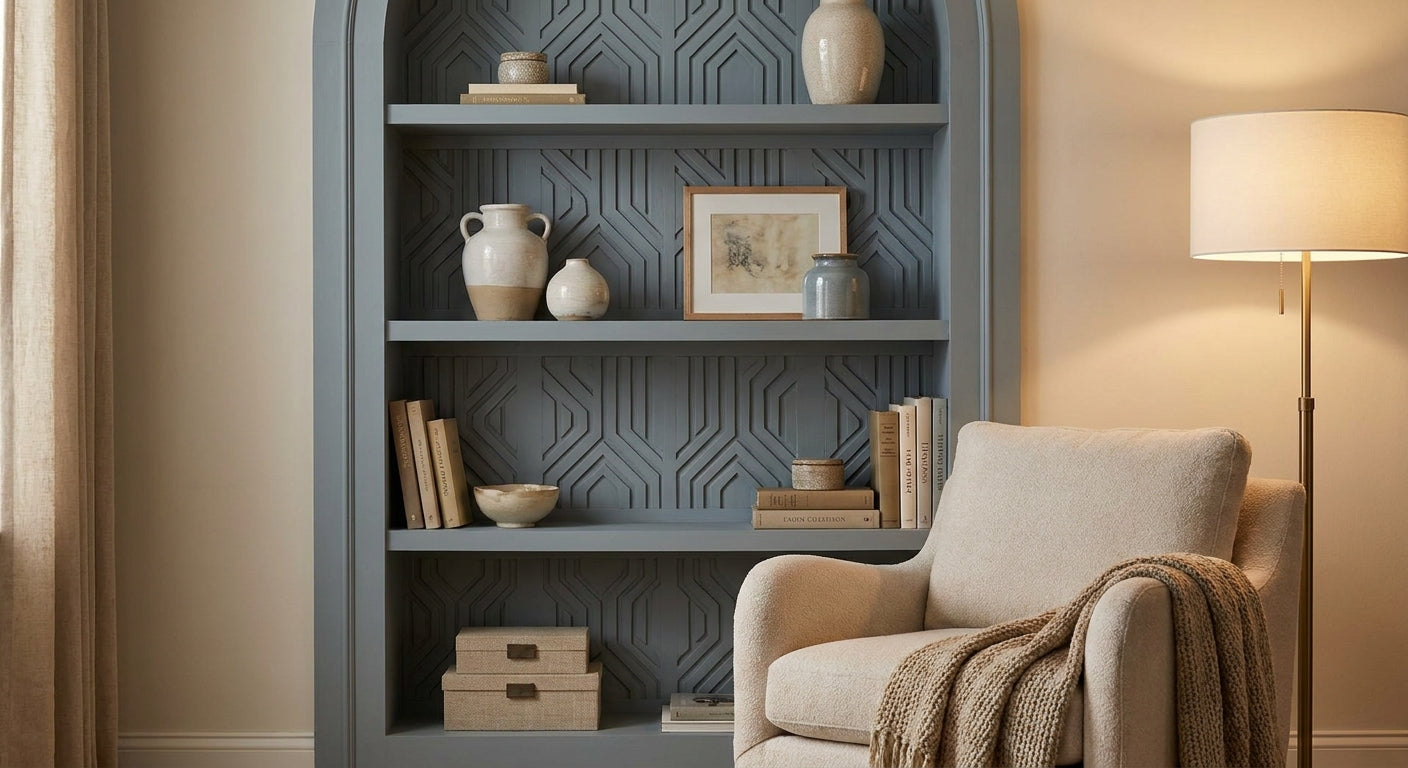
Alcoves are one of the most rewarding spots in a living room to panel — contained, flat, and naturally framed so the result looks intentional rather than added-on. This guide covers which decorative wall panels for alcoves actually work in that specific context, what to look for before you buy, and which Aku Wood Panel finishes suit different alcove styles in 2026.
TL;DR: For living room alcoves in 2026, acoustic wood slat panels outperform standard MDF options because they add texture, dampen sound, and fit tight spaces without complex cutting. Natural Oak and Smoked Oak are the safest finish choices; 3D decorative panels like the Crimson or Lobelia ranges work well for a single statement alcove. Order a sample before committing — alcove lighting changes how a finish reads dramatically.
Why alcoves reward the right panel choice
An alcove is typically 60–120 cm wide and sits recessed from the main wall plane by 15–30 cm. That geometry means the panel is always viewed at close range and under directional light — usually a floor lamp or recessed spot directly above. Flat, painted walls look fine in this context. A panel with real depth and grain variation looks exceptional. The contained footprint also means you need fewer panels than a full feature wall, which makes it practical to spend more per square metre on quality.
Acoustic wood slat panels — the kind Aku Wood Panel manufactures — carry a secondary benefit in alcoves: they reduce flutter echo from the hard surfaces that typically flank the recess (shelving, painted plaster). That matters in open-plan living rooms where conversation clarity is already compromised.
Who this guide is for
You are decorating or renovating a living room with one or two alcoves — likely flanking a chimney breast — and want to panel the back wall. You may be a homeowner doing it yourself, or a decorator working on a client's brief. You want a finish that photographs well, lasts without re-painting, and goes up without specialist tools. Budget consciousness is real but you are not buying the cheapest option: you want quality that is proportionate to the visibility of the space.
What to look for in decorative wall panels for alcoves
Depth and shadow line
Alcoves get directional light, which means surface relief shows clearly. A panel with a defined slat gap — typically 3–5 mm — casts a visible shadow line that adds dimension even in lower light. Flat or embossed panels lose that effect under a single light source. Look for a genuine 3D profile, not a printed grain on a flat sheet.
Finish stability under variable light
An alcove can shift from bright afternoon sun to lamp-only evening light within hours. Darker finishes like Smoked Oak or Black Oak read differently across that range — warm and rich at night, potentially flat in daylight. Lighter finishes like Natural Oak hold consistent across both conditions. Always test with a sample in your specific alcove before ordering full panels.
Panel width relative to alcove width
Most acoustic slat panels run in standard widths of around 60 cm. In a 90 cm alcove you will need one full panel plus a cut strip. Confirm the panel's cut-ability before buying — some composite-backed panels splinter badly if cut with a standard wood blade. Aku Wood Panel's slat panels cut cleanly with a fine-tooth saw.
Acoustic performance
If your living room is open-plan or has hard floors, the felt backing on acoustic panels reduces mid-frequency echo noticeably. The grey felt variants are worth prioritising if echo is already an issue. For purely decorative alcoves in a smaller, carpeted room, solid-backed panels are fine.
Fixing method compatibility
Alcove back walls in UK homes are commonly plasterboard on timber battens, solid brick, or dot-and-dab plasterboard. Panel glue works on all three surfaces but requires the wall to be clean and flat. Check whether the alcove has a power socket or data outlet — you may need to chase the panel around it, which changes the fixing sequence.
Edge and end-piece availability
The junction between the panel face and the alcove side wall is the detail that separates a professional result from an amateur one. Manufacturers that supply matching end pieces — pre-finished strips that cap the exposed slat ends — produce a far cleaner finish than anything you can achieve by painting a cut edge. Confirm end pieces are available in your chosen finish before ordering.
Top picks for living room alcoves in 2026
Natural Oak — the safe pick
Natural Oak is the highest-volume finish for good reason. The warm mid-tone grain works across period and contemporary living rooms, reads consistently under both daylight and lamp light, and pairs with the widest range of existing furniture finishes. It is the pick when you want impact without risk.
Concrete number: Natural Oak panels cover approximately 0.6 m² per panel, making it straightforward to calculate coverage for a standard 90 × 220 cm alcove (roughly 1.98 m²).
Verdict: Buy. The wooden wall panel natural oak is the default recommendation for any living room alcove where the brief is "warm and classic."
Smoked Oak — the atmospheric pick
Smoked Oak delivers a darker, more characterful grain than Natural Oak without going full black. It photographs well under warm lighting and suits living rooms with leather furniture, dark parquet, or a mid-century brief. The tonal depth increases visual receding, which can make an alcove feel intentionally deeper.
Verdict: Buy if your living room already leans dark or you want the alcove to read as a distinct zone.
Black Oak — the statement pick
Black Oak is uncompromising. Against white or pale plaster walls, a black-panelled alcove reads as an architectural element, not just decoration. It works best in rooms with high ceilings and confident lighting. In small or low-lit rooms it absorbs too much light and the slat detail disappears.
Verdict: Consider. Strong when conditions are right; commit only after testing a sample in your specific alcove.
Crimson 3D Panel (Smoked Brown or Pearl White) — the wildcard
The Crimson range is a handcrafted 3D panel in a 60 × 60 cm format with American walnut detailing. It is not a slat panel — it is a sculptural surface that creates strong shadow geometry. For a single-alcove statement in a living room that already has confident design intent, it is the highest-impact choice in the range.
Verdict: Consider for a single feature alcove. Not suited to a practical alcove that holds shelving or a TV — the surface geometry makes bracket fixing difficult.
Natural Oak with Grey Felt — the acoustic pick
Identical slat profile to Natural Oak but with grey felt visible between the slats. The felt adds a textural contrast and improves mid-frequency absorption. This is the right choice for open-plan living rooms or rooms with hard flooring where echo is already noticeable.
Verdict: Buy when acoustics matter as much as aesthetics.
What to avoid
- PVC or foam-backed "wood effect" panels. They look close to real wood in photographs but the surface texture is unconvincing at the close viewing distances an alcove demands. They also dent and scuff faster than composite-backed real-veneer panels.
- Panels without matching end pieces. Exposed cut ends on slat panels look unfinished against the alcove side wall. Do not assume you can paint them to match — the slat profile makes brush access difficult and the result is never clean.
- Full-coverage 3D panels behind a TV or shelving. If the alcove holds a television or integrated shelving, a flat slat panel is the practical choice. Sculptural 3D panels behind functional furniture create bracket and cable management problems that are not worth solving.
Comparison table
| Finish | Grain depth | Light stability | Acoustic option | Best room type | Verdict |
|---|---|---|---|---|---|
| Natural Oak | Medium | High | Yes (grey felt) | Any | Buy |
| Smoked Oak | High | Medium | No | Dark/contemporary | Buy |
| Black Oak | Very high | Low | No | High-ceiling/bold | Consider |
| Crimson 3D | Maximum | Medium | No | Statement alcove | Consider |
| Natural Oak Grey Felt | Medium | High | Yes | Open-plan/hard floors | Buy |
FAQ
What is the best decorative wall panel for a living room alcove? Natural Oak acoustic slat panels are the most versatile choice for a living room alcove in 2026. They work under both daylight and lamp light, suit most furniture styles, and are available with grey felt backing if acoustic performance matters.
Can I install wall panels in an alcove myself? Yes. Most acoustic slat panels fix with panel adhesive directly to a clean, flat wall surface. A standard 90 × 220 cm alcove takes 2–3 hours for a competent DIYer. The main variables are whether the back wall is plumb and whether you need to cut around sockets.
How many panels do I need for a typical alcove? A standard UK alcove back wall of approximately 90 × 220 cm is around 1.98 m². Most Aku Wood Panel slat panels cover 0.6 m² each, so budget 4 panels including one cut panel for waste. Use the panel calculator guide for precise quantities.
Do wall panels work in alcoves with shelving already installed? Yes, but fit the panels before fixing permanent shelving. If shelving is already in place, remove it, panel the back wall, then refit. Attempting to panel around fixed shelving results in visible joins.
Is Smoked Oak or Natural Oak better for a dark living room? Smoked Oak adds atmospheric depth in a dark room but can lose slat definition under low light. Natural Oak holds its grain visibility better. For a very dark room with a single light source over the alcove, Natural Oak is the safer choice. The best wood wall panels for dark and moody interiors guide covers this in detail.
What glue should I use to fit panels in an alcove? High-tack panel adhesive rated for wood-to-plaster or wood-to-plasterboard bonding is the standard choice. Apply in a serpentine bead across the back of the panel and press firmly. Allow 24 hours before loading the wall with shelving or fixings.
Can I panel just the back wall of an alcove, or do the sides need panels too? Back wall only is the standard approach and looks complete with a proper end piece finishing the exposed edge at each side. Panelling the side walls as well works but narrows the alcove and increases material cost significantly.
Are decorative wall panels suitable for rented properties? Panel adhesive creates a semi-permanent bond, so check with your landlord before fitting. If tenancy rules prohibit adhesives, command strip systems can hold lighter panels in an alcove context. For more on this, see best wall panels for rented properties and tenants.
One last thing
The single most common mistake with alcove panelling in 2026 is skipping the sample. Alcove light is directional and specific to your room — no product photograph replicates it. Aku Wood Panel supplies samples for every finish in the range. A sample costs a few pounds and takes two days to arrive; it eliminates the risk of ordering the wrong finish for a space that will be visible every day. Order the sample, hold it in the alcove at different times of day, then order full panels.
Share:
Wooden Slat Panels for Bedroom Ceilings 2026 | Aku Wood
Exterior Cladding for Porch Walls: Top Picks 2026