

Choosing the best composite cladding for a self-build in 2026 means balancing weather resistance, maintenance demands, installation speed, and kerb appeal — all before the first panel goes up.
TL;DR: For a UK self-build in 2026, composite exterior cladding beats solid timber on longevity and maintenance. The best composite cladding self-build option depends on your frame type, finish preference, and budget — but a UV-stabilised, tongue-and-groove panel with a wood-grain emboss delivers the look of timber without the annual oiling cycle. Akustiq UK's exterior wall cladding range covers black and textured finishes suited to both timber-frame and brick-and-block self-builds across the UK.
Why composite cladding is the right call for a self-build
Self-builders carry the whole decision chain themselves. There is no main contractor to blame if the cladding fails at year 3, and there is no developer margin to absorb a costly reclad. That pressure makes material selection matter more here than on any other project type.
Composite cladding — panels engineered from wood fibre, PVC, or polymer blends — holds its profile through freeze-thaw cycling, driving rain, and the sustained damp that characterises UK winters. Solid timber requires recoating every 2–3 years to stay watertight; most quality composite panels carry a 10–25 year performance warranty with zero maintenance beyond an occasional wash. For a self-builder juggling a build programme and a day job, that difference is real.
The UK self-build market grew by roughly 12% between 2022 and 2026, and planning applications for bespoke single dwellings now routinely specify composite or engineered-timber cladding as a primary finish. Architects and building inspectors are familiar with it. Suppliers stock it. Lead times are predictable.
How we ranked
The picks below are assessed against five criteria that matter specifically to self-builders: weather performance in a UK climate, compatibility with timber-frame and SIP construction, installation speed for a small site team, available finishes, and value relative to comparable timber options. No single product ticks every box equally — the verdicts reflect real trade-offs.
The ranked list
1. Akustiq UK Exterior Wall Cladding Panel — Black
The self-builder's workhorse.
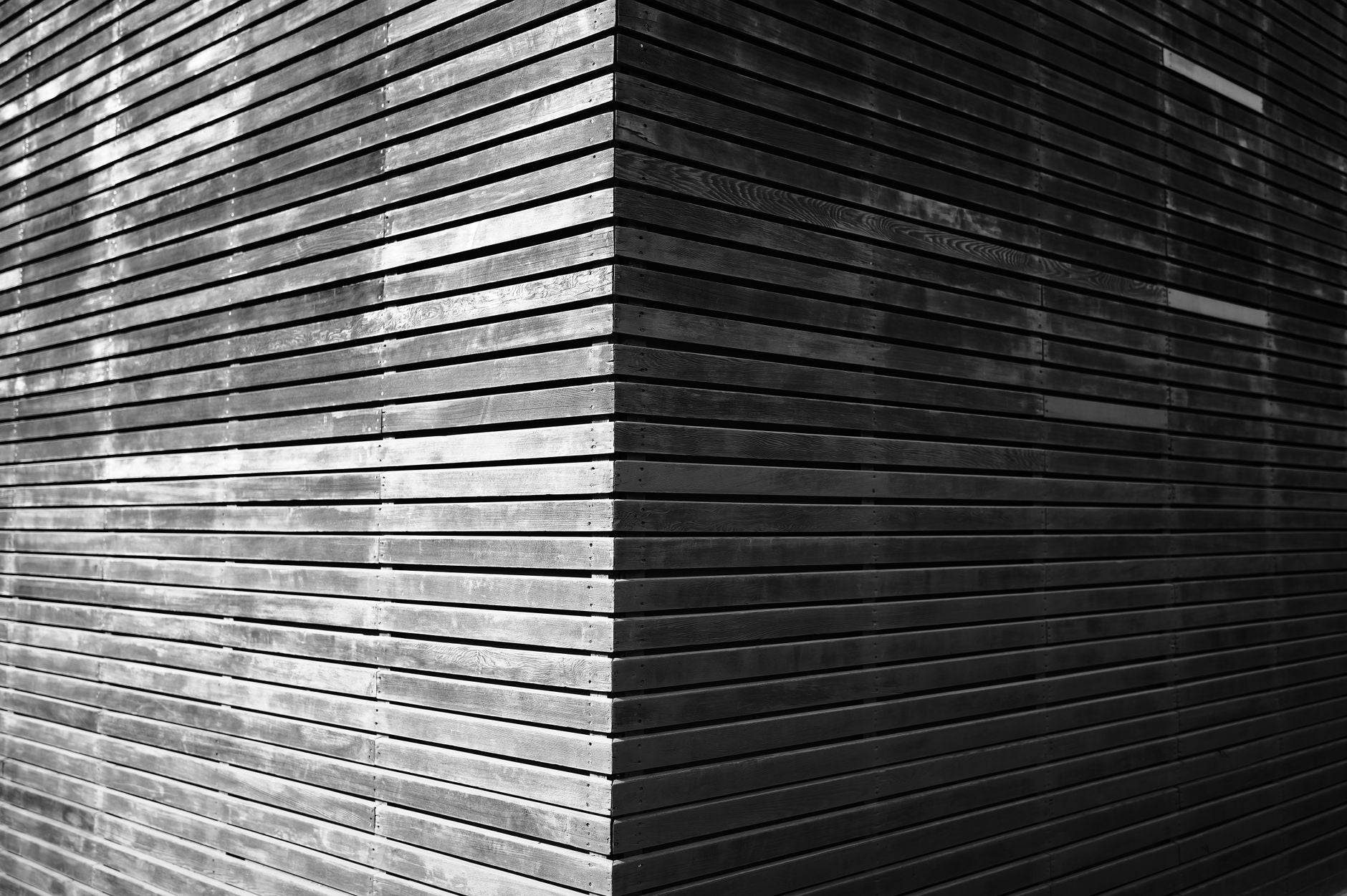
The exterior wall cladding panel in black from Akustiq UK is a composite panel with a deep wood-grain emboss, designed for UK exterior conditions. The black finish photographs exceptionally well against render, timber framing, and landscaping — it is the dominant exterior colour choice on contemporary UK self-builds in 2026. The tongue-and-groove profile clicks together cleanly, which keeps install time down on a self-managed site. Fix directly to treated battens at 400 mm or 600 mm centres; no specialist subframe needed.
The panel suits both vertical and horizontal runs, so you can vary the elevation without ordering separate SKUs. One full wall bay — roughly 10 m² — goes up in under two hours for a competent pair of DIY fixers.
Verdict: Buy. The finish, the ease of install, and the Akustiq UK price point make this the default choice for a modern self-build exterior in 2026.
2. Fibre-cement composite panels (e.g. Cedral, Marley)
The safe pick for planning-sensitive plots.
Fibre-cement boards — a mix of Portland cement, cellulose fibre, and sand — achieve a painted-plank look that planning officers on sensitive rural or heritage-adjacent plots tend to accept more readily than polymer composites. They are Class A2 fire-rated, which matters if your self-build sits within 1 metre of a boundary or if your building regulations package requires non-combustible cladding above 11 m.
Expect to pay £28–£45 per m² for material, before batten and fixings. They are heavier than polymer composites — around 16–18 kg per m² — so scaffolding and a two-person lift are non-negotiable. Factory-primed boards need a topcoat on site; budget one to two days of painter time per elevation.
Verdict: Buy for planning-constrained plots or where fire classification is a spec requirement. Hold if you want a zero-maintenance exterior — they need repainting every 10–15 years.
3. WPC (wood-plastic composite) boards — mid-market
The budget composite that performs above its price.
WPC boards blend recycled wood flour (typically 60%) with HDPE polymer. The result is a panel that machines like timber, floats on a standard batten, and resists rot, fungal growth, and insect attack without any treatment. Mid-market WPC costs £18–£30 per m², which lands comfortably below fibre-cement and well below real hardwood cladding (£60–£90 per m²).
The trade-off is thermal expansion. WPC moves more than cement-based boards — up to 3 mm per linear metre across the UK temperature range — so fixings must be designed for movement. End-gaps matter. First-time self-builders who skip the expansion allowances get boards that buckle or crack by year 2.
Verdict: Buy on budget-led builds where finish aesthetics are secondary. Skip if you want a tight, flat reveal without visible fix gaps.
4. Solid PVC hollow-profile cladding
The low-cost option with caveats.
Hollow PVC cladding is light, inexpensive (£10–£18 per m²), and completely impervious to water. It is common on extensions, annexes, and outbuildings across the UK. For a self-build main dwelling, though, it reads as utilitarian — planning officers on open-market plots increasingly reject it as a primary finish, and it adds negligible thermal mass or acoustic performance to the envelope.
It also degrades faster under UV exposure than polymer-modified composites; chalking and colour fade become visible within 8–12 years in south-facing elevations.
Verdict: Skip as a primary cladding on a main dwelling. Consider for outbuildings, garages, or low-visibility elevations where cost is the only constraint.
5. Engineered-timber composite (e.g. Kebony, Accoya-adjacent products)
The premium wildcard.
Chemically modified timber — Kebony, Accoya, or thermally treated alternatives — sits at the high end of the composite spectrum. These are real wood cells restructured at a molecular level to refuse water and resist decay for 30–50 years. They silver naturally to a driftwood grey without maintenance, or hold a factory finish for 15+ years with a single topcoat.
Costs start at £80 per m² and rise quickly with profile complexity. For self-builders with a generous cladding budget and a design that calls for authentic grain, this is the specification. For everyone else, it is hard to justify against a quality polymer composite at a third of the price.
Verdict: Buy if budget allows and the project spec demands real-wood aesthetics. Wait if you haven't priced the full elevation — the total installed cost often surprises.
Comparison table
| Product | Approx. cost/m² | Maintenance cycle | Fire classification | Install difficulty | Verdict |
|---|---|---|---|---|---|
| Akustiq UK Exterior Cladding — Black | Check site | None (clean only) | Check spec sheet | Low | Buy |
| Fibre-cement (Cedral/Marley) | £28–£45 | Repaint 10–15 yrs | A2 non-combustible | Medium | Buy/Hold |
| WPC mid-market boards | £18–£30 | None | B-s1,d0 typical | Low–Medium | Buy |
| Hollow PVC | £10–£18 | None | C typical | Very low | Skip (dwellings) |
| Engineered timber (Kebony etc.) | £80+ | Single topcoat 15 yrs | B–C | Medium | Buy (if budget) |
Where to buy
- Direct from supplier: Order Akustiq UK panels direct via the exterior wall cladding collection. No middleman margin, samples available, and delivery across mainland UK.
- Builders' merchant: Fibre-cement and WPC boards are stocked by most large merchants (Jewson, Travis Perkins, Buildbase). Useful for site top-ups but expect a 15–25% premium over online direct pricing.
- Timber frame package suppliers: If you're buying a SIP or timber-frame kit, ask whether cladding is included — many package companies bundle WPC or fibre-cement at a negotiated rate. Audit the spec carefully; budget bundles often substitute hollow PVC.
What to avoid on a self-build
- Unbranded import composites with no warranty documentation. The UK market in 2026 carries several cheap WPC boards sold without BS or CE test data. If a supplier cannot provide fire classification, water absorption, and thermal expansion figures, the material has no place on a building regulations application.
- Fixing composite panels direct to masonry without a ventilated cavity. Every composite cladding system needs a drained and ventilated cavity behind it. Skipping battens traps moisture, voids warranties, and can cause substrate damage within 18 months.
- Matching composite cladding to solid-timber trim without an expansion buffer. Composite and timber move at different rates. Fixed together rigidly, the joint opens or splits at the first hard frost.
FAQ
What is the best composite cladding for a self-build in 2026? For most UK self-builds in 2026, a UV-stabilised composite with a wood-grain emboss — such as Akustiq UK's exterior cladding panel in black — gives the best balance of aesthetics, durability, and install speed. Fibre-cement is the better call where fire classification or planning sensitivity is a factor.
Is composite cladding more expensive than timber? Mid-market composite boards (£18–£30 per m²) cost less than most hardwood cladding species (£60–£90 per m²). Over a 20-year period, composite is almost always cheaper once you include timber's recoating costs every 2–3 years.
Does composite cladding need planning permission on a self-build? The cladding material itself does not trigger a separate planning application — your self-build planning consent already covers the external finish. However, some planning conditions specify material types, so confirm with your LPA before ordering.
How long does composite cladding last? Quality composite panels carry 10–25 year performance warranties. Engineered-timber composites (Kebony, Accoya) claim 30–50 years. Hollow PVC typically shows visible degradation within 8–12 years on south-facing elevations.
Can composite cladding go on a timber-frame self-build? Yes. Composite cladding is the most common finish on UK timber-frame and SIP self-builds in 2026. Fix to treated vertical battens at 400–600 mm centres over a breather membrane; maintain a minimum 25 mm ventilated cavity.
Is black composite cladding suitable for the UK climate? Black composite performs well in the UK. It absorbs more solar heat than lighter colours, which can increase surface temperature, but quality composites are UV-stabilised and formulated to resist thermal expansion within normal UK temperature ranges (-10°C to +35°C).
How much does it cost to clad a self-build house in composite? A typical 3-bedroom self-build has 150–250 m² of claddable elevation. At £18–£45 per m² for mid-range composites, material costs run £2,700–£11,250. Add battens, fixings, and installation labour (£15–£25 per m² typical UK rate) for total installed costs of £5,000–£18,000 depending on spec and complexity.
What fire rating do I need for composite cladding on a house? For a dwelling under 11 m in height, the Building Regulations (Approved Document B) require cladding products to achieve at least a Class B-s3,d2 reaction to fire. Buildings over 11 m require Class A2-s1,d0 (limited combustibility). Check your building regs drawings — your BCO will confirm the threshold for your specific plot.
One last thing
The ventilated cavity is the detail most self-builders underestimate. A 25 mm drained and ventilated gap behind any composite cladding system is not optional — it is a building regulations requirement and the primary reason composite panels survive UK weather for 20+ years. Treat it as a structural specification decision, not a site shortcut.
Share:
Black Cladding Flat Roof Extension: Best Picks 2026
How to Choose Composite Cladding for a Garden Building 2026